

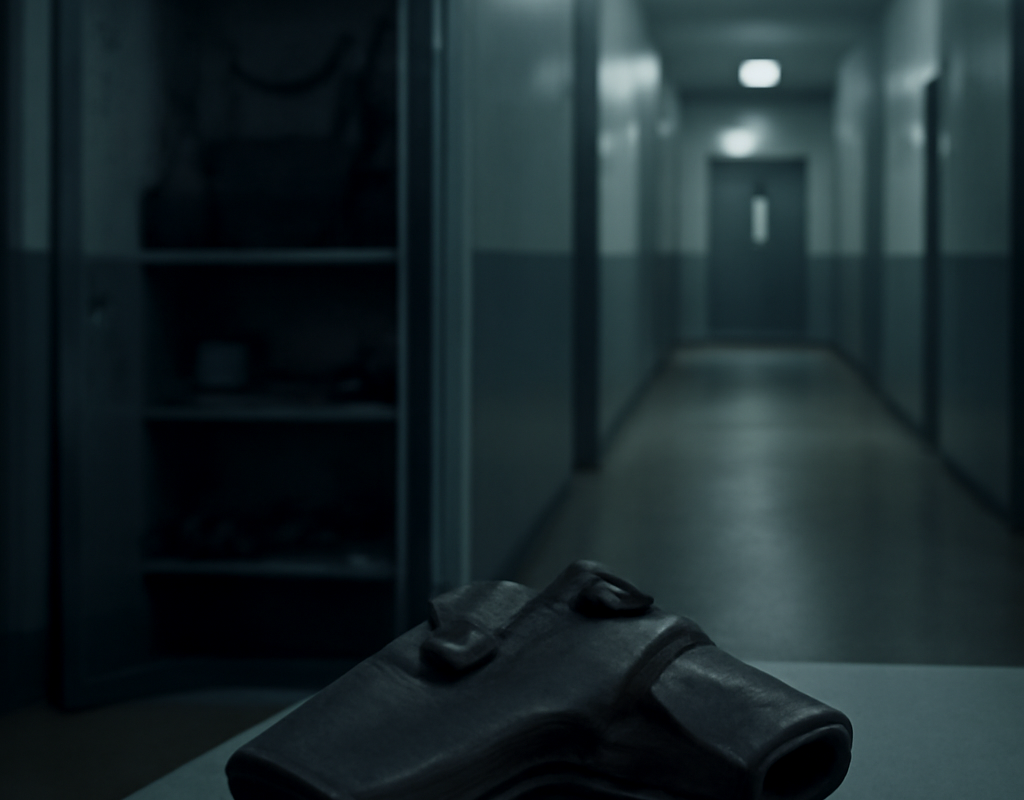
An investigation is examining the Garda holster connected with the fatal shooting of Detective Garda Colm Horkan. The development has raised fresh questions about equipment, procedures and accountability within An Garda Síochána, although the available information does not establish any wrongdoing.
What we know about the investigation
The Garda Síochána Ombudsman Commission, known as GSOC, is investigating issues concerning the holster used by Detective Garda Colm Horkan. The matter was raised in the context of scrutiny surrounding the circumstances of his death and the handling of Garda equipment.
GSOC is an independent statutory body responsible for investigating complaints and matters involving members of An Garda Síochána. Its role is to establish facts independently rather than to determine conclusions in advance.
The source material identifies Jim O’Callaghan in connection with the issue. It does not provide enough confirmed detail to state what specific concern investigators are examining, when the investigation will conclude or whether any disciplinary or criminal finding will follow.
Why the Garda holster matters
A police holster is designed to secure a firearm while allowing an authorised officer to draw it quickly when necessary. Its condition, design, fitting and use can therefore become important in any investigation involving a Garda firearm.
Questions about equipment may include:
- whether the holster was approved and correctly fitted;
- whether it was maintained and inspected;
- whether it functioned as intended; and
- whether Garda procedures were followed when it was issued or used.
Those questions are technical and procedural. They should not be treated as evidence of a confirmed failure until investigators publish findings or an official body makes a determination.
Background to the Colm Horkan case
Detective Garda Colm Horkan was fatally shot while on duty in Castlerea, County Roscommon, in June 2020. His death prompted a major criminal investigation and led to a wider public focus on the risks faced by armed members of An Garda Síochána.
Because the case involved a serving detective and Garda firearms, subsequent questions about operational practice and equipment have attracted significant public interest. Any review must balance transparency with the integrity of investigative and legal processes.
What GSOC can establish
GSOC investigations can examine the conduct of Garda personnel and operational circumstances where the statutory threshold for an investigation is met. Investigators may review documentation, equipment records, policies, witness accounts and other relevant evidence.
Possible outcomes depend on the evidence. An investigation could identify no breach, recommend changes to procedures or lead to further action where evidence supports it. A finding cannot be predicted from the existence of an investigation alone.
What happens next?
The next significant step will be the completion of the investigation and any formal communication from GSOC or another authorised body. Until then, details may remain limited to protect evidence, witnesses and related legal proceedings.
Readers should distinguish between confirmed information and claims made during public discussion. Official statements, published findings and court records are the appropriate sources for assessing any eventual conclusions.
Frequently asked questions
Who is investigating the Garda holster issue?
The source material identifies the Garda Síochána Ombudsman Commission, or GSOC, as the body examining the matter.
Does the investigation prove that the holster was defective?
No. An investigation is a fact-finding process. It does not, by itself, establish that equipment failed or that any person acted improperly.
Who was Colm Horkan?
Colm Horkan was a Detective Garda who was fatally shot while on duty in Castlerea, County Roscommon, in June 2020.
When will a conclusion be available?
No confirmed completion date is provided in the available source material.
Why this development matters
For Garda members, equipment reliability and clear operational procedures are directly linked to safety. For the public, independent oversight provides a way to examine serious concerns without assuming the outcome before the evidence has been assessed.
The investigation into the Garda holster connected with the Colm Horkan case is therefore an important development in Irish public accountability. The clearest takeaway is simple: scrutiny is under way, but no final finding has been reported.