

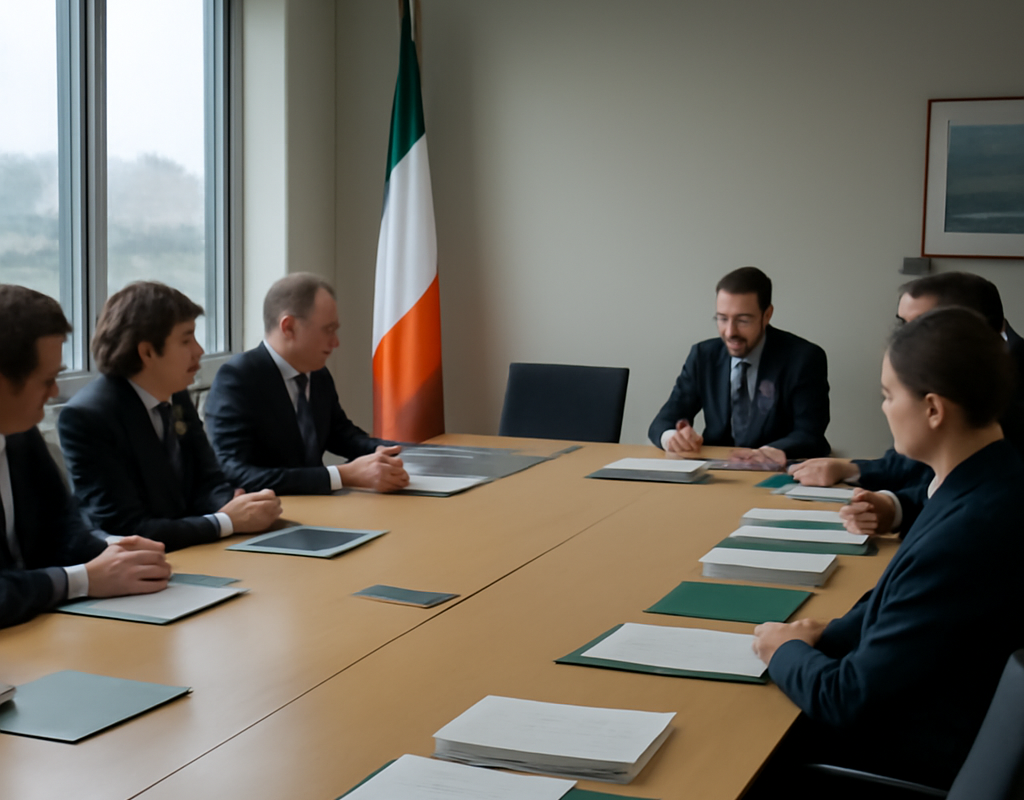
Government and trade union representatives remain apart over inflation forecasts linked to a proposed public sector pay agreement, after unions rejected an offer valued at 7.75% in total increases. The latest development is significant for thousands of public servants and could shape Ireland’s wider pay and industrial relations outlook.
Government and unions disagree over public sector pay deal
The Government’s proposed agreement, presented last week, was rejected by trade union representatives. Officials were told on Monday that the package would cost approximately €3.4 billion over its proposed two-and-a-half-year duration.
The disagreement centres partly on differing expectations for inflation. Unions and the Government appear to have reached different assessments of how rising prices could affect workers’ earnings during the proposed agreement period.
For public sector employees, the central issue is whether the proposed increases would adequately protect purchasing power as household expenses continue to influence pay negotiations. The talks are also being closely watched as a measure of the Government’s approach to public spending and public services.
What did the rejected offer include?
The proposed pay package would have delivered a series of staged increases across a 2½-year period. The schedule outlined to union officials included:
- A 1.75% increase from November 1st;
- A further 1% increase in April next year;
- Additional 1% increases in August and November next year;
- Further 1% increases in May and October 2028.
Taken together, the increases were worth 7.75% under the proposal. However, trade unions rejected the offer, indicating that the package did not meet their expectations in the context of projected inflation and the financial pressures facing workers.
Proposed term: 2½ years
Estimated cost: €3.4 billion
Total proposed pay increases: 7.75%
Status: Rejected by trade unions
Why inflation projections matter in the talks
Inflation forecasts are central to public sector pay negotiations because they help determine whether a nominal pay increase will translate into a real improvement in living standards.
If consumer prices rise faster than wages, employees may see their purchasing power fall even when their salaries increase. That calculation is particularly important for workers managing rent, mortgages, energy bills, transport costs and everyday household spending.
The Government must also weigh any pay agreement against the cost of delivering public services and the wider State budget. A multi-billion-euro settlement would have long-term implications for public expenditure, while unions are focused on ensuring that workers are not left behind by price increases.
Impact on public services and workers
The outcome could affect employees across areas including health, education, local government and other State services. It may also influence recruitment, staff retention and morale in sectors that depend on a stable workforce.
For the public, the talks matter because unresolved pay negotiations can create uncertainty around industrial relations. Any future dispute or disruption would have consequences for services used by households and businesses throughout Ireland.
The negotiations are not only about salary increases. They also concern the affordability of public services, workforce stability and how inflation is measured when long-term pay agreements are assessed.
What happens next?
The rejection of the proposal leaves negotiations open. The Government and trade unions will need to decide whether further talks can narrow the gap between the offer and union expectations.
The next stage is likely to focus on the financial value of any revised package, the timing of increases and the inflation assumptions used to assess its fairness. Until an agreement is reached, the final terms and implementation timetable remain uncertain.
There is no indication in the supplied information that a new agreement has been concluded. Workers and members of the public should therefore treat the rejected proposal as a negotiating position rather than a confirmed pay settlement.
Frequently asked questions
How much was the proposed public sector pay increase worth?
The proposed package included total increases worth 7.75% over a 2½-year period.
How much would the agreement have cost?
Government officials told union representatives that the proposal would cost approximately €3.4 billion.
Why was the offer rejected?
The supplied report says the parties remain divided over inflation projections. The proposal was rejected by unions, but the available information does not provide a full statement of their detailed reasons.
When would the increases have been paid?
The proposed schedule included an initial 1.75% increase from November 1st, followed by 1% increases in April, August and November of the following year, with further increases planned for May and October 2028.
Conclusion
The public sector pay negotiations remain unresolved after unions rejected a proposed 7.75% package worth an estimated €3.4 billion. The central challenge is balancing inflation protection for workers with the Government’s responsibility to manage public spending. For now, the next move lies with both sides as they consider whether a revised agreement can be reached.
For further Ireland News, public services coverage and breaking News Updates, visit DailyDigest.ie.