

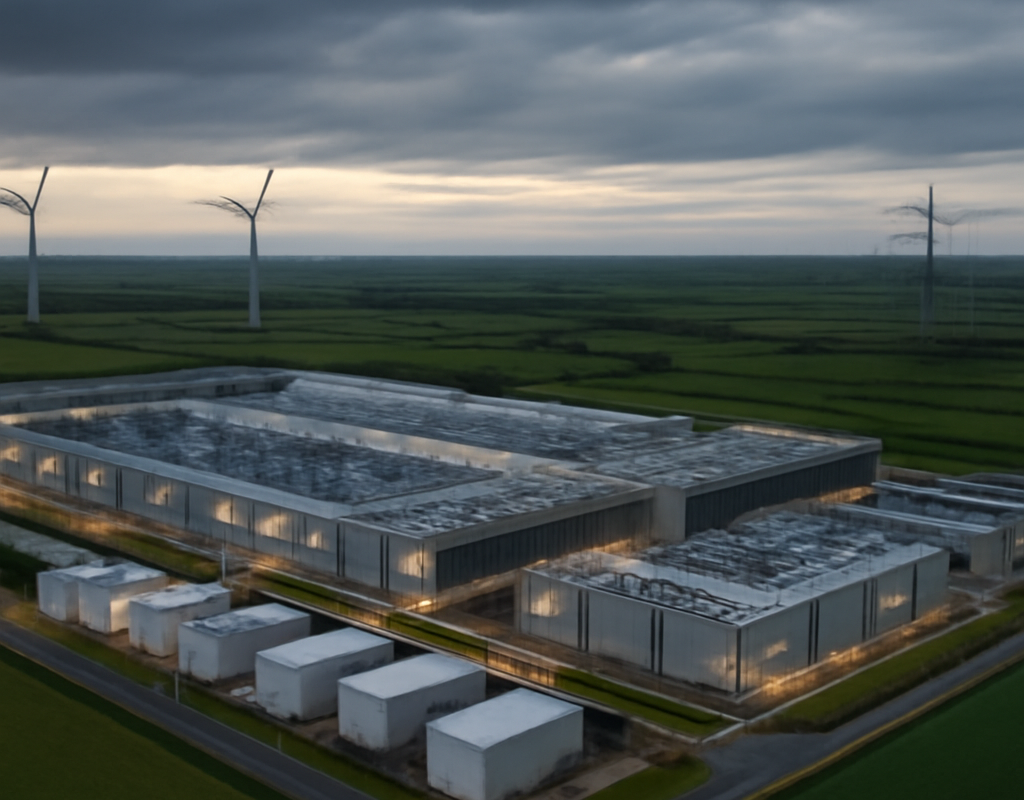
Ireland’s data centre debate is becoming one of the country’s most important economic and infrastructure stories. The growth of large digital facilities has brought investment and highly skilled employment, but it has also raised difficult questions about electricity demand, grid capacity, emissions, water use and the future shape of Ireland’s economy.
Why Ireland’s data centre debate matters
Data centres are secure facilities that store and process information for cloud computing, online services, financial systems, streaming platforms and artificial intelligence applications. Ireland has become a major European location for this industry because of its skilled workforce, international business links, technology ecosystem and access to subsea communications networks.
That success has created a policy challenge. Every new facility requires a dependable supply of electricity, often around the clock. As demand grows, policymakers and communities are asking whether the national grid can support further expansion without increasing pressure on households, businesses and climate targets.
The central issue: electricity demand and grid pressure
The most immediate concern is the amount of power consumed by large-scale computing facilities. Their demand is continuous, unlike many ordinary commercial buildings. This makes the location, timing and management of connections particularly important for EirGrid, ESB Networks, energy regulators and government departments.
Ireland’s electricity system is also changing. More renewable power is being developed, but wind and solar generation vary with weather conditions. That means the country needs stronger transmission infrastructure, storage, flexible demand and reliable backup capacity as it electrifies transport, heating and industry.
- Grid capacity: New connections must be matched with available network capacity.
- Renewable energy: Additional clean generation is needed to reduce reliance on fossil fuels.
- System stability: Large users must support a secure electricity supply during periods of high demand.
- Consumer costs: Investment in infrastructure must be assessed alongside its effect on bills and public spending.
The debate is not simply about whether data centres use electricity. It is about who pays for the infrastructure required to serve them, how their demand is managed and whether their economic value justifies the wider system costs.
Economic benefits and local concerns
Supporters of the sector point to substantial benefits. Data centres can attract multinational investment, create construction work and support employment in engineering, security, maintenance, facilities management and technology services. Their presence can also strengthen Ireland’s position as a base for cloud computing and digital business.
However, the benefits are not always felt equally by surrounding communities. Construction can affect roads, noise levels and local landscapes. Permanent employment numbers may be lower than the workforce required during the building phase, while the facilities themselves can occupy significant sites without becoming major everyday employers.
This has made planning decisions increasingly sensitive. Residents, local authorities and national policymakers must consider whether a proposed development fits local infrastructure, environmental objectives and long-term regional plans.
Follow further Ireland News coverage on energy policy, infrastructure planning and the country’s changing technology sector at DailyDigest.ie.
Climate targets and the role of renewable power
Ireland has legally binding climate objectives and must reduce greenhouse gas emissions across the economy. The data centre sector therefore faces scrutiny not only because of its electricity consumption, but also because of the carbon intensity of the power used to operate facilities.
Renewable generation can reduce emissions, but building wind farms and grid infrastructure takes time. A direct connection to renewable projects does not automatically mean that a facility operates independently of the national electricity system. At a national level, supply and demand still have to be balanced continuously.
Operators are increasingly expected to demonstrate energy efficiency, improve cooling systems and participate in demand-management measures. These steps can reduce waste, although they do not remove the need for careful national planning.
Water, land and environmental questions
Electricity is only one part of the discussion. Depending on their design, data centres may use water for cooling, while their construction requires land, transport access and supporting infrastructure. Environmental assessments must examine local conditions rather than relying on broad claims about the sector.
Important considerations can include:
- the impact on local water resources;
- noise from cooling and backup systems;
- the effect of construction on nearby habitats and communities;
- backup generators and fuel storage;
- the long-term use and reuse of industrial land.
What policymakers may need to decide
Ireland’s approach is likely to involve a combination of planning controls, grid rules and energy requirements rather than a single national answer. Authorities may assess proposed facilities according to their location, expected demand, connection arrangements and contribution to system flexibility.
Potential policy tools include:
- prioritising projects in areas with sufficient grid capacity;
- requiring credible renewable-energy and emissions plans;
- encouraging operators to reduce demand during electricity shortages;
- setting stronger efficiency and water-management conditions;
- improving transparency around the costs and benefits of new connections.
Any decision must balance competing objectives. Restricting development could affect investment and Ireland’s technology reputation. Allowing rapid expansion without adequate safeguards could deepen pressure on the electricity system and undermine climate commitments.
What happens next?
The issue will remain part of Ireland’s wider conversation about energy security, digital infrastructure and industrial strategy. Government departments, regulators, local authorities, grid operators and technology companies will all have a role in determining how the sector develops.
For households, the key questions are practical: will new demand increase pressure on electricity bills, will the grid remain reliable, and will the economic benefits reach communities beyond the areas hosting facilities? Clear public information will be essential as further planning and energy decisions are made.
Frequently asked questions
What is a data centre?
It is a specialised facility containing servers and related equipment that stores, processes and distributes digital information and online services.
Why are data centres important to Ireland?
They support cloud computing, technology investment and digital services while contributing to construction, engineering and specialist employment.
Why are they controversial?
The main concerns relate to electricity demand, grid capacity, emissions, water use, land requirements and whether local benefits match the infrastructure burden.
Does renewable energy solve the problem?
Renewable generation can reduce carbon emissions, but the electricity system still needs sufficient capacity, storage, transmission and flexibility to operate reliably.
The takeaway
Ireland’s data centre debate is ultimately a test of how the country manages economic opportunity alongside energy security and environmental responsibility. The sector can support Ireland’s digital economy, but future growth will need to be matched by transparent planning, stronger infrastructure and credible climate safeguards. For readers tracking Breaking News and Ireland’s technology policy, the decisions made now will shape both the national grid and the country’s economic model for years to come.