

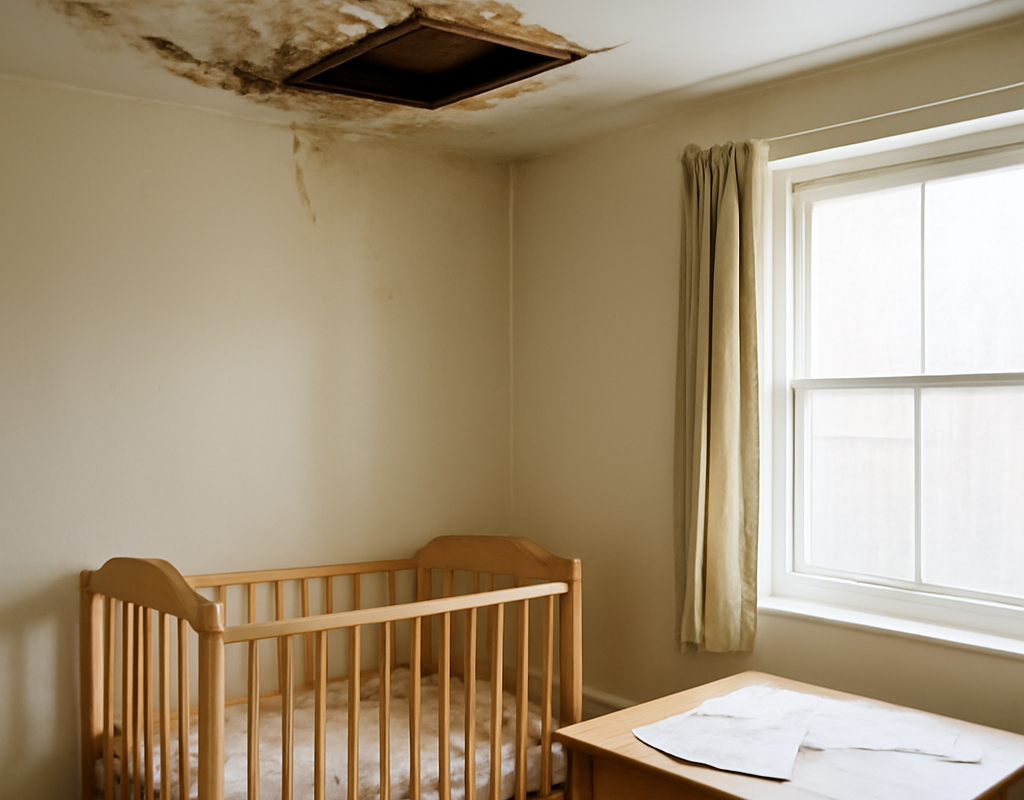
A Dublin tenant has been awarded more than €1,000 in damages after raising serious concerns about the condition of his rented home, including a piece of ceiling falling onto or near his son’s cot. The case highlights the importance of minimum rental standards and the role of the Residential Tenancies Board (RTB) in resolving disputes between tenants and landlords.
What happened in the Dublin tenancy case?
Stephen Russell brought concerns about his accommodation before an RTB tribunal. His evidence included reports of extensive defects at the property, among them a damaged ceiling and problems involving the water tank. He told the tribunal that seagulls were living in the tank and that part of the ceiling had fallen on his son’s cot.
The tribunal described Russell’s evidence as “very detailed” and “very compelling”. Photographs documenting the defects were also presented. An independent contractor’s report and a council inspection report were described in strongly critical terms, with the latter characterised as “damning”.
Damages against the landlord, Ian Kingsnorth, were initially set at €20,000 because of the alleged failure to address issues reported by the tenant. However, the final award reported in the case was more than €1,000.
Why the RTB decision matters for Dublin renters
This case is relevant to tenants across Dublin and Ireland because rental homes must meet legally required standards. Those standards cover areas such as structural condition, sanitation, heating, ventilation, lighting and fire safety. Landlords are generally responsible for ensuring that a property remains fit to live in and that significant defects are addressed within a reasonable period.
A tenant who reports a serious repair problem should keep a clear record of what happened and when it was reported. That documentation can become important if the dispute later reaches the RTB or another authority.
- The dispute involved a Dublin rental property.
- The tenant provided detailed evidence and photographs.
- Reported issues included a damaged ceiling and problems with a water tank.
- The tribunal considered official inspection material and an independent contractor’s report.
- The tenant received an award of more than €1,000.
How tenants can document housing defects
Tenants facing unresolved maintenance problems should communicate in writing wherever possible. Emails, letters and messages can establish when a landlord was notified and whether follow-up action took place.
Useful evidence may include:
- dated photographs and videos of defects;
- copies of repair requests and landlord responses;
- reports from local authorities, contractors or other qualified professionals;
- records of health, safety or access problems caused by the defect; and
- a timeline showing when issues appeared and how they developed.
In urgent situations, particularly where there is a risk of injury, tenants should prioritise personal safety and contact the appropriate emergency or local authority service. A serious structural concern should not be left untreated while a tenancy dispute is being considered.
For further Ireland News and public-service coverage, visit DailyDigest.ie.
What is the Residential Tenancies Board?
The RTB is Ireland’s independent body for regulating the residential rental sector and resolving many disputes between landlords and tenants. Its dispute-resolution processes can deal with matters including rent arrears, notice of termination, deposit retention, breaches of landlord or tenant obligations and property-standard complaints.
An RTB tribunal considers the evidence submitted by both sides. The strength of a claim can depend on the quality of the records, the seriousness of the breach and whether the landlord had an opportunity to respond or carry out repairs.
The RTB process does not remove the need for tenants to report problems promptly. A landlord cannot reasonably respond to a defect that has not been brought to their attention, except in circumstances where an immediate safety intervention is required.
What happens next in cases involving unsafe rental housing?
The reported decision underlines how inspection reports and photographic evidence can influence a tenancy dispute. For landlords, it is a reminder that complaints involving structural damage, water systems or household safety require prompt attention and a documented response.
For tenants, the case shows why verbal complaints alone may not be enough. Written communication and independent evidence can help establish the condition of a property and the steps taken, or not taken, after the problem was reported.
Frequently asked questions
Can a Dublin tenant bring a housing complaint to the RTB?
Yes. The RTB handles a range of disputes involving private residential tenancies, including alleged breaches of landlord obligations and unresolved property conditions.
What evidence should a tenant keep?
Tenants should retain dated images, written repair requests, replies, inspection reports, contractor assessments and a clear chronology of events.
Are landlords responsible for major repairs?
Landlords are generally responsible for maintaining rental accommodation in line with legal minimum standards, subject to the specific facts and obligations applying to the tenancy.
Conclusion
This Breaking News case from Dublin demonstrates how documented evidence can shape an RTB dispute involving poor rental conditions. The reported award of more than €1,000 followed detailed testimony, photographs and critical inspection material. For renters, the clearest takeaway is to report serious defects in writing, preserve evidence and seek appropriate help when a home may pose a safety risk.