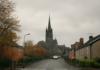
Residents in Portadown have urged Northern Ireland’s Parades Commission to restrict an Orange Order march planned for Garvaghy Road this Sunday, warning that the event could revive deep-rooted tensions in the nationalist community.
Breaking News from Portadown
The Garvaghy Road Residents Coalition has called on the body responsible for regulating parades in Northern Ireland to consider the area’s history before deciding how the proposed march should proceed.
Residents say allowing the Orange Order to march along Garvaghy Road without restrictions could “reawaken and sustain old animosities and divisions”. Their concerns centre on the serious violence associated with previous demonstrations in the largely nationalist part of Portadown.
The application relates to a march scheduled for Sunday. The final conditions will be determined by the Parades Commission, which has responsibility for assessing contentious parades and imposing restrictions where necessary.
Why the Garvaghy Road march matters
Garvaghy Road has long been one of the most sensitive parade routes in Northern Ireland. Disputes over Orange Order marches through nationalist communities became a defining feature of the Troubles and remained a source of political and community tension after the 1998 peace agreement.
The issue is particularly associated with Drumcree Church, near Portadown. In the late 1990s, members of the Portadown Lodge were prevented from continuing along the route after leaving the church. The confrontations surrounding the Drumcree parade became a powerful symbol of the wider dispute over public demonstrations, identity and consent.
For unionists, loyal orders and supporters of traditional marching routes, restrictions can be viewed as an attack on cultural expression and a long-established tradition. For many residents along Garvaghy Road, a march without local consent is seen as an unwelcome assertion through a predominantly nationalist neighbourhood.
Residents appeal for restrictions
The residents’ coalition has pointed to what it described as the “extremely violent and lethal circumstances” that arose during earlier protests and demonstrations. Its appeal reflects concern that a decision perceived as ignoring local sensitivities could increase hostility rather than support community relations.
The coalition’s position is not simply about one event. It argues that decisions about disputed parades can influence relationships between communities and affect whether old divisions remain contained or become more visible again.
- The proposed march is scheduled for Sunday.
- The route includes Garvaghy Road in Portadown.
- The Garvaghy Road Residents Coalition has requested restrictions.
- The Parades Commission will determine the conditions attached to the event.
- The dispute is linked to the area’s history of violent parade-related confrontations.
Follow continuing Northern Ireland news and breaking updates as further information becomes available.
The role of the Parades Commission
The Parades Commission was established to make determinations on public processions in Northern Ireland. When considering a disputed parade, it can set conditions relating to matters such as route arrangements, timing, stewarding, conduct and communication with residents.
Its decisions are intended to balance competing rights and responsibilities. These include the right to peaceful assembly and cultural expression, the impact on residents, public order, community relations and the potential for disruption or disorder.
That balancing exercise is especially difficult in places where a parade route carries historic meaning for more than one community. The Garvaghy Road dispute demonstrates why decisions on individual marches can attract attention well beyond the immediate neighbourhood.
What happened during the Drumcree disputes?
In 1998, members of the Portadown Orange Order were stopped by a roadblock after leaving Drumcree Church. The incident followed years of disagreement over the proposed route along Garvaghy Road.
Previous Drumcree confrontations contributed to periods of severe unrest and heightened tensions across Northern Ireland. The history continues to shape how residents, parade organisers and public authorities assess similar applications today.
The legacy of those events means that even a modern march can be viewed through the lens of earlier violence. That is why residents have stressed the importance of avoiding decisions that could reopen unresolved grievances.
What happens next?
The immediate next step is a determination by the Parades Commission on the Sunday application. The commission’s decision will establish whether the march can proceed as proposed or whether conditions will apply.
Residents and organisers are likely to scrutinise the decision closely. Any restrictions may be welcomed by those prioritising local consent and public safety, while march supporters may regard them as an unacceptable limitation on their tradition.
At this stage, the central concern is preventing a renewed confrontation. The response of participants, residents, organisers and authorities will be important in determining whether the event passes peacefully.
Frequently asked questions
Where is the proposed Orange Order march taking place?
The proposed march is associated with Garvaghy Road in Portadown, County Armagh, an area with a long history of parade-related disputes.
Who has raised concerns?
The Garvaghy Road Residents Coalition has asked the Parades Commission to impose restrictions, citing the area’s history of serious violence and division.
Who decides whether restrictions apply?
The Parades Commission is responsible for determining the conditions under which contentious parades can proceed in Northern Ireland.
Why is Drumcree significant?
Drumcree Church became closely associated with major Orange Order parade disputes in the 1990s, including confrontations over access to Garvaghy Road.
Why this story matters
The proposed march is a reminder that Northern Ireland’s peace process did not erase the historical meaning attached to public space, flags, traditions and identity. For communities affected by past unrest, parade decisions can carry a strong emotional and practical impact.
The Parades Commission now faces the task of making a decision that protects lawful expression while reducing the risk of renewed confrontation. For residents, the key test will be whether the arrangements recognise the history of Garvaghy Road and prevent old animosities from being sustained.
The latest Irish news from Portadown shows that disputed parades remain a sensitive issue in Northern Ireland. The outcome of Sunday’s application, and how the event is handled, will be closely watched by both communities.