

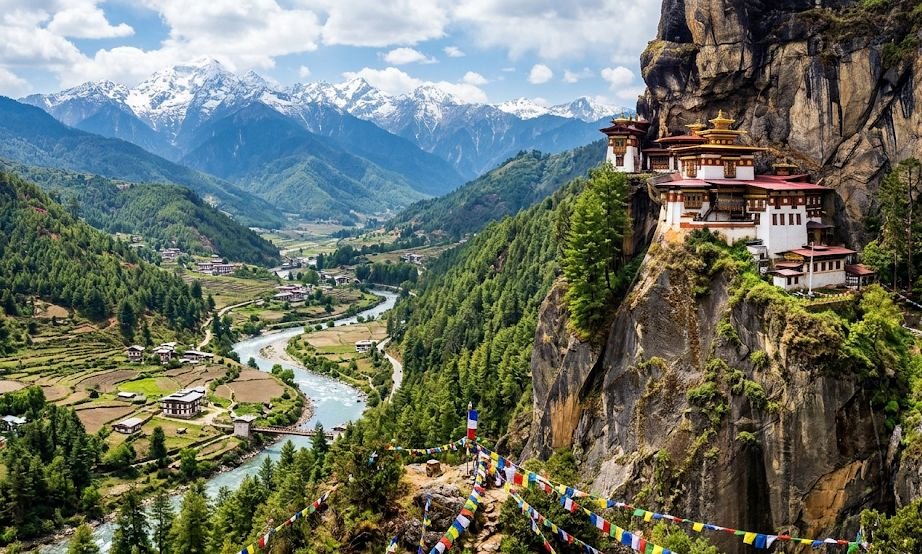
Bhutan is emerging as an appealing alternative to conventional Asian holidays for Latin American travellers seeking mountain scenery, Buddhist heritage, wellness and meaningful cultural experiences. From the cliffside Taktsang Monastery, better known as Tiger’s Nest, to remote valleys and traditional villages, the Himalayan kingdom offers a carefully managed style of tourism shaped by environmental protection and cultural preservation.
The destination’s reduced Sustainable Development Fee, scheduled to remain available through 31 December 2029, may also make longer visits easier to plan. However, travellers must still budget separately for accommodation, transport, meals, activities and visa costs.
Why Bhutan is attracting international visitors
Bhutan’s tourism model is based on a high-value, low-volume approach. Rather than pursuing mass tourism, the country promotes experiences centred on nature, heritage, spirituality and local communities.
That positioning is increasingly relevant as travellers look for holidays that feel different from familiar resort destinations. Bhutan combines:
- Himalayan landscapes and remote valleys
- Ancient Buddhist monasteries and fortress-like dzongs
- Walking, rafting, kayaking and mountain-biking opportunities
- Meditation, monastery retreats and traditional hot-stone baths
- Local food, homestays and community-led cultural experiences
- Wildlife and birdwatching in protected natural environments
Bhutan welcomed 209,376 tourists in 2025, compared with 145,065 in 2024, an increase of approximately 44.3%. Visitors came from 157 countries. Indian travellers represented about 62% of arrivals, while other important markets included the United States, China, Singapore, the United Kingdom, Malaysia, Bangladesh, Germany, Australia and Thailand.
Bhutan’s Sustainable Development Fee and visa costs
The Sustainable Development Fee, or SDF, is a central part of Bhutan’s tourism system. Official tourism information lists the current promotional rate at US$100 per adult per night, with that rate scheduled to remain in place until 31 December 2029. The standard rate referenced in the November 2026 announcement is US$200 per night.
International visitors generally also pay a separate, non-refundable visa application fee of US$40. Applications can be submitted online and are normally reviewed within five working days.
The SDF helps support environmental protection, cultural preservation and wider social-development priorities. It should not, however, be mistaken for the full price of a Bhutan holiday. Travellers must calculate additional expenses such as:
- Hotels, guesthouses or homestays
- Private transport and driver services
- Meals and drinks
- Guided tours and outdoor activities
- Flights and connecting accommodation
- Travel insurance
Tiger’s Nest and the cultural heart of Paro
Paro is one of the most important arrival points for visitors. The valley combines traditional settlements, religious buildings and dramatic mountain views, making it a natural base for exploring Bhutan’s living heritage.
Tiger’s Nest is the country’s best-known landmark. The monastery complex sits on a steep mountainside above the Paro Valley and requires a strenuous uphill hike. Visitors should allow enough time, wear supportive footwear, carry water and prepare for uneven terrain and changing weather.
Beyond the monastery, travellers can visit dzongs, learn about Bhutanese textiles, attend religious festivals and watch archery, the national sport. Visitors should dress respectfully inside religious buildings, follow photography restrictions and ask permission before photographing local residents.
Nature, wildlife and wellness experiences
Bhutan’s appeal extends well beyond sightseeing. The Trans Bhutan Trail offers a longer walking experience, while rivers and mountain routes provide opportunities for rafting, kayaking, cycling and hiking.
Birdwatching is another significant attraction. Official tourism information identifies 754 bird species, with March to May highlighted as an important season. In winter, Phobjikha Valley attracts visitors hoping to see black-necked cranes, which generally arrive between late October and February.
Conservation is central to the destination’s identity. Bhutan’s constitutional framework requires at least 60% forest coverage, while government forestry information reports actual forest coverage of 70.45%, with a further 10.43% covered by shrubs.
Wellness travellers can consider meditation, monastery retreats and traditional hot-stone bathing. Food provides another way to connect with local life, with red rice, yak-milk cheese and ema datshi among the country’s best-known culinary experiences.
How Latin American travellers can reach Bhutan
Most visitors from Latin America will need to connect through an Asian aviation hub before continuing to Paro International Airport. International services are operated by Drukair and Bhutan Airlines.
Connections identified by Bhutan’s tourism authority include Bangkok, Kathmandu, Singapore, Dhaka and Indian cities such as New Delhi and Kolkata. Flight schedules, transit rules and visa requirements can vary by nationality and route, so travellers should confirm all arrangements before booking.
Once in Bhutan, visitors can arrange private vehicles with drivers, domestic flights and selected helicopter services. Self-drive vehicle rentals are not permitted under the official tourism guidance.
What travellers should plan before departure
Bhutan is best suited to visitors who are comfortable with advance planning, mountain travel and a structured tourism system. Before departure, travellers should:
- Check passport, visa and transit requirements for every country on the itinerary.
- Confirm the SDF and visa fees through Bhutan’s official tourism channels.
- Allow time for the Tiger’s Nest hike and other high-altitude activities.
- Arrange approved transport and accommodation in advance.
- Review travel insurance for hiking, medical care and activity risks.
- Pack modest clothing for monasteries and religious sites.
- Check airline schedules and connection times through Asian hubs.
Bhutan’s growing visitor numbers show that international interest is increasing, but its appeal remains rooted in a slower and more considered style of travel. For Latin American visitors seeking a Himalayan holiday combining culture, adventure, food and wellness, the country offers an experience that is markedly different from mainstream Asian itineraries.
The takeaway for Latin American travellers
Bhutan offers more than a visit to Tiger’s Nest. Its valleys, monasteries, wildlife, cuisine and conservation policies create a distinctive travel experience, while the reduced Sustainable Development Fee may support longer stays through 2029. The key is to plan carefully: confirm visa and transit rules, budget for all costs beyond the SDF and arrange transport through approved channels before travelling.