

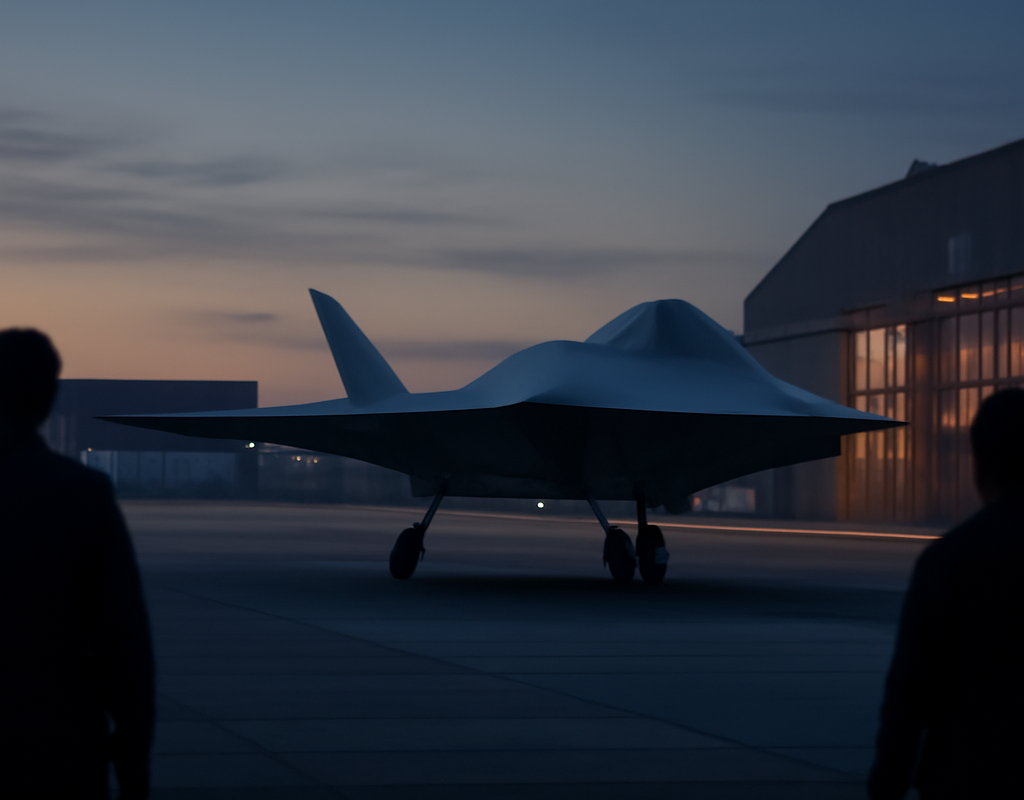
Airbus is considering whether to join the Global Combat Air Programme, a next-generation fighter jet initiative involving the United Kingdom, Japan and Italy, after a separate Franco-German project broke down over disagreements about the aircraft’s design.
Airbus chief executive Guillaume Faury said the company was discussing future options with the German and Spanish governments. Any decision would be political as well as industrial, with governments expected to determine how European countries participate in future combat-aircraft cooperation.
Airbus weighs potential role in GCAP
Speaking to journalists on Wednesday, Faury described participation in GCAP as a “potential” solution, while stressing that other arrangements remained possible. The programme is intended to develop a sixth-generation fighter aircraft for service from 2035.
GCAP is being developed by the UK, Japan and Italy. According to the information available, the three countries have allocated more than $5.5 billion (€4.7 billion) to the project. Canada has joined the programme as an observer.
Airbus currently represents Germany and Spain in discussions about the future of advanced European combat-aircraft cooperation. Faury said the company wanted the next-generation fighter capability to be developed “in Europe and for Europe”, while also arguing that cooperation was necessary to deliver a sixth-generation aircraft.
- Programme under consideration: Global Combat Air Programme
- Core participants: United Kingdom, Japan and Italy
- Target service date: 2035
- Potential European participants: Germany and Spain, through Airbus discussions
- Canada: Observer status
Why the Franco-German fighter project collapsed
The possible Airbus move follows the collapse of a competing European fighter project involving France and Germany. Airbus represented Germany and Spain in that initiative, while Dassault Aviation represented France.
The project failed after Dassault and Airbus were unable to reach agreement on the aircraft’s design and related industrial responsibilities. The dispute highlighted the difficulties involved in dividing leadership, technology and manufacturing work between major defence companies and national governments.
Following the breakdown, Dassault began pursuing a separate fighter project with the French state. The aircraft is intended to replace France’s Rafale fleet in the longer term.
What the development means for European defence
The discussions reflect wider efforts to strengthen European defence capabilities and preserve industrial expertise in advanced military aviation. A future fighter programme would involve extensive research, manufacturing and supply-chain work across participating countries.
For Germany and Spain, joining or cooperating with GCAP could offer a route into an established multinational programme after the Franco-German initiative failed. However, Airbus’s comments do not amount to a government decision, a formal accession agreement or a confirmed change to GCAP’s membership.
Several issues would need to be settled before any partnership could move forward, including:
- the aircraft’s technical design and operational requirements;
- the division of development and manufacturing responsibilities;
- intellectual-property and technology-sharing arrangements;
- funding commitments from participating governments; and
- compatibility between national defence strategies.
Governments will decide the next step
Faury said governments would ultimately decide how the future fighter project should be organised. He indicated that a decision would ideally be reached without excessive delay, but no timetable for a formal agreement was given.
The next stage is therefore likely to involve discussions between the governments of Germany, Spain, the UK, Italy and Japan, alongside the companies already involved in their respective programmes. Airbus’s position could become clearer as those governments assess whether cooperation with GCAP is technically, financially and politically workable.
The issue is separate from European Union legislation or a European Commission decision. It concerns national governments, defence companies and international industrial cooperation, although its outcome could influence European security policy, defence spending and the continent’s aerospace sector.
What it could mean for Europe
A successful multinational fighter project could help participating countries share the high cost of developing advanced military aircraft. It could also support specialised engineering jobs and defence manufacturing capacity across Europe.
At the same time, adding new partners to an existing programme can make decision-making more complex. Different military requirements, export rules and industrial priorities would need to be reconciled before a new structure could be agreed.
For now, Airbus has confirmed only that GCAP is one possible option. No final decision has been announced on whether Germany or Spain will join the programme, and the 2035 target remains the stated ambition of the existing partnership.
Conclusion
Airbus is exploring whether the Global Combat Air Programme could provide a future path for Germany and Spain after the Franco-German fighter project collapsed. The discussions are still preliminary, and governments—not Airbus alone—will determine whether a wider partnership with the UK, Japan and Italy can be created.
The development is significant for European defence and aerospace policy, but it is not yet a confirmed deal. The key issue to watch is whether the countries can agree on technology, funding and industrial responsibilities while preserving the programme’s target of entering service in 2035.