

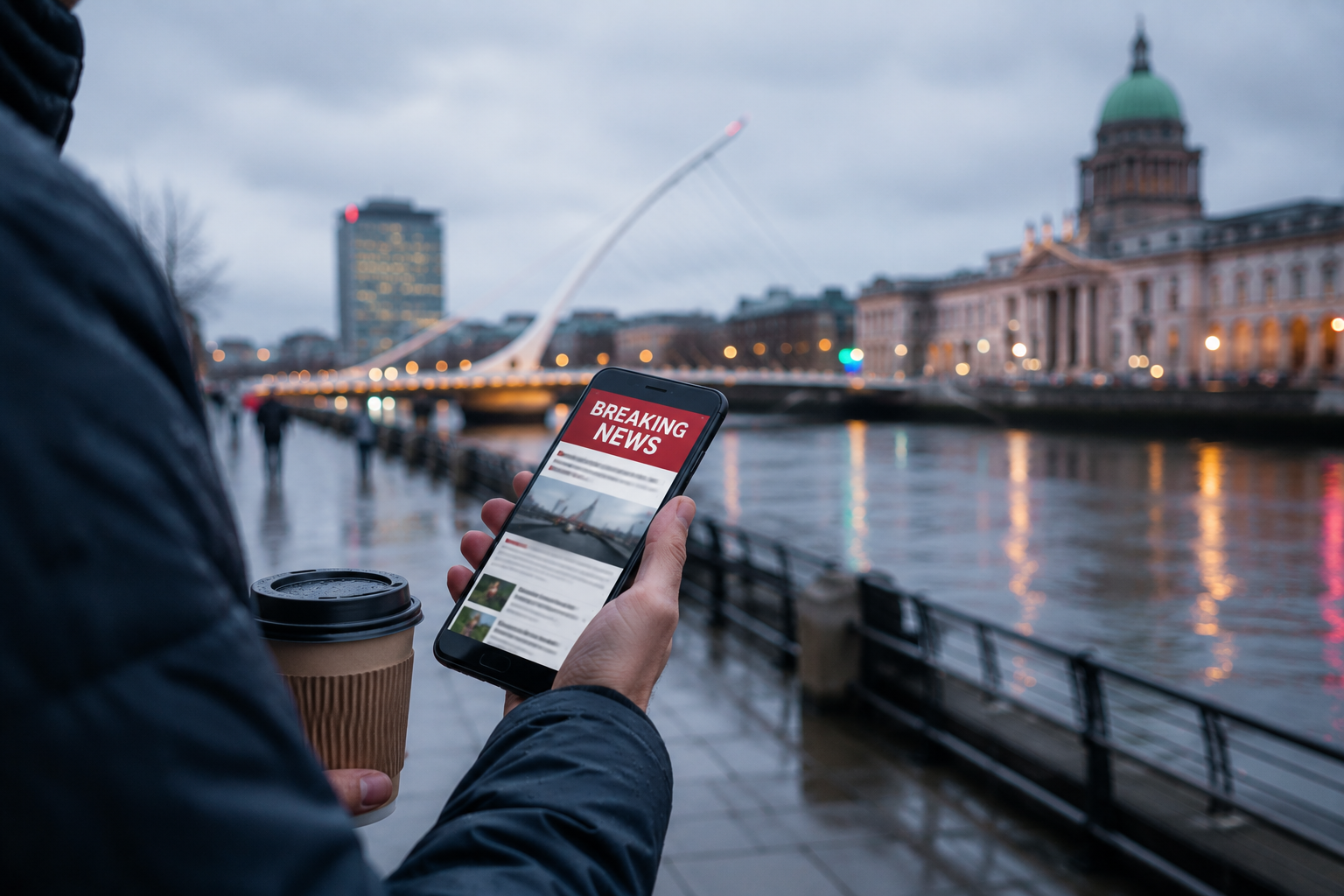
New government rules in Ireland are not involved in this seasonal change, but the clocks will go back by one hour this Sunday, 25 October 2026. At 2am, Irish time will move back to 1am, giving people an extra hour overnight.
The annual time change affects households, businesses, transport services and anyone relying on clocks or devices that do not adjust automatically. Here is what you need to know about the October change and when the clocks will move forward again.
When do the clocks go back in Ireland?
The clocks go back at 2am on Sunday, 25 October 2026. When the change happens, the time will return to 1am.
This means the hour between 1am and 2am occurs twice. For most people, the practical result is an extra hour in bed, although anyone working overnight may need to check how their employer records working time.
What time should I change my clock?
If a clock does not update itself automatically, it should be changed from 2am back to 1am. Many smartphones, computers and internet-connected devices will make the adjustment automatically, but older clocks, alarms, kitchen appliances and car displays may need to be changed manually.
- Digital phones and computers usually update automatically when the correct time-zone settings are enabled.
- Analogue clocks and watches generally need to be turned back by one hour.
- Home appliances, car clocks and alarm systems should be checked after the change.
- People travelling or attending appointments should confirm times carefully during the weekend.
Why do the clocks change twice a year?
The clocks change twice annually. In October, they go back by one hour. In March, they move forward by one hour.
The change takes place at the same time across the European Union. It is intended to align daylight hours with daily routines across different seasons, although the twice-yearly adjustment can be inconvenient for some people.
The October change means mornings become lighter earlier, while evenings become darker sooner. The March change has the opposite effect, bringing longer evening daylight but reducing the amount of light available early in the morning.
What the October time change means for daily routines
For most residents, the change is straightforward. The extra hour may provide additional rest, but the shift can still affect sleep patterns, children’s routines and planned activities over the following days.
People who are sensitive to changes in their sleep schedule may find it helpful to keep regular bedtimes and waking times. Outdoor light during the day can also help the body adjust to the new routine.
The change may be particularly noticeable for:
- parents managing young children’s sleep schedules;
- people who work night shifts;
- drivers travelling early in the morning or late in the evening;
- businesses operating overnight systems;
- anyone using older clocks or devices that do not change automatically.
Do public services and appointments change?
There is no indication in the Citizens Information notice that public services, benefits or other government schemes are changing because of the clock adjustment. However, scheduled appointments, transport departures and digital services may display times differently depending on how their systems handle the change.
Anyone with an early appointment on Sunday should check the time shown in confirmation messages and on the relevant service’s official website. This is especially important where a journey, medical appointment, examination or work shift depends on arriving at a precise time.
The latest Citizens Information updates on the seasonal time change confirm the key detail: at 2am on 25 October 2026, the clock moves back to 1am. Citizens Information remains a useful source for general information about public services and entitlements, while transport operators and service providers should be consulted for specific timetables.
Are these new social welfare rules in Ireland?
No. The October clock change is not a social welfare measure and does not alter Ireland benefit eligibility, payment rates or application procedures. It is a seasonal adjustment to the official time.
People searching for new social welfare rules Ireland or Ireland public service changes should therefore treat the time-change notice separately from announcements about payments, grants, taxation, healthcare or other Government services. Official information about those areas should be checked with the relevant department or public body.
How to prepare for the clocks going back
A few simple checks can prevent confusion on the morning of 25 October.
- Check automatic settings. Make sure phones, tablets and computers have the correct date, time and time-zone settings.
- Change manual clocks. Turn back watches, wall clocks, alarm clocks and appliance displays that do not update automatically.
- Review alarms. Check Sunday alarms and recurring alarms, particularly if an early start is important.
- Confirm appointments. Recheck travel bookings, work schedules and appointments that fall during the changeover.
- Check safety devices. If smoke alarms, security systems or other equipment display a time, confirm that the setting is correct.
It is also worth remembering that darker evenings can affect visibility for pedestrians, cyclists and drivers. Taking extra care on roads and at crossings is sensible as daylight patterns change.
When will the clocks go forward again?
After the October change, the clocks will remain on winter time until the next seasonal adjustment in March 2027. Under the regular arrangement, clocks move forward by one hour in March and back by one hour in October.
The exact date of the March change should be checked against an official calendar or an updated Citizens Information notice when it is published. Dates can vary from year to year because the change is linked to the calendar rather than a fixed date.
What should residents check in official guidance?
For the clock change itself, the Citizens Information notice provides the relevant public information for Ireland. People looking for broader Irish Government policy changes explained should use the department responsible for the subject, such as the Department of Social Protection for social welfare matters, Revenue for tax issues, or the HSE for health services.
There is no need to apply for the seasonal clock change, provide documents or contact a Government office. The practical action is simply to ensure that personal clocks and relevant devices show the correct time.
Frequently asked questions
When do the clocks go back in Ireland in 2026?
The clocks go back on Sunday, 25 October 2026. At 2am, they move back to 1am.
Do I get an extra hour?
Yes. Because the clock moves from 2am back to 1am, the overnight period includes an additional hour.
Will my phone change time automatically?
Many modern phones and connected devices update automatically when their date, time and time-zone settings are correct. Manual clocks and some older devices may need to be changed by hand.
Do I need to apply for the time change?
No. The adjustment happens automatically as part of the seasonal time system. There is no application process and no impact on eligibility for government support in Ireland.
Does the clock change affect social welfare payments?
The Citizens Information notice concerns the time change only. It does not announce a change to social welfare payments, entitlement rules or how to apply for Irish government schemes.
Where can I find official government guidance in Ireland?
Citizens Information provides general information about public services and rights. For a specific service, payment or scheme, consult the official website of the responsible department or agency and check the latest published notice.
Read more
Readers seeking further information about public services, benefits and Government announcements can explore relevant guidance on Citizens Information and the official websites of Irish public bodies. Always check the publication date, as rules, dates and service arrangements can change.
Conclusion
The clocks go back in Ireland at 2am on Sunday, 25 October 2026, when the time changes to 1am. The change provides an extra hour overnight and is separate from new government rules in Ireland, social welfare updates and other public policy measures.
Before the weekend, check devices, alarms and appointments, and change any clocks that do not update automatically. For the latest public policy changes in Ireland, rely on Citizens Information and the relevant Government department rather than assuming that a seasonal time change affects public services or payments.