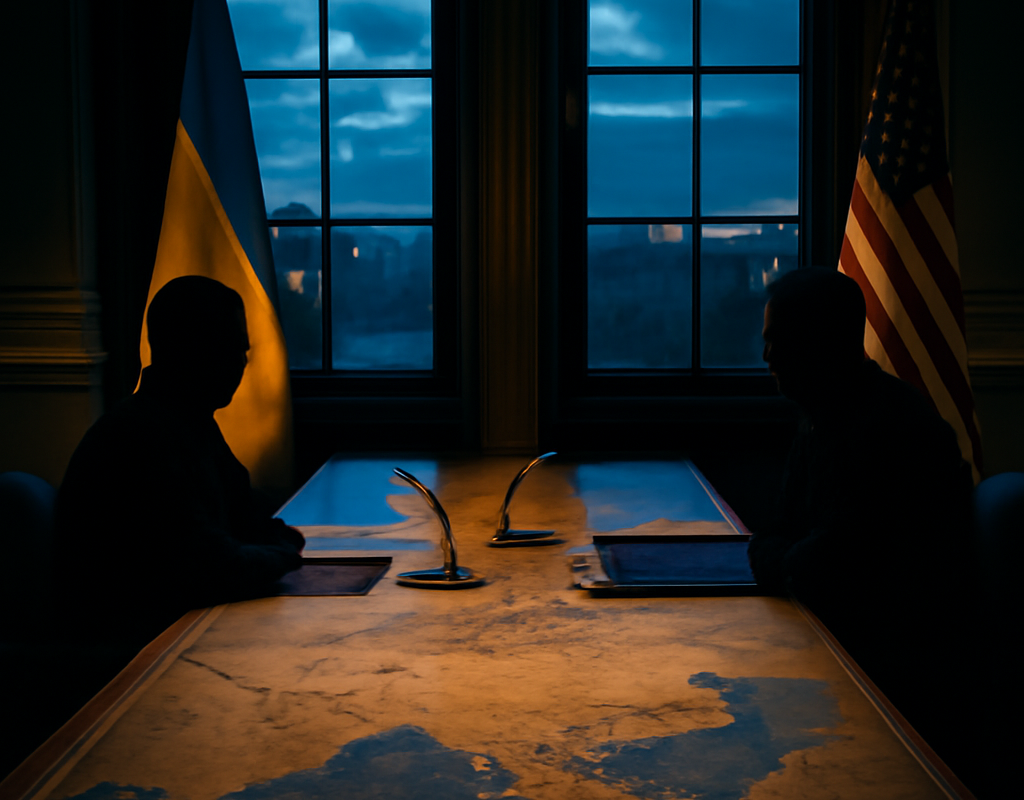
Ukraine peace talks have entered a sensitive new phase after President Volodymyr Zelensky said US negotiators raised the possibility of Ukraine withdrawing its remaining forces from the eastern Donbas in exchange for potential Nato membership.
The remarks came as diplomatic efforts intensified, with US envoys travelling between Moscow and Dublin for discussions aimed at ending the war between Russia and Ukraine. The proposal, if formally developed, would place territory, security guarantees and Ukraine’s future military alignment at the centre of negotiations.
Ukraine peace talks put Donbas and Nato at the centre
Zelensky said the idea was raised during discussions with US representatives. He indicated that the suggestion linked Ukrainian control of parts of the Donbas with a possible path towards Nato membership—an issue Kyiv has repeatedly described as essential to deterring another Russian attack.
Ukraine has consistently rejected demands to surrender sovereign territory. The Donbas, comprising large parts of Donetsk and Luhansk, carries enormous political and symbolic importance. Russia currently controls roughly a fifth of Ukraine, including most of those two regions.
Giving up the remaining areas held by Ukrainian forces would not simply represent a military withdrawal. It could also be viewed as formal recognition that the territory is Russian, something Kyiv has resisted since the conflict began.
What Ukraine says it would need
Zelensky said he would consider presenting a proposal to the Ukrainian public in a referendum if it included meaningful security guarantees, no restrictions on the country’s armed forces and substantial funding for reconstruction.
- Reliable guarantees against a future invasion
- No imposed limits on Ukraine’s military capability
- International support for rebuilding damaged infrastructure
- A clear and credible framework for any Nato membership process
Kyiv has argued that restrictions on its armed forces could leave the country vulnerable. Moscow, meanwhile, has previously demanded territorial concessions, military limitations and Ukrainian neutrality.
Russia’s position remains a major obstacle
Although recent meetings have created cautious hopes for progress, statements from Russian President Vladimir Putin and Kremlin officials suggest that Moscow’s core demands have not significantly changed. Russia has opposed Nato expansion near its borders and has insisted on conditions that Ukraine considers unacceptable.
Zelensky acknowledged that the discussions would be extremely difficult, particularly because the US proposal appears to conflict with Russia’s stated position. US officials had previously indicated that Ukrainian Nato membership was not under consideration, making the latest comments especially significant.
Any agreement would also need to address territory occupied by Russia, including Crimea, which Moscow annexed in 2014. Zelensky has previously spoken about restoring Ukrainian control over occupied regions and the peninsula.
Diplomatic efforts continue in Dublin and Moscow
US envoys Jared Kushner and Steve Witkoff met Zelensky in Dublin after holding talks with Putin in Moscow. The meetings followed a period of strained relations between Kyiv and Washington, including disagreements over Ukrainian strikes against Russian energy facilities and the wider impact of the conflict on international fuel markets.
There have been limited signs that practical cooperation remains possible. A temporary ceasefire in the Kherson region reportedly enabled evacuations and aid deliveries, offering a reminder that narrowly focused humanitarian agreements may be easier to achieve than a comprehensive peace settlement.
Ukraine’s political future and possible referendum
Ukraine’s elections remain suspended while martial law is in force. Zelensky has previously said elections could take place within months of a peace agreement and has indicated that he could leave the presidency as part of a broader settlement involving Nato membership.
However, questions about territorial concessions would be politically explosive. Any referendum would likely require clear wording, public debate and strong assurances that the proposed settlement would protect Ukraine’s long-term independence.
Read more: Ireland and international affairs
Explore more: global developments and analysis
- World affairs, international diplomacy and global news
- Dublin news today and major international headlines
What happens next in the Ukraine peace talks?
The immediate challenge is turning an exploratory idea into a detailed proposal acceptable to Ukraine, Russia, the United States and European allies. The most difficult questions will involve the status of the Donbas, the legal meaning of any security guarantees and whether Nato membership could realistically be offered.
For Kyiv, a peace deal must prevent another invasion rather than merely pause the current war. For Moscow, neutrality and territorial control remain central demands. Unless those opposing positions narrow, negotiations are likely to remain fragile.
Conclusion
The latest Ukraine peace talks have reopened debate over a possible trade-off between Donbas territory and Nato membership, but no agreement has been reached. Zelensky’s comments show that Kyiv may examine proposals backed by credible guarantees, military freedom and reconstruction funding. The key takeaway is that diplomacy is active, yet the gap between Ukraine’s security demands and Russia’s territorial objectives remains substantial.