

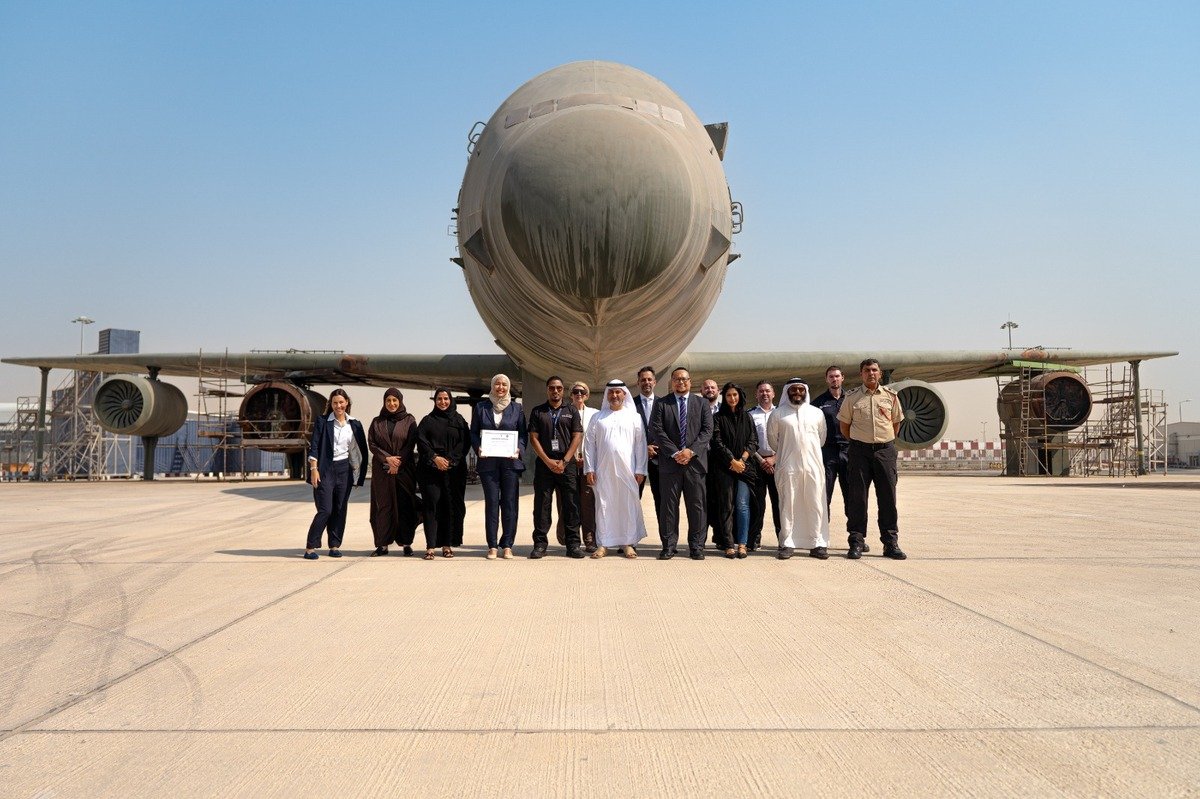
The United Arab Emirates has certified Serco as the first training provider approved under the country’s new national aerodrome regulations, marking a significant development in airport emergency preparedness and aviation safety.
The approval allows Serco to train and assess Aerodrome Rescue and Firefighting Services (ARFFS) personnel across operational, supervisory and management roles. The programme is intended to create more consistent professional standards across UAE airports and strengthen the skills required during aviation emergencies.
New UAE framework focuses on airport rescue and firefighting skills
The General Civil Aviation Authority (GCAA) has introduced a competency-based system for training and evaluating ARFFS professionals. Rather than relying only on classroom instruction, the framework is designed to assess the practical capabilities, technical knowledge and operational judgement needed in airport rescue and firefighting.
ARFFS teams are responsible for responding to aircraft incidents, airport fires and other emergencies that may threaten passengers, crews or airport infrastructure. Their readiness is an important part of an aerodrome’s overall safety system.
Under the newly established framework, training and assessments must align with nationally approved requirements. This is intended to reduce variation in standards and ensure that personnel working in different roles have the qualifications and practical abilities required for their responsibilities.
What Serco’s certification allows
Serco is now authorised to provide specialised training and competency assessments for ARFFS staff at three levels:
- Operational personnel involved in frontline rescue and firefighting duties
- Supervisors responsible for coordinating teams and emergency response activity
- Managers overseeing wider airport safety and operational functions
The certification means Serco can support the implementation of the GCAA’s approved standards through structured training programmes and formal assessments. It also builds on the company’s existing experience in fire, rescue, aviation support and professional development services across the region.
Why the certification matters for UAE aviation
The UAE has an expanding aviation sector serving major international passenger and cargo markets. As airports and air traffic volumes grow, regulators must ensure that emergency response capabilities develop alongside them.
The GCAA’s new approach links regulatory oversight with specialist education and operational testing. That combination is designed to help airports maintain teams that are prepared to respond effectively, while also giving employers a clearer national benchmark for recruitment, training and qualification.
The framework is also intended to support internationally recognised safety practices. Consistent competency requirements can help aviation organisations identify skills gaps, plan refresher training and maintain professional standards as airport operations become more complex.
Regulator highlights readiness and national expertise
Eng. Aqeel Al Zarouni, Assistant Director General for Aviation Safety Affairs at the GCAA, described the certification as an important step in strengthening the competency and readiness of ARFFS personnel across the UAE.
He said the framework brings together regulatory requirements, specialised training and operational preparedness. The broader objective is to support effective emergency response while developing national aviation capabilities that can keep pace with the sector’s future needs.
The GCAA’s approval is part of a wider effort to improve the UAE’s aviation safety infrastructure through detailed standards and specialised training programmes. The authority also aims to enhance the technical knowledge, operational preparedness and professional skills of airport personnel.
Practical effect on passengers and airport users
The certification does not introduce a new passenger requirement, change airport security procedures or alter flight schedules. Travellers will not need to apply for anything because of the approval.
Its effect is operational rather than administrative. Stronger training and assessment for airport rescue teams should help support emergency preparedness at UAE aerodromes and contribute to safe, reliable airport operations.
For passengers travelling through the UAE, including those connecting between Ireland and destinations in Asia, Africa, the Middle East and Australia, the development forms part of the safety infrastructure operating behind the scenes at airports. It does not, however, indicate that a current emergency or disruption is taking place.
What happens next for aviation training in the UAE?
Serco’s certification establishes the first approved provider under the new regulatory framework. Further recognition of training organisations could help extend the system across the UAE aviation sector, although no additional providers or approval dates were specified in the announcement.
The framework is expected to support ongoing training, assessments and professional development for ARFFS teams. As the system develops, its effectiveness will depend on consistent implementation, regular evaluation and continued cooperation between regulators, airports and approved training providers.
For now, the main significance is the creation of a nationally regulated pathway for airport rescue and firefighting qualifications. It gives the UAE a more structured method of ensuring that personnel are equipped for the technical and practical demands of aerodrome emergency response.
Conclusion
The UAE’s certification of Serco as its first GCAA-approved aerodrome training provider strengthens the country’s approach to airport emergency preparedness. The new competency-based framework is focused on ensuring that rescue and firefighting personnel meet consistent national standards across operational, supervisory and management roles.
For travellers, there is no immediate change to bookings or airport procedures. The development is instead a long-term investment in aviation safety, professional training and the resilience of the UAE’s airport network.