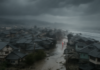
Typhoon Dujuan has left at least four people dead and six missing in Japan after bringing record rainfall, flooding and widespread disruption to areas around Tokyo. More than 45,000 households in Chiba prefecture remained without power on Tuesday, while emergency crews continued search and rescue operations.
Authorities revised the death toll upward after rescuers recovered the bodies of two additional people. Officials warned that the number of fatalities could rise as teams search for those still unaccounted for.
Flooding and power outages hit the Tokyo region
The Fire and Disaster Management Agency said three people died in Chiba and one in Kanagawa, two areas close to the Japanese capital. Floodwaters submerged entire neighbourhoods, damaged homes and brought roads, public transport and other essential services to a standstill.
More than 460 homes had suffered varying levels of damage by Tuesday afternoon. In Chiba, thousands of households were still waiting for electricity to be restored as utilities assessed damage and emergency services worked in affected communities.
The storm weakened as it moved northeast and eventually headed out into the Pacific. As conditions improved, authorities lifted or downgraded many warnings relating to torrential rain and landslides. However, the risk of further flooding and unstable ground remained a concern in areas that had received exceptional rainfall.
Record rainfall recorded near Japan’s capital
Typhoon Dujuan produced particularly intense rainfall in parts of the Tokyo region. Oshima, an island approximately 120 kilometres south of central Tokyo, recorded 832 millimetres of rain over 48 hours, according to public broadcaster NHK. That total was more than twice the island’s average rainfall for the entire month of September.
Tokyo’s Edogawa Ward also recorded a record 282.5 millimetres over a 24-hour period. Such rainfall can overwhelm drainage systems, trigger landslides and rapidly raise river levels, particularly in densely populated urban areas.
Japan regularly experiences powerful typhoons during late summer and early autumn. The storms can affect transport, electricity supplies, public events and industrial activity across large parts of the country.
Emergency response continues
Search and rescue teams were still working to locate six missing people after the typhoon moved away from the coast. Emergency authorities were also assessing damage to homes, roads and public infrastructure while restoring essential services.
- At least four people have died.
- Six people remain missing.
- Twenty-two people were reported injured.
- More than 45,000 households in Chiba were without electricity.
- Hundreds of homes sustained damage.
- Some roads and public transport services were disrupted by flooding.
The typhoon also caused disruption beyond emergency operations. A major video game trade fair in Tokyo closed early because of the storm, illustrating how severe weather can affect large public events even when they are held indoors.
Climate change and extreme rainfall risk
Scientists have warned that human-driven climate change is increasing the danger associated with extreme rainfall. A warmer atmosphere can hold more moisture, potentially allowing storms to release larger volumes of water in a short period.
This does not mean that climate change alone determines the path or strength of an individual typhoon. It does, however, increase the potential for intense precipitation and raises the pressure on drainage, transport and emergency systems.
For Japan, the latest storm highlights the continuing challenge of preparing densely populated regions for increasingly disruptive weather. Authorities must manage immediate rescue operations while also assessing how roads, power networks and flood defences performed under exceptional conditions.
What happens next?
Authorities are expected to focus on locating the missing people, supporting communities affected by flooding and restoring electricity and transport links. Damage assessments will help determine whether further evacuations, repairs or assistance are required.
Although many warnings were reduced after the typhoon moved offshore, residents in affected areas may still face hazards from flooded roads, damaged buildings and landslides. Recovery efforts are likely to continue after the immediate weather threat has passed.
Conclusion
Typhoon Dujuan has caused a serious emergency in Japan, with four confirmed deaths, six people missing, widespread flooding and major power outages near Tokyo. The immediate priority is the search for those unaccounted for and the restoration of essential services, while the record rainfall is likely to renew attention on Japan’s resilience to increasingly intense weather events.