

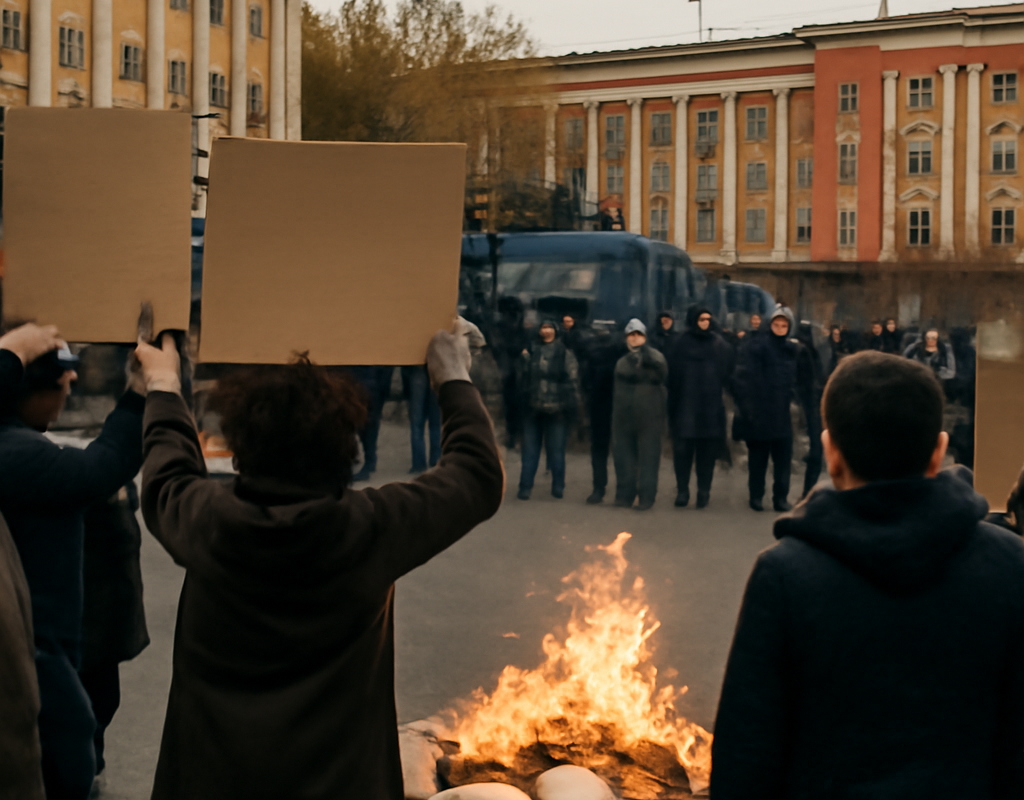
Albania faced rising tension on Saturday as opposition supporters and students held demonstrations in Tirana, with protesters burning symbolic pillows outside Prime Minister Edi Rama’s office. Police deployed water cannon and Rapid Intervention Forces near the Ministry of Education after some demonstrators threw rocks at the building and officers.
The protests are a significant development in Albania politics because separate opposition and student mobilisations converged amid growing public dissatisfaction with the government. Authorities remained on alert as demonstrators moved through the capital and concerns grew over possible further clashes.
What happened in Tirana?
Supporters of Albania’s Democratic Party gathered outside the prime minister’s office, where they remained for approximately 90 minutes. Some protesters set fire to pillows placed there by Rama as a symbolic invitation to dialogue with students.
The opposition demonstrators later marched towards the Ministry of Education. A separate student protest had also been announced near the ministry, bringing together two groups with different immediate concerns but a shared expression of dissatisfaction with the government.
Some participants threw rocks at the ministry and police officers. In response, security forces strengthened their presence around the building, deploying a water cannon and units from the Rapid Intervention Forces, known by their Albanian acronym FNSH.
Why are opposition supporters and students protesting?
The demonstrations reflect a combination of political opposition to Rama’s government and student concerns linked to university conditions. The protests have attracted wider public sympathy, according to remarks from the prime minister, who acknowledged that a significant part of society was seeking a more attentive response from the government.
The available information does not establish that the opposition and student demonstrations have formally merged into a single movement. They were announced and organised separately, although their timing brought them together near the Ministry of Education.
Government response
Rama said the government was preparing a response to the concerns raised by demonstrators. He indicated that the authorities would present their broader assessment within hours or days.
At the same time, the prime minister issued a warning against violence. He said people who encourage, repeat or carry out violence should expect a sustained response from the state. His comments came as police prepared for possible confrontations in central Tirana.
The government’s next public response will be important in determining whether tensions ease or whether demonstrations continue. Any measures concerning universities, public services or political dialogue would need to be assessed separately once formally announced.
Police presence and risk of further unrest
Security operations were concentrated around the Ministry of Education ahead of the student gathering. The deployment of a water cannon and riot units suggested that authorities were preparing for disorder rather than treating the event as a routine demonstration.
Clashes between protesters and police can quickly increase pressure on the government, particularly when separate demonstrations take place at the same time. However, the reported incidents should not be taken as evidence that unrest has spread nationwide. The confirmed events described here were centred on Tirana.
- Opposition supporters gathered outside the prime minister’s office.
- Symbolic pillows were burned during the demonstration.
- Protesters later moved towards the Ministry of Education.
- Some participants threw rocks at the building and police officers.
- Police deployed a water cannon and Rapid Intervention Forces.
- The government said it was preparing a response to public concerns.
What happens next?
The immediate focus will be on whether the government publishes its promised response and whether student and opposition protests continue. Authorities will also face pressure to maintain public order while respecting the right to peaceful assembly.
Further developments could include additional demonstrations, negotiations with students or new statements from opposition leaders. The impact on Albania’s wider political environment will depend on the scale of future protests, the government’s response and whether incidents of violence are repeated.
For the European Union and neighbouring countries, the situation is primarily a national political development rather than an announced EU decision. Albania’s domestic stability nevertheless matters within the wider Western Balkans, a region closely followed in European affairs and EU enlargement discussions.
Conclusion
The latest EU news and Europe news agenda includes a closely watched development in Albania, where opposition supporters and students mobilised in Tirana amid growing public discontent. Police intervention followed reports of rocks being thrown, while Edi Rama promised a government response and warned against violence. The next decisive step will be whether authorities address the protesters’ concerns through dialogue and policy action, or whether demonstrations intensify.