


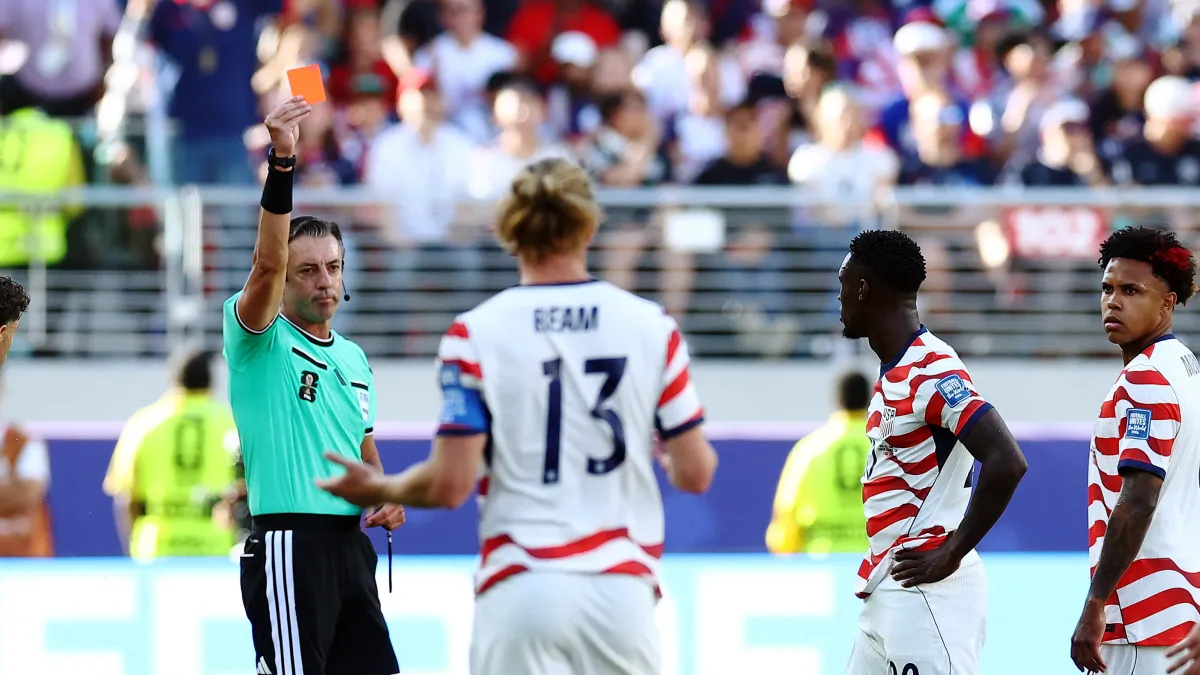
The United States may be through in the World Cup 2026 knockout stage, but the mood around the camp has shifted sharply after Folarin Balogun’s dismissal against Bosnia and Herzegovina. For supporters tracking the FIFA World Cup 2026, the key question is simple: can a red card be overturned once it has been shown on the sport’s biggest stage?
The short answer is no — at least not through the usual route many fans know from domestic football. Balogun’s sending-off means the U.S. must now prepare for Belgium without their starting striker, a major setback as the tournament moves into its most unforgiving phase.
Why Balogun’s suspension matters
Balogun had already made his mark before he was dismissed, scoring in a 2-0 win that pushed the Americans forward. Yet a straight red card changes everything. In the FIFA World Cup 2026, any player sent off is automatically banned for the next match, unless FIFA’s disciplinary authorities decide to adjust the punishment.
That leaves the U.S. in a difficult spot. Belgium, ranked among the stronger sides left in the bracket, will test a squad now forced to rethink its attacking plan. In a tournament where depth and momentum shape every tie, losing a first-choice forward can alter the entire tactical picture.
What FIFA rules say about red cards
Unlike many club competitions, the World Cup 2026 does not offer teams a standard appeal process for on-field red card decisions. FIFA regulations make clear that a referee’s decision on facts connected with play is final. That means the incident itself cannot simply be reviewed and erased because a federation disagrees with it.
What can happen, however, is disciplinary review in limited circumstances. FIFA can:
- uphold the automatic one-match suspension,
- increase the sanction if the incident is deemed more serious,
- or in some cases assess related disciplinary matters.
But the core decision from the referee is generally not open to challenge through a normal appeal. For anyone following the World Cup 2026 schedule and waiting on roster news, that makes Balogun’s absence the most likely outcome.
Could another legal route still be explored?
There is some discussion around the Court of Arbitration for Sport and its tournament-based fast-track division. In theory, that forum can hear urgent sporting disputes during major competitions. In practice, though, such bodies are usually reluctant to interfere with pure refereeing decisions made during live matches.
So while legal curiosity exists, expectations should remain low. The most realistic reading is that Balogun will miss the next tie, and the U.S. must adapt quickly as the Football World Cup 2026 intensifies.
Read more: explore the latest global sports developments
What this means for the U.S. moving forward
With the World Cup 2026 fixtures narrowing and pressure rising, the Americans now face a test of squad resilience. Coaches will need to reshuffle the front line, while senior players must absorb the emotional impact of losing one of the team’s most dangerous attackers.
Key talking points ahead of the Belgium match include:
- who replaces Balogun in the starting XI,
- whether the U.S. changes shape to protect midfield control,
- and how the team manages transitions without its usual focal point up front.
Explore: more breaking stories and tournament talking points
For fans following the World Cup 2026 teams, this is the kind of disciplinary moment that can reshape a knockout path. One decision in one match can carry consequences well beyond 90 minutes.
A familiar frustration for supporters
Red-card controversy is hardly new in major tournaments, but the lack of a true appeal route often frustrates players, coaches, and fans alike. When stakes are this high, every disciplinary call becomes part of the wider story — especially in an expanded event already drawing huge attention around the 48 team World Cup format.
Read more: explore wider international news and event coverage
As the World Cup 2026 moves deeper into the elimination rounds, the U.S. will have little time to dwell on what might have been. The takeaway is clear: Balogun’s red card is set to stand, and America’s next chapter at the FIFA World Cup 2026 will likely begin without him.