




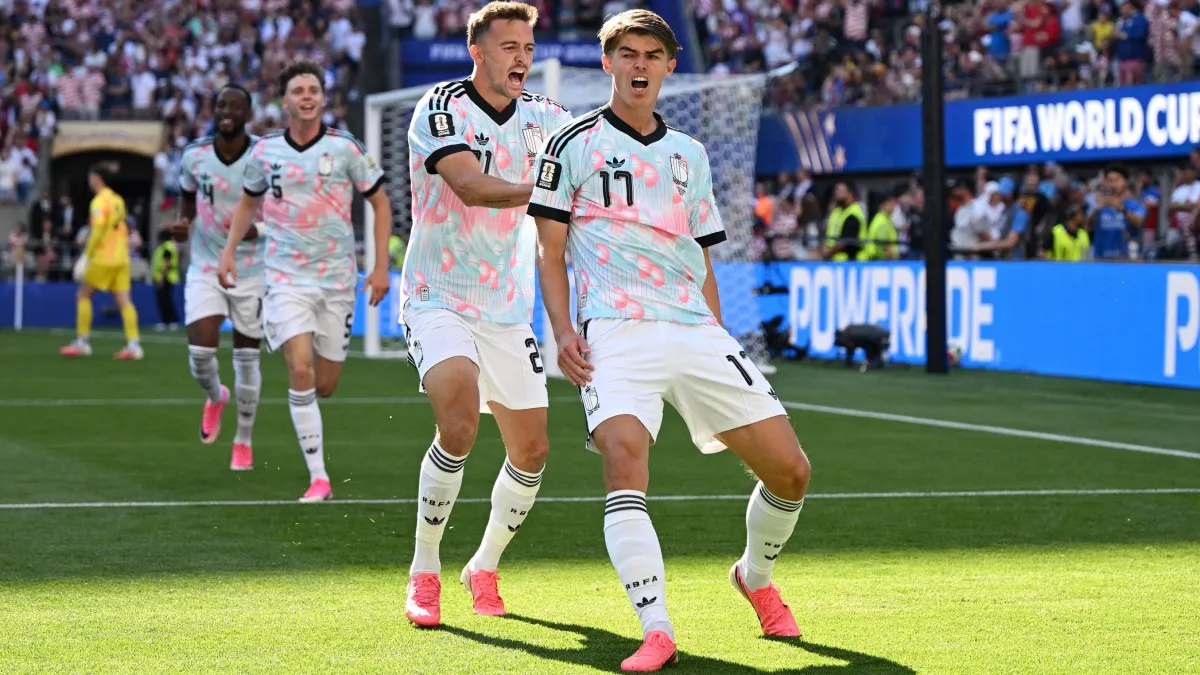
International football thrives on symbolism, and Belgium’s latest kit choice offered more than a visual surprise. During a high-profile knockout clash, the team stepped away from its familiar red look and appeared in a pastel blue-and-pink strip, prompting immediate questions from viewers following the World Cup 2026 buildup and wider tournament storylines.
The reason was practical at first: avoiding a color clash with the opposition’s alternate strip. But the design also carried a cultural message, turning a standard uniform decision into one of the more memorable style moments connected to the FIFA World Cup 2026 conversation. Instead of a routine change shirt, Belgium wore a design inspired by national identity, art history and modern presentation on football’s biggest stage.
Why Belgium wore an unexpected away kit
Belgium’s traditional palette is rooted in the national flag — red, yellow and black — with red usually dominating the home shirt. Yet in this case, match officials and kit coordinators needed clearer visual separation, a familiar issue in elite tournaments and one that will matter throughout the World Cup 2026 schedule as more teams, broadcast audiences and global kick-off windows come into play.
The away shirt solved that problem with a softer color scheme. Rather than using a generic backup design, Belgium opted for a concept-driven kit that stood out immediately on screen. For fans tracking the Football World Cup 2026, it was a reminder that shirt selections can be shaped by both sporting regulations and storytelling.
The René Magritte influence behind the design
The pastel look was inspired by René Magritte, one of Belgium’s most celebrated artists and a defining figure of surrealism. The shirt’s blue base and pink circular details reference the atmosphere and forms associated with his work, especially the dreamlike imagery that made his paintings world famous.
That artistic connection gives the jersey an identity beyond branding. In an era when major tournaments are judged not only by results but also by visual culture, Belgium’s choice fit the mood of a 48 team World Cup where presentation, heritage and global recognition all matter.
Read more: Explore more sports features and tournament coverage
What it means for fans following the tournament
Kit stories often travel fast because they connect casual viewers with deeper national narratives. For supporters already searching for updates on World Cup 2026 teams, World Cup 2026 groups and the World Cup 2026 format, moments like this help bring personality to the competition.
- It highlights how teams balance tradition with modern design.
- It shows why alternate kits are essential in major events.
- It gives broadcasters and fans a talking point beyond the scoreline.
- It reinforces the cultural value teams carry into international football.
These details will continue to matter as anticipation builds around the World Cup 2026 draw, the World Cup 2026 fixtures and the eventual World Cup 2026 knockout stage. In a competition spread across multiple nations and venues, identity can be expressed in many ways — and kits are one of the clearest.
Explore: Read more on major sporting events and media trends
A modern football statement, not just a wardrobe switch
There will always be debate about whether a national side should move away from classic colors. Traditionalists often prefer familiar looks, while others welcome innovation when it has a genuine cultural basis. Belgium’s shirt did both jobs at once: it met matchday needs and honored a major Belgian creative figure.
As attention shifts toward the World Cup 2026 host countries, World Cup 2026 venues and the overall fan experience, these visual choices will keep shaping how teams are remembered. The biggest tournaments are not only about goals and results; they are also about the symbols nations choose to wear.
Read more: Explore more culture, style and travel stories
Belgium’s eye-catching switch was ultimately a smart and meaningful one. For anyone following World Cup 2026, it was a timely reminder that even a jersey change can reveal something bigger about football, culture and the way the global game presents itself.