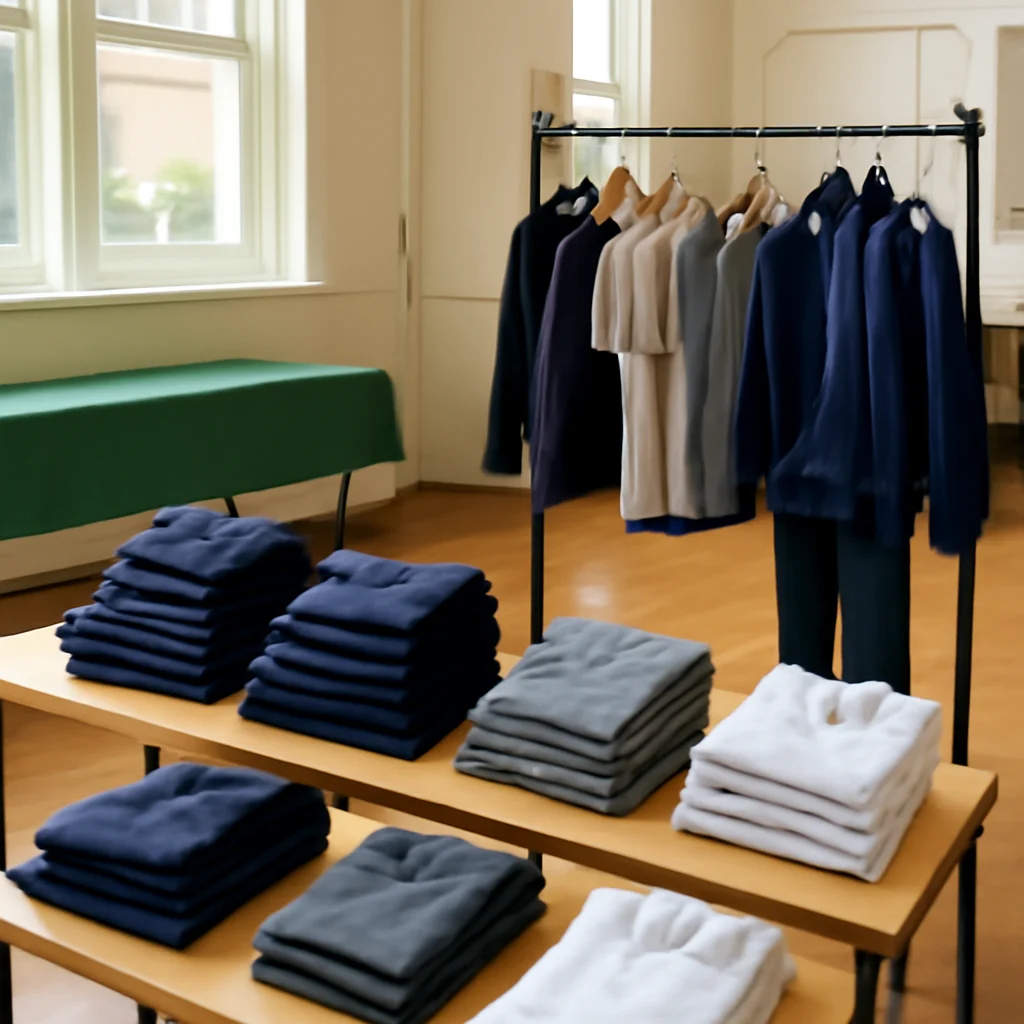
School uniform costs could fall under new proposed rules from the Department of Education and Youth, with schools asked to make policies more affordable, practical, inclusive and sustainable. A public consultation is expected to open in early 2027.
School uniform costs at the centre of proposed changes
Minister for Education and Youth Hildegarde Naughton presented the proposals to Cabinet on 24 November 2026. The plans are intended to ease pressure on family budgets while ensuring that uniform requirements do not prevent students from participating fully in school life.
Schools that retain a uniform would be expected to consult parents and students, explain their requirements clearly and demonstrate that items offer value for money. Uniform policies would also have to be published online, including approved suppliers, information on uniform banks or swap shops, and measures supporting affordability and inclusion.
What the draft proposals include
- Uniforms should be widely available from multiple retailers.
- No more than two crested or unique items should be required across the full uniform, including PE clothing.
- Where crests are used, sew-on or iron-on versions should be chosen instead of embroidered crests.
- Schools should not require one specific jacket.
- PE clothing should use generic items where possible, or the ordinary school uniform should also be suitable for PE.
- Schools should allow case-by-case flexibility, including for students with sensory needs.
- Uniform banks and swap shops should be encouraged.
Why school uniform costs are being reviewed
The Department said recent surveys show that many families are worried about meeting back-to-school expenses. Barnardos’ 2026 survey found that 65% of primary-school parents were somewhat worried about uniform costs, while 11% were very worried. Among post-primary parents, the corresponding figures were 78% and 19%.
The Irish League of Credit Unions reported that 59% of respondents considered back-to-school costs a financial burden. Of those who said costs had risen compared with the previous year, 63% identified school uniforms as an area where spending had increased.
The proposals also address comfort and physical activity. A University of Limerick study involving more than 1,400 students found that over half believed uniforms negatively affected participation in physical activity. The Department said flexible requirements could support PE, walking and cycling, as well as students with sensory needs.
Consultation planned for early 2027
The consultation is intended to run from early January until February 2027. Parents, students, schools, patrons, suppliers, local businesses and members of the public will be invited to submit views. Children and young people will also be engaged during the process.
The Department said engagement has begun with relevant Government bodies and trade associations representing uniform suppliers and retailers. A full SME Test will assess the effect of any eventual measures on local businesses.
The Education (Charter and Miscellaneous Provisions) Bill 2019 is also due to progress to Report Stage in the Dáil. The Bill is intended to support greater transparency and stronger engagement between schools, students and parents.
What happens next?
The measures announced are proposals, not yet final rules. The consultation responses will help shape future guidance or legislation, including the balance between reducing school uniform costs, preserving school identity and supporting local retailers.
For families, the central issue is whether uniform policies become simpler, more flexible and easier to access. The consultation will provide an opportunity to influence how those changes are developed.
Key takeaway: the proposed reforms put school uniform costs, choice and flexibility under review, with families and school communities expected to have a direct say from early 2027.