

Paraguayan President Santiago Peña resigned on 5 November 2026 as a banking crisis involving Ueno Bank deepened, leaving almost three million customers unable to access their accounts. His departure came as lawmakers prepared to vote on impeachment proceedings linked to alleged conflicts of interest and questions about oversight of the lender.
Vice President Pedro Alliana is expected to take office, while regulators and the government face pressure to restore access to deposits, protect public funds and explain how Ueno Bank’s financial position deteriorated so sharply.
What happened in Paraguay?
Paraguay’s central bank took control of Ueno Bank earlier in the week after an intervention uncovered a severe capital shortfall. Investigators reportedly found poorly documented lending and expenses that had been recorded incorrectly as assets. Once those accounts were corrected, the bank’s capital fell to about half the legal minimum.
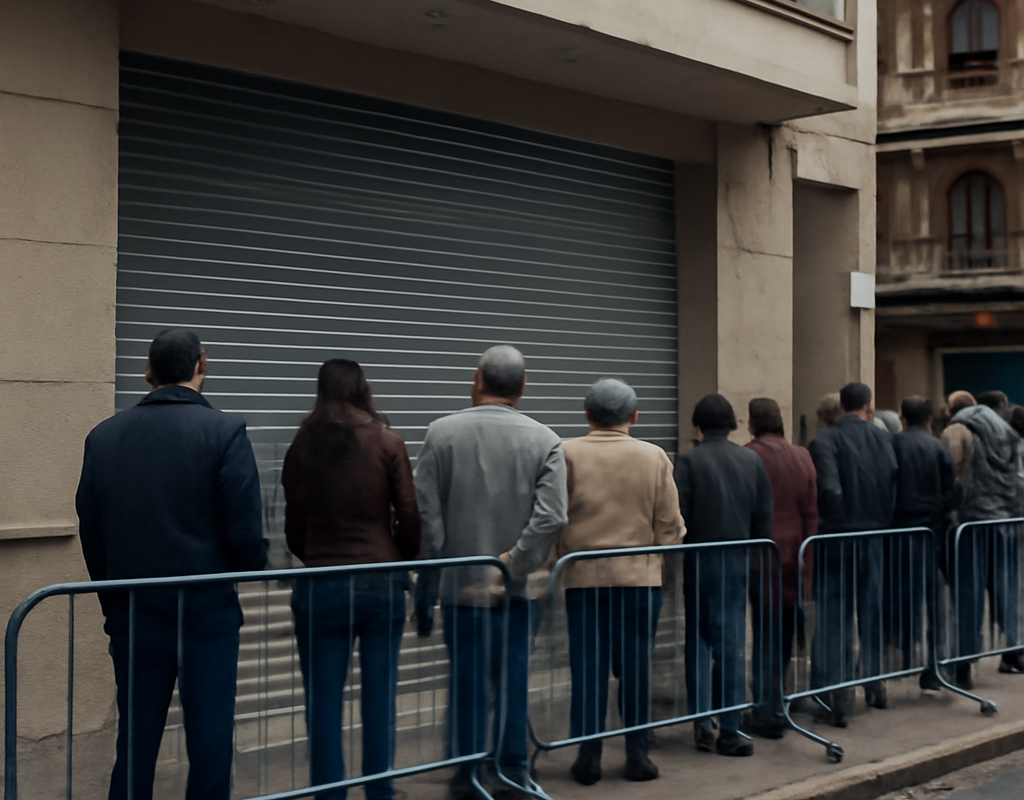
Ueno’s digital banking application, payment cards and transfers stopped functioning, while branches closed. Long queues formed in Asunción as customers tried to withdraw money or obtain information about their savings. A rush to move funds to other banks also caused problems for rival institutions’ mobile applications.
The crisis affected more than individual depositors. Ueno held public money, including funds connected to Paraguay’s pension and health system and the operators of the country’s major hydroelectric dams. The bank also employed around 7,000 people whose wages were reportedly affected by the closure.
Why did Santiago Peña resign?
Peña announced his resignation in a video published on X while lawmakers debated impeachment. He said he was stepping down to protect national stability, social peace and democratic institutions, and apologised to citizens who felt that he had failed them.
The resignation followed a planned impeachment vote in the Chamber of Deputies, which the source report described as unanimous. The allegations centred on a potential conflict of interest and the relationship between the president, Ueno’s ownership structure and the agencies responsible for supervising the bank.
Peña had held a stake in a company linked to Ueno until the previous year. He also appointed Carlos Carvallo, who had led Financiera Ueno before it became a bank, to head Paraguay’s central bank. That appointment has intensified scrutiny because the central bank was responsible for regulating Ueno.
How large was Ueno Bank?
Ueno grew rapidly after receiving a banking licence in 2023. The institution developed from an established finance company into a prominent digital lender with more than 70 branches. It promoted cashback offers, sponsored Paraguay’s national football team and became highly visible in public life.
The bank claimed that more than 60% of Paraguay’s adults were customers. Its reported customer base meant that the failure was not confined to a small group of investors or businesses. It disrupted access to ordinary household accounts, government payments and commercial transactions across the country.
According to the report, Ueno held approximately $800 million (€712 million) in public deposits as recently as October 2026, representing about one-quarter of its total deposits. The scale of those holdings raises questions about risk management and the safeguards applied when public bodies place money with commercial banks.
What were regulators investigating?
Concerns about Ueno reportedly emerged before the intervention. Central bank inspectors found indications of risky lending to insiders, including large loans to companies connected to the bank’s owners. Some of those loans allegedly exceeded legal limits or lacked sufficient collateral.
The report said that almost $39 million (€35 million) was transferred to three related companies on a single day in September 2025. These claims remain part of the scrutiny surrounding the bank’s collapse and its supervision; they should not be treated as a final judicial finding.
Peña had defended Ueno and the central bank’s supervision as recently as October, rejecting concerns as a campaign that could unsettle the public. The subsequent intervention and political crisis have placed the government’s economic credibility under pressure.
What happens to depositors and workers?
The immediate challenge is restoring access to money and determining how deposits will be protected. Customers are waiting for information on the process for recovering savings, pensions and other payments held at Ueno.
Key issues include:
- when customers will regain access to accounts and payment services;
- how insured or protected deposits will be reimbursed;
- how public funds held at the bank will be secured;
- whether employees will receive outstanding wages; and
- whether further investigations or legal proceedings will follow.
The source material does not confirm a timetable for reopening accounts or reimbursing customers. Those details will depend on the central bank, the government and any formal resolution process established for Ueno.
Why the crisis matters beyond Paraguay
The collapse has become both a financial and political crisis. Paraguay had built a reputation for steady economic management and was viewed favourably by foreign investors. The failure of a rapidly expanding bank with extensive public and retail links may prompt questions about regulatory independence, related-party lending and the protection of depositors.
It also highlights the risks created when a financial institution grows quickly while becoming deeply connected to political networks, public bodies and essential payment services. The consequences will depend on whether authorities can separate the banking resolution from political pressure and provide transparent, legally supported compensation arrangements.
What happens next?
Vice President Pedro Alliana is expected to assume the presidency following Peña’s resignation. Paraguay’s institutions must now manage the constitutional transition while addressing the banking emergency.
Authorities will need to clarify Ueno’s financial position, protect eligible deposits and establish accountability for any regulatory or management failures. Further information from Paraguay’s central bank, government and legislature will be essential before the full cost of the collapse can be assessed.
The immediate takeaway from this developing political and financial crisis is clear: Paraguay must restore access to customers’ money while ensuring that investigations into Ueno Bank’s lending, ownership links and supervision are conducted transparently. The outcome will shape public confidence in both the country’s banking system and its democratic institutions.