

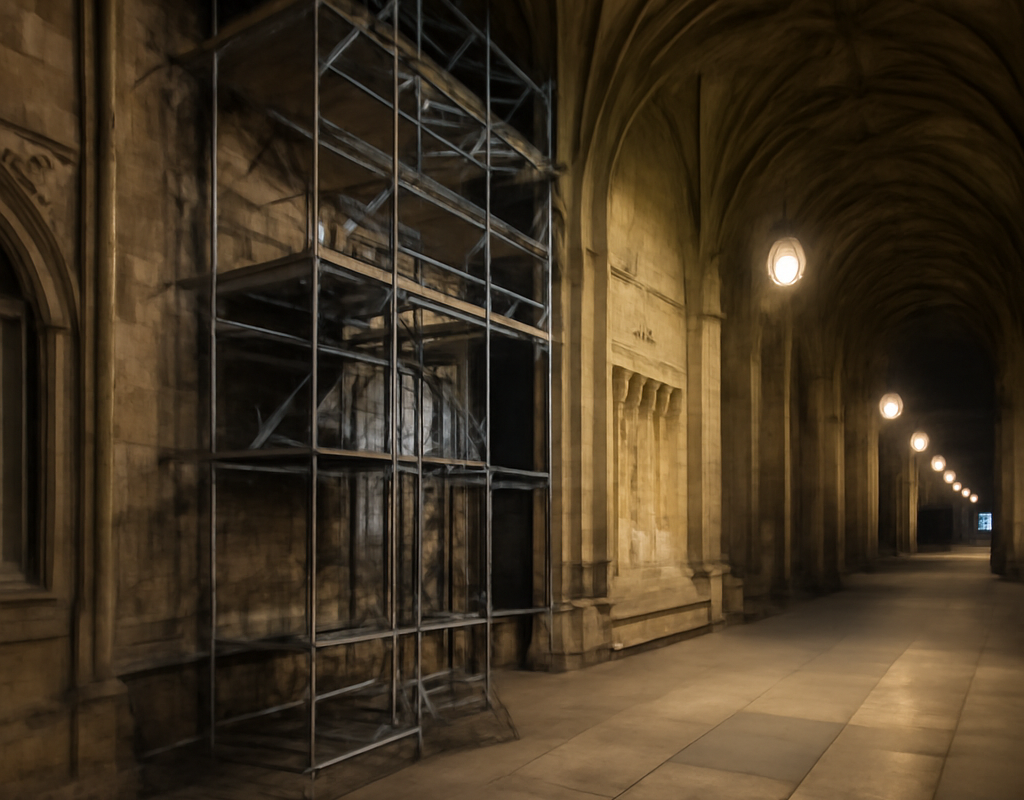
Standfirst: Years of political disagreement and repeated postponements have left the Palace of Westminster renovation programme under growing pressure. The warnings raise questions about the safety of the UK Parliament’s historic estate, the cost of delay and the future of parliamentary proceedings.
The UK Parliament’s ageing Palace of Westminster could face serious structural and operational risks if its long-delayed renovation is postponed further. Political disagreements over how and when to restore the building have repeatedly slowed progress, leaving one of the country’s most important public institutions operating in an increasingly difficult environment.
The development is a national UK issue rather than an EU decision, but it has wider European relevance because the Palace of Westminster is central to the country’s democratic system and to scrutiny of policies affecting the UK’s relationship with the European Union.
Why the Palace of Westminster renovation is under pressure
The Palace of Westminster is an historic parliamentary complex that requires extensive modernisation. Its ageing infrastructure includes systems that must support daily parliamentary activity, public access, security and the preservation of a major heritage site.
Renovation plans have been repeatedly delayed amid political disagreement over the scale, timetable and cost of the work. Each postponement creates a difficult balance between keeping Parliament functioning and carrying out essential repairs.
The central concern is that deterioration may continue while decisions are deferred. In the event of a major failure involving the building’s structure, utilities or safety systems, the consequences could extend beyond repair costs.
- Parliamentary debates and votes could be disrupted.
- Staff, visitors and elected representatives could face safety risks.
- Emergency repairs could be more expensive than planned works.
- Temporary relocation could become unavoidable at short notice.
- Heritage features could be damaged if maintenance is delayed.
What is at stake for the UK Parliament?
The Palace of Westminster is not simply an office complex. It houses the House of Commons and the House of Lords, making it a working centre of national decision-making. Any major interruption would affect legislation, committee scrutiny and the ability of ministers to answer questions in Parliament.
A serious incident could also create constitutional and logistical complications. Parliament would need suitable alternative facilities, secure communications, voting arrangements and access for members of the public and the media.
Those challenges would be particularly significant during periods of political pressure, including major budget decisions, national emergencies or negotiations involving the UK and other European countries.
A heritage building with modern demands
The Palace combines protected historic architecture with the requirements of a modern legislature. Renovation work therefore involves more than replacing outdated equipment. It must also preserve the building’s character while improving fire safety, accessibility, heating, electrical systems and digital infrastructure.
That combination makes the project technically complex. Work must be carefully planned to avoid unnecessary damage to historic interiors and to ensure that Parliament can continue operating safely during the transition.
Why renovation decisions have been delayed
The source of the current concern is not a single technical failure but the prolonged inability to settle the project’s future. Political disagreement has affected decisions about timing, temporary accommodation and the extent of the proposed works.
Large public projects often require agreement on funding and governance before construction can begin. For the Palace of Westminster, those questions are complicated by the need to protect a nationally significant landmark while maintaining parliamentary services.
Delaying a decision may appear to reduce immediate disruption, but it can also increase uncertainty. Contractors, engineers and heritage specialists need a clear programme, while parliamentary authorities need to plan staffing, security and access arrangements well in advance.
What could happen next?
The immediate priority is likely to be a clear assessment of the building’s condition and the risks associated with further postponement. Parliament and the relevant authorities will also need to establish whether existing maintenance measures are sufficient to keep the complex operating safely.
Any renewed renovation plan would need to address several questions:
- What work is considered essential for safety and continued operation?
- How long would the programme take?
- Where would parliamentary activity take place during major construction?
- How would the project be funded and overseen?
- What safeguards would protect the building’s historic fabric?
A decision to proceed would not remove all disruption. However, a defined schedule could allow parliamentary authorities to manage temporary arrangements rather than responding to an emergency caused by a sudden failure.
Why this matters beyond Westminster
The condition of the Palace of Westminster has implications for confidence in public institutions. A functioning legislature must be able to meet, debate, scrutinise government decisions and pass laws in a safe and reliable setting.
The issue also highlights a wider challenge faced by historic public buildings across Europe: how to preserve architectural heritage while adapting infrastructure to modern safety, accessibility and environmental standards.
For Ireland and other European countries, the practical impact is indirect. The UK Parliament remains responsible for decisions affecting UK domestic policy, UK-EU relations and arrangements connected with Northern Ireland. Any prolonged disruption would therefore be relevant to observers tracking British legislation and cross-border developments, even though the renovation itself is a UK matter.
Conclusion
The warning over a possible “catastrophic failure” underlines the risks created by continued delay to the Palace of Westminster renovation. The key issue is now whether political leaders and parliamentary authorities can agree a credible, properly managed programme before deterioration forces events to dictate the timetable.