

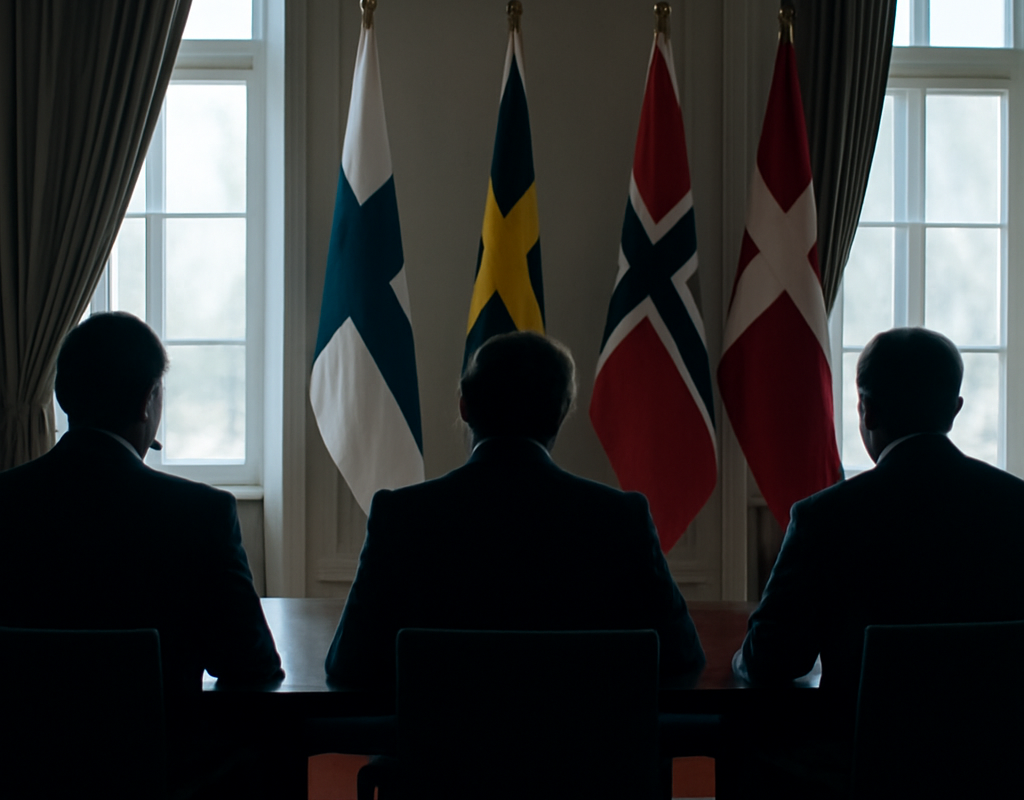
Finland and Norway have urged Russian President Vladimir Putin to end the war in Ukraine after a 90-minute phone call, but the initiative has exposed an unusual public disagreement with Denmark and Sweden. The exchange took place as the four Nordic countries gathered in Helsinki for a leaders-level session of the Nordic Council.
Finnish President Alexander Stubb and Norwegian Prime Minister Jonas Gahr Støre said they contacted Putin to press for de-escalation and meaningful negotiations. Danish Prime Minister Mette Frederiksen and Swedish Prime Minister Ulf Kristersson questioned whether the call could advance peace or risk weakening Europe’s unified position.
What happened in the call with Putin?
The initiative came from Stubb and Støre, who recently hosted peace talks in Oslo. According to their public read-outs, both leaders told Putin that Russia should end its full-scale invasion of Ukraine and enter negotiations aimed at a stable settlement.
Stubb described the conversation as frank and substantive. He said the war’s outcome would directly affect Finland, Norway and wider European security, while stressing that ending the conflict required direct discussion.
Støre said the leaders emphasised de-escalation. The read-out also clarified that the two leaders spoke as representatives of their own countries rather than on behalf of Europe as a whole.
Following the conversation with Putin, Stubb and Støre spoke with Ukrainian President Volodymyr Zelenskyy. Zelenskyy thanked them for what he described as active support.
Why Denmark criticised the initiative
Frederiksen responded sharply after details of the call became public. She argued that Russia’s continuing escalation in Ukraine and its wider pressure on European countries provided no clear evidence that Moscow was seeking peace.
The Danish prime minister also questioned what the discussion could achieve, drawing a comparison with earlier independent diplomatic initiatives, including former Hungarian Prime Minister Viktor Orbán’s visit to Moscow. Her central concern was that separate national contacts could make it harder for European countries to maintain a common approach to Russia.
Denmark, Finland, Norway and Sweden have generally presented a united position on the war. They are among Kyiv’s important bilateral supporters and have backed stronger sanctions against Moscow. That makes the public disagreement particularly notable, even though the four governments remain aligned on their support for Ukraine.
Sweden voices more cautious concern
Swedish Prime Minister Ulf Kristersson adopted a less confrontational tone but expressed similarly low expectations. He said his impression was that most parties wanted peace, while questioning whether Putin shared that objective.
Kristersson warned that direct talks could become risky if they divided Europe’s voice. At the same time, he left room for diplomacy, saying that discussions would be useful if they made Russia more willing to accept a credible peace on Ukraine’s terms.
His comments highlight the difference between opposing diplomatic contact outright and questioning its timing, coordination and likely outcome. Sweden’s position, as presented by Kristersson, was that dialogue could have value but should not undermine European unity.
What Finland and Norway say diplomacy can achieve
Støre defended the decision to engage directly with Putin, arguing that European contacts should complement messages from the United States. The transatlantic partners have not always used identical approaches to diplomatic engagement over the war.
For Finland and Norway, the security consequences of the conflict are immediate and regional. Finland shares a long border with Russia, while Norway is a NATO member with strategic importance in the High North. Their leaders’ argument is that direct communication may be necessary even when expectations of an immediate breakthrough are limited.
However, the call did not produce a reported agreement or confirmed change in Russia’s position. The Kremlin’s statement following the conversation retained a hard-line tone, reinforcing scepticism in Copenhagen and Stockholm.
Why the Nordic disagreement matters
The dispute is not evidence of a formal break in Nordic cooperation, nor does it indicate that Finland or Norway have abandoned support for Ukraine. Rather, it reveals a disagreement over diplomatic method.
- Finland and Norway: argue that direct engagement can support de-escalation and complement wider international pressure.
- Denmark: warns that uncoordinated national initiatives may weaken Europe’s collective position.
- Sweden: accepts that dialogue may be useful but questions whether it will influence Moscow.
- Ukraine: remains central to the discussion, with both Finnish and Norwegian leaders speaking to Zelenskyy after the Putin call.
The episode also underlines the limits of describing European policy as completely uniform. Governments may share the same objectives—support for Ukraine, stronger European security and pressure on Russia—while disagreeing about whether direct communication with the Kremlin is worthwhile.
What happens next?
The immediate question is whether the conversation leads to further diplomatic contact or remains a one-off initiative. No new peace agreement or formal negotiation framework was announced in the information available.
Finland, Norway, Denmark and Sweden are expected to continue coordinating through Nordic and wider European channels. Their governments will also face pressure to explain how any future contacts with Moscow fit alongside sanctions, military assistance and political support for Ukraine.
For Europe, the key issue is whether national diplomacy can complement collective action without creating competing messages. The Helsinki meeting showed that Nordic countries remain closely aligned on the importance of Ukraine’s security, but not necessarily on how best to pursue an end to the war.
Conclusion
The call between Finland, Norway and Putin has produced no confirmed diplomatic breakthrough, but it has exposed a significant debate over Europe’s approach to Russia. Finland and Norway see value in direct communication, while Denmark and Sweden fear that uncoordinated talks could dilute European unity. The next stage will depend on whether the initiative produces meaningful engagement without weakening support for Ukraine.