- The Railway Order application was made in July 2024
- The project was approved by An Coimisiún Pleanála on 19 August 2025
- A judicial review was later resolved
- The Railway Order then became live
- New DART+ trains for the Dublin to Drogheda route are expected from the first half of 2027
- Major DART+ Coastal North works may begin from 2028
- Full construction is expected to take several years once funding, contractors and detailed design are in place
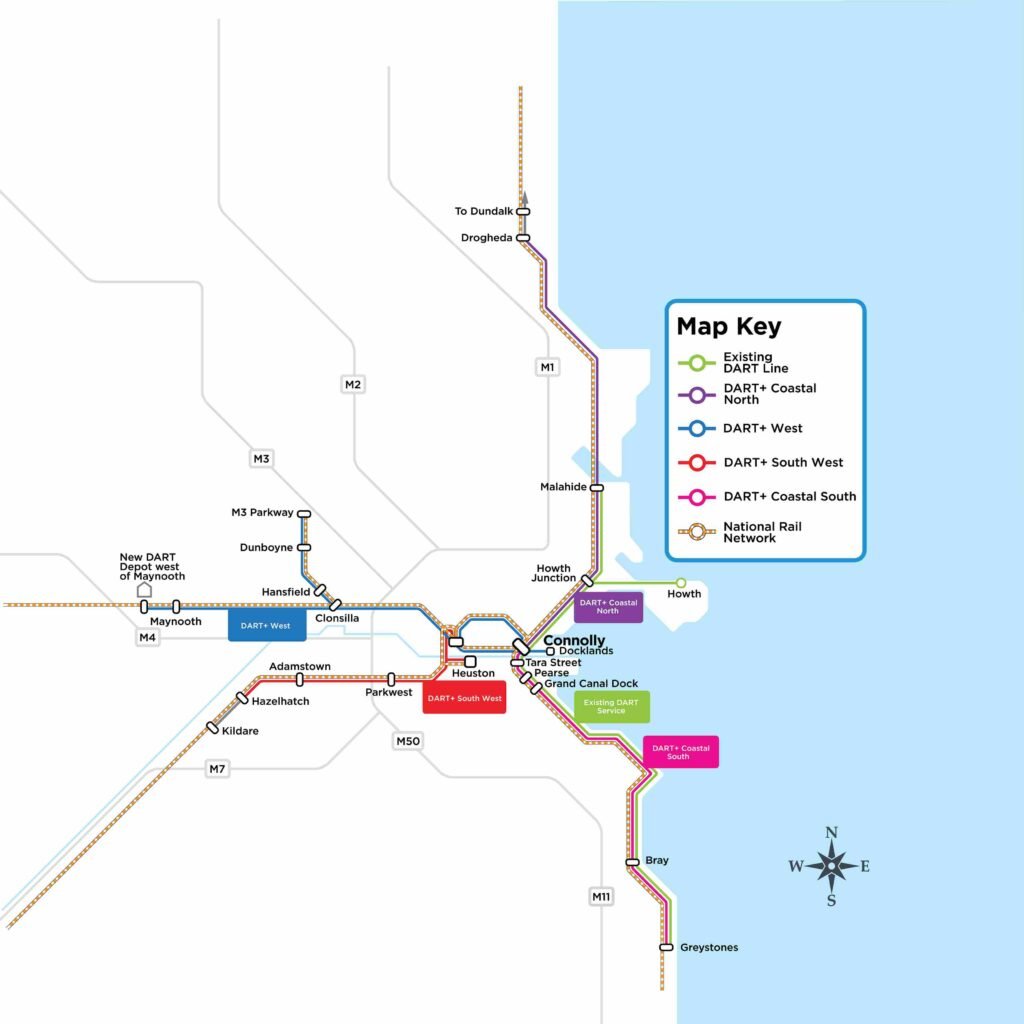
The long-awaited DART to Drogheda is one of the biggest rail upgrades planned for Ireland’s east coast, with DART+ Coastal North set to extend the electrified DART network from Malahide to Drogheda MacBride Station and bring major improvements to commuter rail services between Drogheda and Dublin city centre.
For thousands of passengers travelling from Drogheda, Laytown, Gormanston, Balbriggan, Skerries, Rush and Lusk, Donabate, Malahide, Clongriffin, Howth Junction, Howth and Dublin, the project could transform daily travel. It promises more trains, more capacity, cleaner transport, better reliability and a stronger public transport connection across North Dublin, East Meath and Louth.
The DART+ Coastal North project is not just about new trains. It is about changing the future of commuter rail in Ireland. The plan includes electrification, re-signalling, station upgrades, new platforms, battery-electric DART+ trains, charging infrastructure, track works and a major service increase on one of the country’s busiest rail corridors.
“DART+ Coastal North will extend the DART network from Malahide to Drogheda.”
That single line is the heart of the project. After years of discussion, planning and commuter frustration, the DART to Drogheda is moving closer — but the full upgrade will still take time.
What is DART+ Coastal North?
DART+ Coastal North is part of the wider DART+ Programme, a major Irish Rail and National Transport Authority investment programme designed to expand the DART network across the Greater Dublin Area and improve rail capacity on key commuter routes.
The Coastal North section focuses on the existing Northern Line, extending DART services north from Malahide to Drogheda MacBride Station. The project also includes planned works on the Howth Branch, where future service patterns may be adjusted to improve capacity and reliability.
The project will upgrade the railway corridor between Dublin and Drogheda, supporting more frequent trains and a cleaner electric rail network.
Key parts of the project include:
- Electrification from Malahide to Drogheda
- Around 37km of railway electrification
- Re-signalling of the Northern Line
- New DART+ train infrastructure
- A new platform at Drogheda MacBride Station
- Works at Malahide, Clongriffin and Howth Junction & Donaghmede
- Depot works at Fairview and Drogheda
- Battery-electric train charging infrastructure at Drogheda
- Track layout changes to improve capacity
- Future timetable improvements for commuters
- Better rail services between Drogheda and Dublin city centre
In simple terms, DART+ Coastal North is designed to bring more trains, more space and more reliable commuter services to the Dublin to Drogheda rail corridor.
Why DART to Drogheda matters
The Drogheda to Dublin train route is already one of Ireland’s most important commuter lines. Every day, thousands of people travel from towns in Louth, East Meath and North Dublin into Dublin city centre for work, college, school, appointments and transport connections.
Population growth has made the route even more important. Drogheda has become a major commuter town, while places like Balbriggan, Skerries, Donabate, Rush and Lusk, Laytown and Gormanston continue to grow.
The problem is simple: the demand for rail has grown faster than the service capacity.
DART+ Coastal North is designed to answer that pressure by increasing train frequency and passenger capacity.
“Peak services from Drogheda to Dublin city centre are planned to rise from 11 trains to 24 trains.”
That is a major increase for commuters. It means more peak-time options and less pressure on packed trains.
Passenger capacity is also expected to rise sharply.
“Peak passenger capacity from Drogheda to Dublin city centre is planned to increase from around 12,500 passengers to 26,600 passengers.”
For regular passengers, this is the difference between a crowded commuter line and a more usable high-capacity rail service.
The DART+ Coastal North route
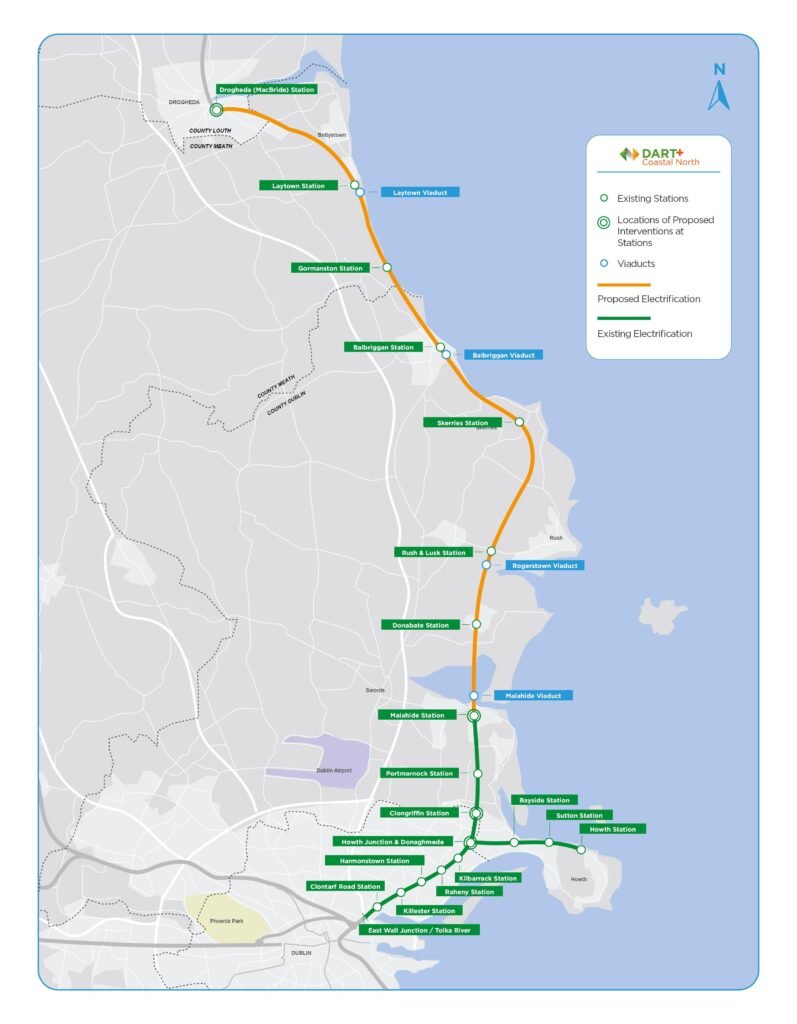
The DART+ Coastal North route will follow the existing rail corridor between Dublin city centre and Drogheda, including the Howth Branch.
The project is expected to benefit major commuter towns and stations across the Northern Line, including:
- Dublin city centre
- Clontarf Road
- Raheny
- Howth Junction & Donaghmede
- Howth
- Clongriffin
- Portmarnock
- Malahide
- Donabate
- Rush and Lusk
- Skerries
- Balbriggan
- Gormanston
- Laytown
- Drogheda MacBride Station
This makes the DART to Drogheda project a major transport upgrade for North Dublin, East Meath and Louth.
For Malahide, it changes the station’s role from the end of the DART line to part of a longer electrified corridor. For Drogheda, it means joining the DART network. For Balbriggan, Skerries and Donabate, it means stronger rail capacity and better commuter access to Dublin.
DART to Drogheda timeline
The DART to Drogheda timeline has moved through several major stages, including planning, public consultation, approval and legal review.
The key timing points are:
- The Railway Order application was made in July 2024
- The project was approved by An Coimisiún Pleanála on 19 August 2025
- A judicial review was later resolved
- The Railway Order then became live
- New DART+ trains for the Dublin to Drogheda route are expected from the first half of 2027
- Major DART+ Coastal North works may begin from 2028
- Full construction is expected to take several years once funding, contractors and detailed design are in place
“New DART+ trains are expected before the full electrification project is complete.”
That is an important point for commuters. The full DART+ Coastal North infrastructure will take years, but new battery-electric trains may bring improvements earlier on the Dublin to Drogheda line.
When will the new DART+ trains arrive?
The new DART+ fleet is one of the most visible parts of the project.
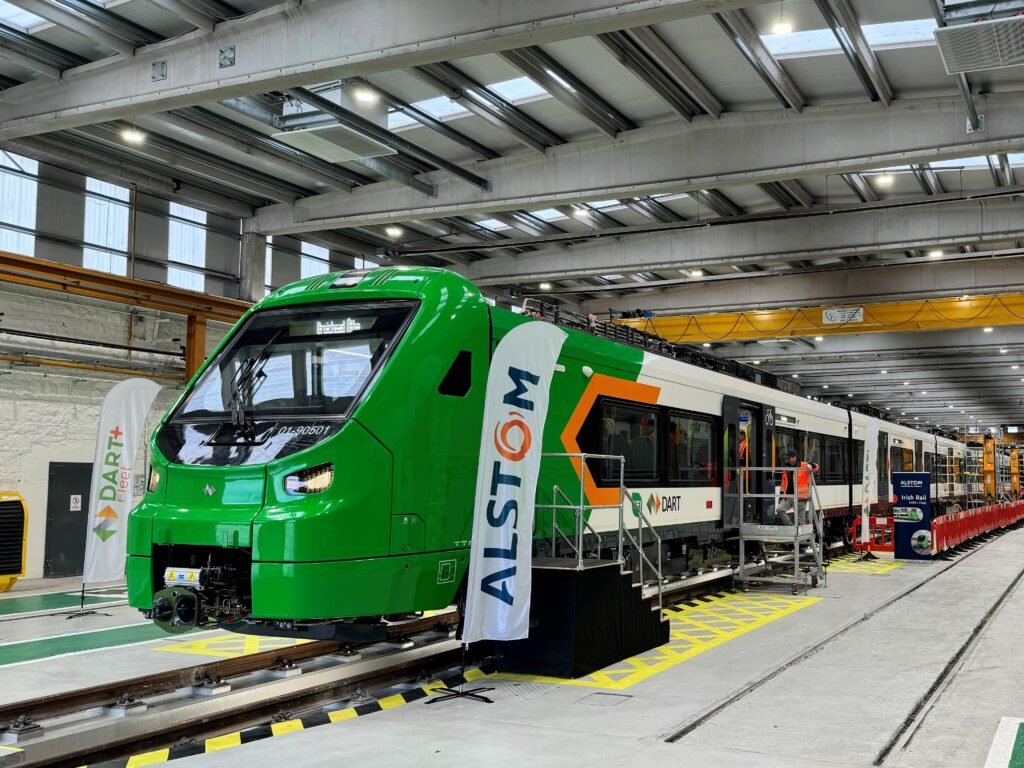
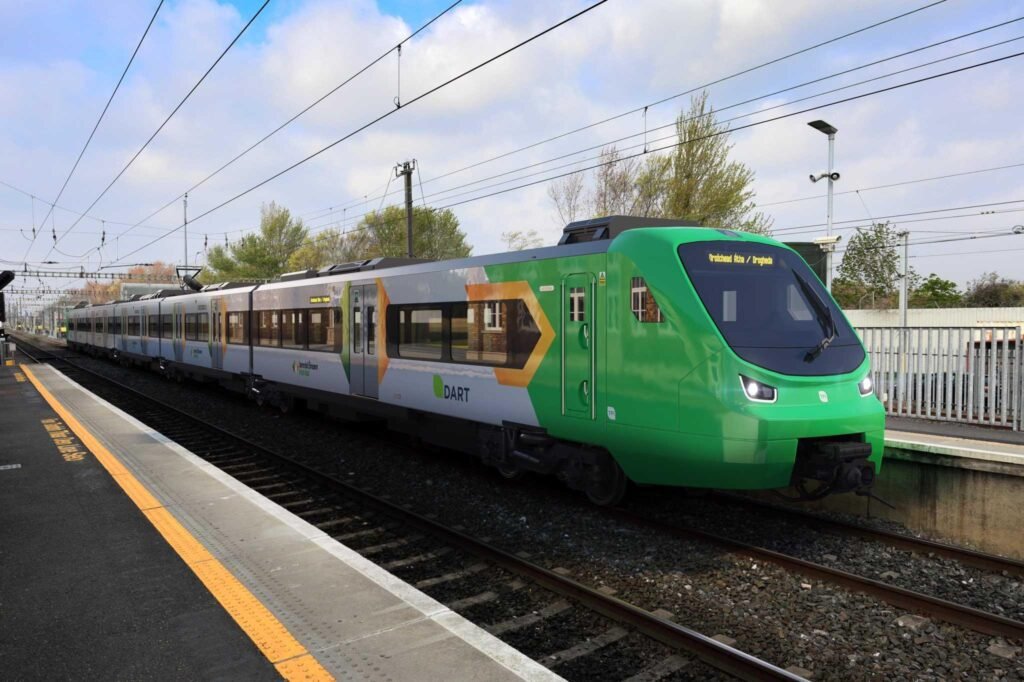
Irish Rail’s new DART+ trains include electric and battery-electric carriages. These modern trains are designed to increase capacity, improve comfort and support more sustainable rail travel.
The first order includes 95 new DART carriages, mainly intended for the busy Dublin to Drogheda line.
“The first 95 new DART+ carriages are expected to enter service mainly on the Dublin to Drogheda line from the first half of 2027.”
A second order of 90 carriages is expected from 2028, while another order of 100 carriages will help replace older DART fleet trains.
The new trains are expected to offer:
- More passenger space
- Better accessibility
- More modern interiors
- Bicycle storage
- Device charging
- Improved security
- CCTV
- Better energy efficiency
- Electric and battery-electric operation
- Cleaner rail travel
For commuters on the Drogheda to Dublin route, the new DART+ fleet could be the first major sign that the project is moving from planning into real-world service improvement.
Why battery-electric DART trains are important
Battery-electric DART trains are a key part of the DART+ Coastal North plan because they can operate before the full line is electrified.
These trains can use overhead electric power where wires are available and battery power where electrification is not yet complete.
This is especially important for the Drogheda route because full electrification from Malahide to Drogheda will take time. Battery-electric trains allow Irish Rail to begin improving services earlier.
At Drogheda, fast-charging infrastructure is planned to support these trains.
“Battery-electric DART+ trains can recharge at Drogheda before returning towards Dublin.”
This means Drogheda MacBride Station will become more than just a destination. It will become a major operating point in the future DART network.
Drogheda MacBride Station: a key part of the project
Drogheda MacBride Station is central to the DART+ Coastal North project.
The station is expected to receive infrastructure works to support higher-frequency services and battery-electric train operation. This includes a new platform, track layout changes and charging infrastructure.
For Drogheda commuters, this is a major upgrade. The town will become part of the expanded DART network, improving its connection to Dublin and strengthening its role as one of Ireland’s most important commuter towns.
The planned station improvements are important because they support:
- More frequent train services
- Battery-electric train charging
- Better service turnaround
- Higher passenger capacity
- Improved operational flexibility
- Stronger Drogheda to Dublin commuter links
For passengers, the key benefit is simple:
“Drogheda is set to become a major hub in the expanded DART network.”
What happens at Malahide?
Malahide is currently the northern end of the DART network on the Northern Line. DART+ Coastal North will extend electrification north from Malahide towards Drogheda.
This changes the role of Malahide in the DART system. Instead of being the end point of the DART route, it becomes part of a longer electrified corridor serving North Dublin, East Meath and Louth.
Works around Malahide are expected to support future service flexibility, improved rail operation and better use of the Northern Line.
For passengers, Malahide remains an important station, but the bigger transport story is that the DART network moves beyond it.
What happens to the Howth Branch?
The Howth Branch is one of the more sensitive parts of DART+ Coastal North because future service patterns may change.
The project includes works at Howth Junction & Donaghmede to allow better operational flexibility. This could support a future shuttle service between Howth and Howth Junction, while also allowing more capacity on the main Northern Line.
However, the final Howth Branch service model will depend on demand, timetable planning and consultation.
“The final Howth Branch timetable will depend on future service planning and passenger demand.”
For Howth commuters, the important issue will not just be whether the service is direct or shuttle-based. The real test will be whether the final service is frequent, reliable, easy to use and well connected.
A shuttle can work if it is simple and frequent. But if it increases inconvenience, passengers will need clear answers.
Why has DART+ Coastal North been delayed?
The DART to Drogheda project has faced delays and timeline changes because it is a major rail infrastructure scheme involving planning, legal, funding and construction processes.
This is not a small upgrade. It involves electrification, signalling, platforms, charging infrastructure, depots, track works, public consultation, environmental assessment and construction along a live railway line.
The main reasons for delay include:
Planning and Railway Order process
Large rail projects in Ireland require formal approval. The Railway Order process includes detailed design, environmental assessment, public consultation and planning review.
That takes time because the project affects stations, bridges, roads, tracks, homes, land, public spaces and existing rail services.
Public consultation
DART+ Coastal North passed through public consultation stages. Feedback from residents, commuters, local authorities and community groups can affect design decisions and project timelines.
This is a normal part of large infrastructure planning, but it can add time.
Judicial review
After planning approval, the project faced a judicial review. That created uncertainty until the legal process was resolved.
“The judicial review was resolved, allowing the Railway Order to take effect.”
This was a major step because it removed one of the key obstacles to the project progressing.
Procurement and contractor appointment
Even after approval, Irish Rail still needs to move through procurement and appoint design-and-build contractors.
This is a complex process because DART+ Coastal North includes electrification, signalling, platforms, track changes and station works.
Funding and phased delivery
The project also depends on funding allocation and phased delivery. Some supporting works may happen earlier, while full electrification and major construction may begin later.
That is why major works may not begin until 2028.
What could happen before full electrification?
Not every improvement has to wait until the full DART+ Coastal North infrastructure is finished.
The arrival of new battery-electric DART+ trains could bring earlier changes to the Drogheda to Dublin route.
Possible early benefits include:
- Newer trains on the Dublin to Drogheda line
- More capacity on selected services
- Battery-electric train operation
- Charging infrastructure at Drogheda
- Platform works
- Track improvements
- Timetable improvements where possible
However, the full DART-style service increase will depend on the delivery of the wider infrastructure, including electrification, signalling and operational planning.
“The new trains may arrive earlier, but the full service transformation depends on the full DART+ Coastal North project.”
What this means for Drogheda commuters
For Drogheda commuters, DART+ Coastal North could be one of the most important public transport upgrades in years.
The Drogheda to Dublin route is already heavily used, especially during morning and evening peak times. More frequent trains and higher passenger capacity would make a real difference.
The benefits for Drogheda could include:
- More trains to Dublin
- Higher peak-time capacity
- Less overcrowding
- Better commuter reliability
- New DART+ trains
- Cleaner rail travel
- Stronger public transport links
- Better long-term town connectivity
- Improved appeal for homebuyers and renters
The biggest planned change remains the peak service increase.
“Drogheda to Dublin city centre services are planned to rise from 11 trains to 24 trains during the three-hour peak.”
That is why the DART to Drogheda project matters so much.
What this means for Balbriggan, Skerries and Donabate
DART+ Coastal North is also a major project for Balbriggan, Skerries and Donabate.
These towns are already popular with commuters because they offer coastal living, access to Dublin and relatively better value compared with central Dublin housing.
Better rail services could strengthen their appeal even further.
Potential benefits include:
- Better commuter rail frequency
- More capacity on peak services
- Stronger links to Dublin city centre
- Better public transport reliability
- More sustainable travel options
- Reduced car dependency
- Stronger support for local growth
For Balbriggan, improved rail capacity could support the town’s long-term development. For Skerries and Donabate, better DART-style connectivity could strengthen their position as attractive coastal commuter towns.
What this means for house prices and commuter towns
Transport upgrades often influence property demand, especially in commuter towns around Dublin.
The DART extension to Drogheda could increase interest in towns along the Northern Line because better rail services make commuting easier and more predictable.
Towns that could benefit from improved commuter appeal include:
- Drogheda
- Laytown
- Gormanston
- Balbriggan
- Skerries
- Rush and Lusk
- Donabate
- Malahide
Better transport does not automatically mean house prices will rise. Property values depend on mortgage rates, housing supply, schools, local amenities, town centre quality, employment, planning and affordability.
But over the long term, better rail connectivity usually improves the appeal of commuter towns.
“A more frequent DART-style service can make towns feel closer to Dublin, even when the distance stays the same.”
That is why DART+ Coastal North is not just a transport story. It is also a housing, lifestyle and regional development story.
What this means for Dublin traffic and climate
DART+ Coastal North is also part of Ireland’s wider move towards sustainable transport.
The Dublin to Drogheda corridor puts heavy pressure on roads, especially the M1 and local commuter routes. If trains become more frequent, more reliable and less crowded, more people may choose rail instead of driving.
The project could support:
- Reduced road congestion
- Lower transport emissions
- Cleaner commuting
- Better air quality
- Less pressure on parking
- More sustainable town growth
- Better public transport access
- Stronger rail-led development
Electric and battery-electric trains also help reduce reliance on diesel operations, supporting Ireland’s climate and public transport goals.
What commuters should watch next
The DART to Drogheda project has passed major planning and legal milestones, but several important steps still need to happen before passengers see the full benefit.
Commuters should watch for:
- Confirmation of project funding
- Design-and-build contractor appointment
- Detailed construction timetable
- Progress on Drogheda charging infrastructure
- Delivery and testing of new DART+ trains
- Updates on the first half of 2027 train rollout
- Final timetable consultation
- Howth Branch service decisions
- Station works at Drogheda, Malahide, Clongriffin and Howth Junction
- Construction disruption notices
- Service frequency announcements
- Any early battery-electric train operation before full electrification
The key question for passengers is not just when construction starts. It is when commuters will see more trains, more space and better reliability.
Why this project is bigger than one rail line
DART+ Coastal North is bigger than a single railway upgrade. It connects transport, housing, climate, town growth, commuting and regional development.
The project affects how people move between Drogheda and Dublin, how North Dublin towns grow, how East Meath connects into the capital, and how Ireland builds public transport for a growing population.
If delivered well, the DART to Drogheda could:
- Make commuting easier
- Support growing towns
- Reduce traffic pressure
- Improve public transport capacity
- Encourage more people to use rail
- Support climate goals
- Improve access to Dublin city centre
- Strengthen the Northern Line
- Make Drogheda a stronger rail hub
- Improve long-term regional connectivity
It is one of the most important public transport upgrades for the north-east commuter belt.
The bottom line
DART+ Coastal North is a major step towards bringing the DART to Drogheda and improving commuter rail between Drogheda and Dublin city centre.
The project will extend the DART network from Malahide to Drogheda, support around 37km of electrification, introduce new DART+ trains, improve rail capacity and increase peak services on the busy Northern Line.
The headline numbers are significant:
“Drogheda to Dublin city centre services are planned to increase from 11 trains to 24 trains during the three-hour peak.”
“Passenger capacity is planned to rise from around 12,500 to 26,600 passengers.”
- New DART+ trains are expected to begin entering service mainly on the Dublin to Drogheda line from the first half of 2027, while major DART+ Coastal North works may begin from 2028, subject to funding, procurement and final delivery planning.
- There have been delays because of planning, consultation, legal review, procurement and funding. But the project has passed important milestones, and the direction is clear.
- The DART is heading north.
- For Drogheda, Balbriggan, Skerries, Donabate, Malahide and the wider east coast commuter belt, DART+ Coastal North could mean more trains, more capacity, cleaner travel and a stronger rail connection to Dublin.
- If delivered properly, the DART to Drogheda could become one of the most important rail upgrades in Ireland — not just for commuters, but for the future of transport, housing and sustainable growth along the east coast.