

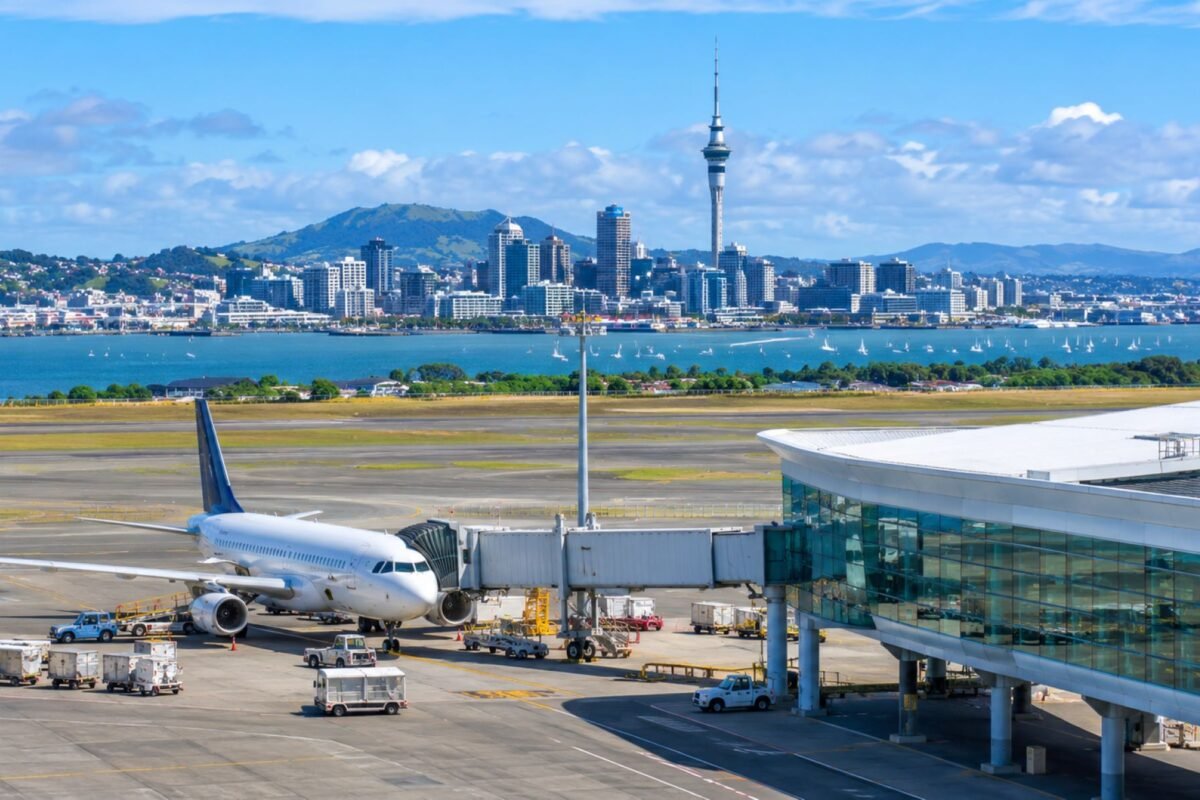
New Zealand recorded 3,713,089 international visitor arrivals in the 12 months ending August 2026, confirming a strong and broadening recovery in inbound tourism. While Auckland remains the country’s main international gateway, rapid growth at Queenstown and Christchurch airports shows that more visitors are reaching South Island destinations directly.
The latest figures, reported by Statistics New Zealand, also point to shifting demand across New Zealand’s key source markets. Australia remains the largest contributor, while arrivals from China recorded particularly strong annual growth.
International arrivals approach pre-pandemic levels
Overseas visitor arrivals increased by 9% compared with the previous 12-month period. The annual total is now equivalent to 95.2% of the 3,899,309 arrivals recorded in the year ending August 2019.
August alone brought 248,714 international visitors, an 8% rise compared with August 2025. The figures suggest that New Zealand’s tourism recovery is moving beyond a simple rebound in visitor numbers, with leisure, business events and regional travel all contributing to demand.
- Annual arrivals to August 2026: 3,713,089
- Annual increase: 9%
- August 2026 arrivals: 248,714
- Recovery against August 2019: 95.2%
- Median length of stay: 9.3 days
Auckland remains the principal international gateway
Auckland Airport handled 144,974 overseas visitor arrivals in August, up 3.4% year on year. Across the 12-month period, the airport processed 2,389,161 international arrivals, an increase of 4.8%.
The airport continues to function as more than an entry point for Auckland itself. Its international connections distribute visitors across the North and South islands, supporting leisure travel, education, business trips and visits to friends and relatives.
Australia remains the leading source market, and Sydney, Melbourne and Brisbane were the largest final overseas departure points for visitors arriving in August. Singapore and several East Asian hubs also continue to support connecting itineraries into New Zealand.
South Island airports record faster growth
Queenstown arrivals rise 19.2%
Queenstown Airport recorded 58,863 overseas arrivals in August, 19.2% more than in the same month a year earlier. Over the year ending August 2026, the airport handled 512,889 international arrivals, representing growth of 17.1%.
The increase reinforces Queenstown’s importance as an international gateway for alpine tourism, winter sports and adventure travel. Direct access is particularly significant for visitors whose itineraries centre on the South Island rather than Auckland.
Christchurch posts the strongest annual growth among major airports
Christchurch Airport processed 30,975 overseas visitor arrivals in August, up 15.7%. Its annual total reached 555,102, an increase of 20.3%—the strongest annual growth among New Zealand’s three largest international airports.
As the main aviation hub for Canterbury and a base for onward journeys through the South Island, Christchurch’s performance highlights the growing role of regional gateways in New Zealand’s visitor economy.
Wellington remains stable despite a monthly decline
Wellington Airport recorded 10,662 international arrivals in August, down 3.8% year on year. However, its annual total edged up 0.3% to 174,166 arrivals.
The capital’s airport continues to support government, corporate and cultural travel, as well as domestic connections between the North and South islands.
Hamilton and Dunedin expand from smaller bases
Hamilton and Dunedin recorded relatively modest monthly arrival totals but significant annual percentage increases from low post-pandemic bases.
- Hamilton Airport: 1,907 arrivals in August and 29,015 for the year, an annual increase of 493.2%.
- Dunedin Airport: 842 arrivals in August and 9,019 for the year, up 488.7% annually.
These figures should be read in context: large percentage increases from a small base do not represent the same volume as growth at Auckland, Christchurch or Queenstown. They do, however, indicate that international connectivity is reaching a wider range of New Zealand regions.
China becomes the fastest-growing major source market
Australia supplied 1,599,141 visitors during the year, making it New Zealand’s dominant international market. The United States followed with 389,162 arrivals, while China contributed 327,287.
Chinese arrivals increased by 32.8% annually, the strongest growth among the leading source markets. Taiwan also rose 26%, while Singapore increased 11.5%. Japan recorded 7.1% growth, although arrivals from South Korea declined by 3.3%.
Visitor demand was led by holidays, with annual leisure arrivals rising 15.2% to 1,975,220. Conference and convention travel grew by 25.7%, while the median stay fell slightly from 9.5 to 9.3 days.
What the figures mean for New Zealand tourism
The data points to a tourism market that is recovering in both scale and geographical reach. Auckland remains essential to international connectivity, but Queenstown and Christchurch are growing more quickly and reducing the sector’s dependence on a single gateway.
For tourism operators, the next challenge will be converting higher arrival numbers into longer stays and greater regional spending. Strong demand from Australia, the United States and China provides a solid base, while the expansion of South Island gateways creates opportunities for visitors to begin their journeys closer to the attractions they intend to visit.
Conclusion
New Zealand’s 3.71 million international arrivals in the year ending August 2026 show that inbound tourism has recovered to 95.2% of its pre-pandemic benchmark. Auckland remains the central aviation hub, but the faster growth recorded by Queenstown and Christchurch signals a more geographically diverse visitor economy. Maintaining international air links to these regional gateways will be central to the next phase of New Zealand’s tourism recovery.