

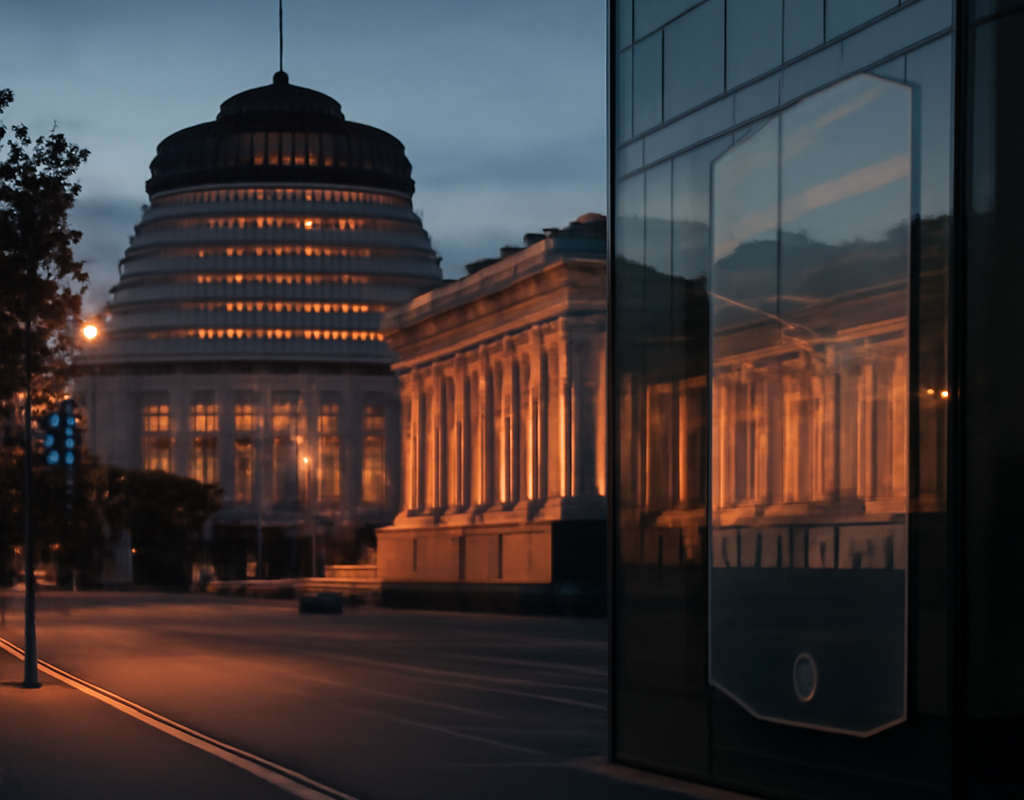
New Zealand has introduced legislation that would restrict social media access for people under 16, placing responsibility on online platforms to prevent children from using covered services. The proposal is part of a wider international debate about child safety, online harms and the responsibilities of technology companies.
Under the proposed law, companies including Meta could face fines of up to 10% of their global revenue if they fail to comply. However, the measure is not yet in force: it must proceed through New Zealand’s legislative process before any obligations become legally binding.
What New Zealand’s proposed social media ban would do
The legislation would establish an age-based restriction aimed at keeping under-16s off social media platforms. The central responsibility would fall on service providers rather than solely on parents or young users.
That approach could require platforms to introduce or strengthen age-assurance systems. Depending on the final wording, companies may need to identify users who are below the minimum age and take reasonable steps to prevent access.
The source information does not confirm which services would be covered, how age verification would operate, or whether specific exemptions would apply. Those details would need to be clarified during parliamentary consideration and in any regulations supporting the law.
Potential penalties for technology companies
The proposed maximum penalty is significant. Platforms that fail to meet their responsibilities could be fined as much as 10% of global revenue. The prospect of large financial sanctions is intended to encourage compliance by companies operating across borders.
A penalty of this kind would also raise practical questions about enforcement, appeals, evidence of non-compliance and the way global revenue would be calculated. Those issues are likely to matter to both regulators and technology firms as the proposal develops.
Why the proposal matters beyond New Zealand
The debate reflects a broader question facing governments: how should children be protected online while preserving privacy, access to information and freedom of expression?
Social media platforms are global businesses, but the rules governing them are often set nationally or regionally. New Zealand’s proposal could therefore become relevant to international technology companies even though it would be a national measure rather than an EU law.
Supporters of age restrictions generally point to concerns about exposure to harmful content, cyberbullying, addictive design features and the pressure created by constant online comparison. Critics of strict bans may question whether age checks can be implemented reliably without collecting sensitive personal data, and whether young people could simply move to less regulated services.
The effectiveness of the measure would depend on several factors:
- How the law defines a covered social media platform
- What age-assurance methods companies must use
- How privacy and data protection are protected
- Which regulator would investigate suspected breaches
- How penalties would be imposed and challenged
- Whether exemptions are created for education, messaging or other services
How the proposal compares with European digital regulation
The New Zealand initiative is separate from European Union digital regulation. It should not be described as a new EU rule, European legislation or a change to Ireland’s law.
EU institutions are already developing and enforcing rules that affect online platforms, including obligations under the Digital Services Act. That framework addresses areas such as illegal content, platform accountability and protection of minors, but it is not the same as a blanket national ban on social media for everyone under 16.
For Irish users and companies, the immediate position is unchanged by the New Zealand announcement. Any future effect in Ireland would depend on decisions taken by the Irish Government, the European Union or both. A New Zealand law could nevertheless contribute to international discussions about age limits and platform responsibility.
What happens next?
The proposal must be examined through New Zealand’s parliamentary process. Its provisions could be amended before final approval, and the source information does not provide a confirmed start date.
Key issues to watch include:
- Publication of the complete bill and explanatory material
- Parliamentary debate and committee scrutiny
- Any changes to the proposed penalties or age threshold
- Details of the enforcement and age-verification system
- Whether the legislation is formally passed and when it would take effect
Until those steps are completed, the restriction remains a proposal rather than an active legal ban.
Conclusion
New Zealand’s proposed social media ban for under-16s would place substantial new obligations on technology companies and could impose penalties of up to 10% of global revenue. The policy is still at the legislative stage, so its final scope, enforcement model and start date remain to be established. Its progress will be watched internationally as governments consider how best to protect children online without undermining privacy and access to digital services.