

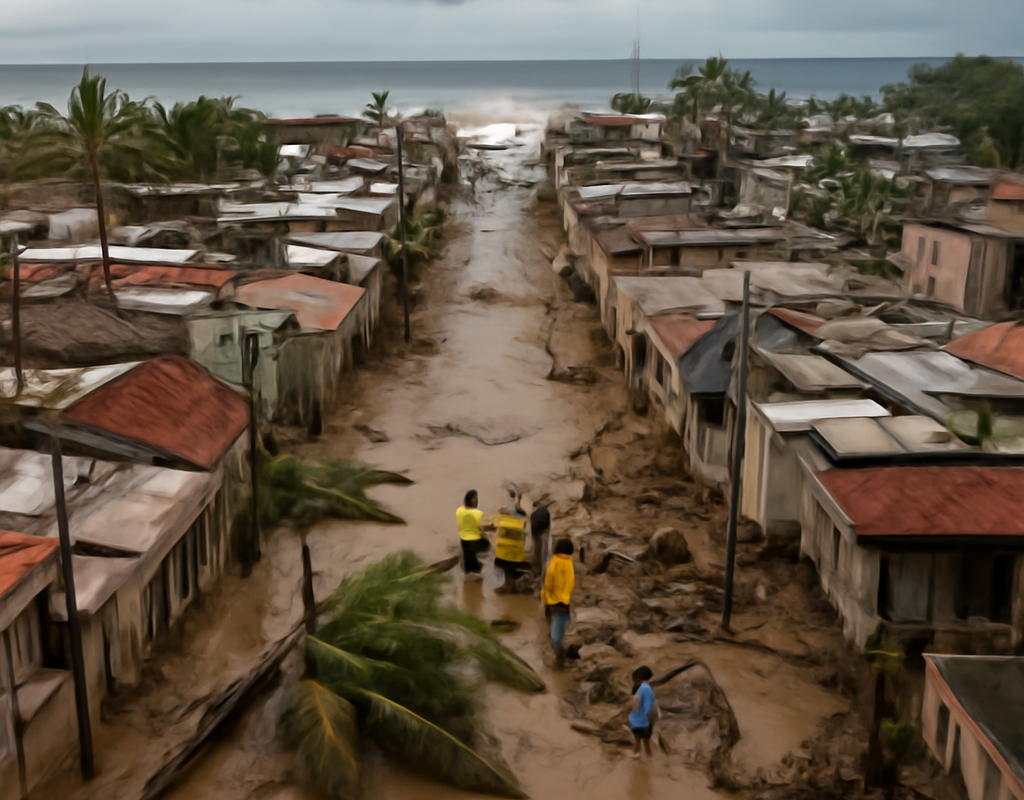
Standfirst: Hurricane Polo brought flooding, powerful waves and property damage to parts of Mexico after making landfall as a Category 3 storm. Communities along the Pacific coast have been clearing debris and assessing the impact as the hurricane weakened.
Hurricane Polo has caused significant flooding and destruction in parts of Mexico, with footage showing inundated streets, damaged roofs, fallen branches and residents clearing debris from affected areas. The storm made landfall on Mexico’s Pacific coast as a Category 3 hurricane before weakening as it moved through the region.
The episode is a major regional emergency rather than an EU policy development, but it is relevant to wider international coverage because of its impact on communities, infrastructure and emergency services in one of North America’s most exposed coastal countries.
Hurricane Polo brings flooding and coastal damage
Images from affected areas show the immediate effects of the storm, including flooded roads, damaged buildings and debris scattered across neighbourhoods. In coastal locations, strong winds and powerful swells placed additional pressure on homes, public infrastructure and beachfront barriers.
Residents in Acapulco were filmed trying to move a boat to safety as heavy waves struck the Pacific coastline. Elsewhere, people and military personnel worked to reinforce exposed sections of the seafront as the hurricane passed offshore and gradually lost strength.
The damage varied by location, but the combination of rainfall, storm surge, high winds and large waves created dangerous conditions for communities in coastal and low-lying areas.
Key effects reported
- Flooding affected streets and populated areas.
- Roofs, branches and other structures were damaged.
- Heavy swells battered parts of Mexico’s Pacific coast.
- Residents cleared debris and attempted to protect property.
- Emergency and military personnel helped reinforce vulnerable coastal areas.
Storm weakened after reaching Category 3 intensity
Hurricane Polo reached Mexico’s Pacific coast as a Category 3 hurricane. Earlier coverage showed the storm producing powerful waves and prompting preparations in coastal communities, including Acapulco and areas around Lázaro Cárdenas.
By the time residents were dealing with the worst visible damage, Polo had weakened from its earlier intensity. The reduction in wind strength did not immediately remove the danger, since flooding, unstable structures, blocked roads and rough seas can continue to threaten communities after a hurricane begins to weaken.
Authorities and residents therefore faced a second phase of the emergency: checking damaged buildings, clearing roads, supporting affected households and monitoring areas where floodwater remained hazardous.
Why Pacific hurricanes can cause widespread disruption
Mexico’s Pacific coastline includes densely populated urban areas, ports, tourism centres and communities located close to the sea. A major storm can affect transport, electricity, communications, housing and local businesses even when its strongest winds are concentrated in a relatively narrow area.
Flooding can also extend beyond the immediate landfall zone. Intense rainfall may overwhelm drainage systems, while rivers and streams can rise after the centre of a hurricane has moved away. Coastal waves and storm surge add a separate risk for homes and infrastructure near the shoreline.
The reported conditions illustrate why hurricane preparedness involves more than tracking wind speed. Residents may also need to respond to:
- rapidly rising water;
- falling trees and damaged power lines;
- unsafe roofs and weakened buildings;
- blocked roads caused by debris;
- dangerous surf and coastal flooding.
What happens next for affected communities?
The immediate priority is to protect people, assess damage and restore access to essential services. Local authorities and emergency teams must determine which roads remain passable, identify buildings that may be unsafe and assist residents whose homes have been damaged or flooded.
Communities also need to remain alert after the storm’s landfall. Floodwater may conceal hazards, while damaged electrical infrastructure and unstable structures can create risks during clean-up operations. Further rainfall could worsen flooding in already saturated areas.
The longer-term recovery will depend on the extent of the damage to homes, businesses, roads and coastal infrastructure. Residents may require temporary shelter, repairs and assistance replacing essential belongings.
Mexico’s wider exposure to extreme weather
The hurricane arrived during a Pacific season described in the source material as unusually severe, with extreme weather contributing to both flooding and drought conditions. Such events place pressure on emergency planning, water management and local infrastructure.
For Mexico, the challenge is not limited to individual storms. Coastal communities must prepare for repeated exposure to intense rainfall, high winds and dangerous seas, while inland regions can face flooding after heavy precipitation. Effective preparedness depends on early warnings, evacuation planning, resilient construction and rapid emergency response.
Hurricane Polo’s effects show how quickly a powerful weather system can disrupt daily life. Even after winds weaken, recovery can take considerably longer as residents clear debris, repair buildings and regain access to essential services.
Conclusion
Hurricane Polo has left flooding, damaged property and dangerous coastal conditions across parts of Mexico after making landfall as a Category 3 storm. Although the hurricane weakened, affected communities still face the difficult work of clean-up, safety checks and recovery. The central lesson from this emergency is that the impacts of a major hurricane continue well beyond landfall, particularly where flooding and coastal damage overlap.