

Standfirst: Thirty-eight students from the Chios Music School joined Berlin choirs and ensembles for a musical celebration at Berlin Cathedral. The exchange, supported by the Greek-German Youth Foundation, used choral music to strengthen links between young people in Greece and Germany.
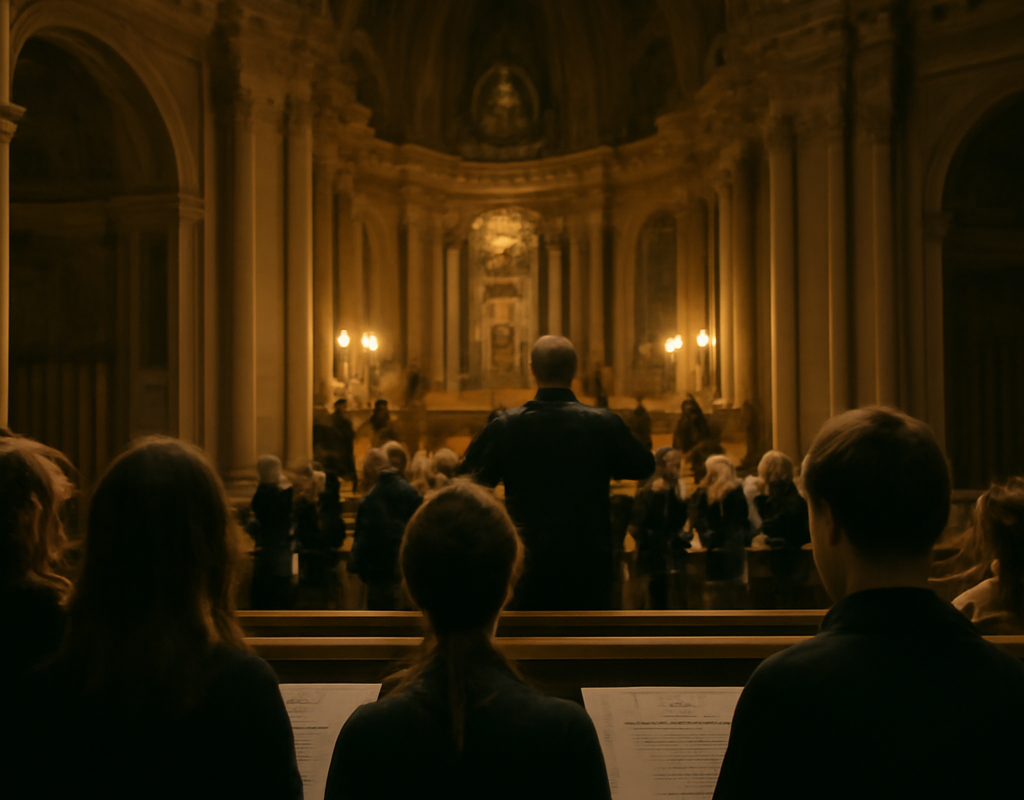
Music became a language of friendship when Greek and German students performed together at Berlin Cathedral during a German Unity Day celebration. The event brought around 240 participants together, including pupils from Greece’s Chios Music School and singers from Berlin’s Sing-Akademie.
The performance took place on 3 October, following a week-long cultural exchange in the German capital. It combined sacred and secular music, Greek and German repertoire, and a public singalong dedicated to Europe.
A Greek-German musical exchange in Berlin
The 38 students from Chios performed alongside choirs and instrumental groups connected with the Sing-Akademie zu Berlin. Their programme included works by Felix Mendelssohn, Francis Poulenc, Benjamin Britten, Louis Lewandowski and Gustav Holst.
The performers also presented Greek works, including “Ora kali” by Michalis Adamis and “Messa Latina” by Yannis Christou. The mixture of musical traditions reflected the broader purpose of the project: giving young people the opportunity to learn from one another while creating a shared artistic performance.
Kai-Uwe Jirka, artistic director of the Sing-Akademie zu Berlin, conducted the service and concert at the Berliner Dom. The occasion formed part of a ceremony held annually around German Unity Day, which commemorates the reunification of Germany.
‘What is Germany without Europe?’
The event also carried a wider civic message. After the service, the choirs and members of the public gathered on the cathedral steps overlooking the Lustgarten for the “Sing for Europe!” initiative.
Jirka said the annual gathering was created to promote togetherness and reject racism and hatred. He described the participation of young people from Greece and Germany as a strong message in support of Europe.
The public singing was not presented as a political rally, but as a community event centred on music and participation. It allowed the audience to join the performers and extended the concert beyond the cathedral.
Music as a bridge between cultures
The exchange was designed to go beyond a single concert. Students from both countries learned songs in each other’s languages and experienced different approaches to choral performance.
Friederike Stahmer, who founded the Berlin Sing-Akademie Girls’ Choir two decades ago, said the project involved practical challenges, including differences in language and musical style. She also said that working through those challenges helped the participants understand another musical culture.
The German singers had previously travelled to Chios, where they took part in the 10th Chios Music Festival. More than 50 young choristers from Berlin spent a week on the Greek island in August, performing at several venues and learning Greek songs from Chios and the surrounding region.
The return visit to Berlin gave the groups an opportunity to revisit repertoire they had already performed together. For the young singers, the process combined rehearsals, concerts, travel and informal time spent building friendships.
Why the Chios connection matters
Chios is a Greek island in the eastern Aegean, while Berlin is one of Europe’s major cultural centres. The organisers said the exchange helped connect young people from a relatively remote location with wider international opportunities.
Olga Holdorff Myriagou and Lefteris Veniadis, who share the artistic direction of the Chios Music Festival, said programmes of this kind can provide valuable experiences for students who may have fewer opportunities to travel or perform abroad.
The organisers also want the relationship to benefit both communities. When Berlin students visit Chios, they bring new artistic activity to the island. When Chios students travel to Berlin, they gain access to new performance settings and a different cultural environment.
- Students learn repertoire from Greece and Germany.
- Choirs develop their skills through joint rehearsals and concerts.
- Participants experience another language and musical tradition.
- The exchange creates opportunities for friendships and future collaboration.
Young participants describe lasting memories
Students involved in the programme described the experience as both demanding and rewarding. Chios Music School students Orfeas Kirythras and Chrysa Noka spoke about adapting to differences in culture and daily life.
Berlin singers Louise Castellani and Elsa Kriegenburg recalled making friends during the visit to Chios and said that music helped the groups form a sense of community quickly. English also helped the participants communicate outside rehearsals.
The Greek group spent eight days in Berlin and took part in three concerts. The final performance at the cathedral was followed by the outdoor gathering, where the singers and audience performed together.
A cultural partnership with a European outlook
The project was organised by the Chios Music Festival and the Sing-Akademie zu Berlin with support from the Greek-German Youth Foundation, known in German as the Deutsch-Griechisches Jugendwerk.
Although the programme was cultural rather than governmental, it illustrates how youth exchanges can strengthen relationships between European communities. Shared performances create direct contact between participants and give young people an active role in cross-border cooperation.
The collaboration also demonstrates how local cultural organisations can build international partnerships. A music school on a Greek island and established Berlin ensembles created a programme that reached performers, families, worshippers and members of the wider public.
What happens next?
The organisers hope the partnership will continue, with future activity in both Chios and Berlin. The experience on each side has provided a foundation for further concerts, workshops and youth exchanges.
For the participants, the most immediate result was the chance to perform together. For the organisers, the longer-term goal is to create sustained access to high-quality artistic experiences and encourage young people to remain connected across borders.
The Berlin Cathedral event offered a clear takeaway: European cooperation can be built not only through institutions and formal agreements, but also through rehearsals, shared performances and personal friendships. In this Greek-German exchange, music gave young people a practical way to experience European connection for themselves.