

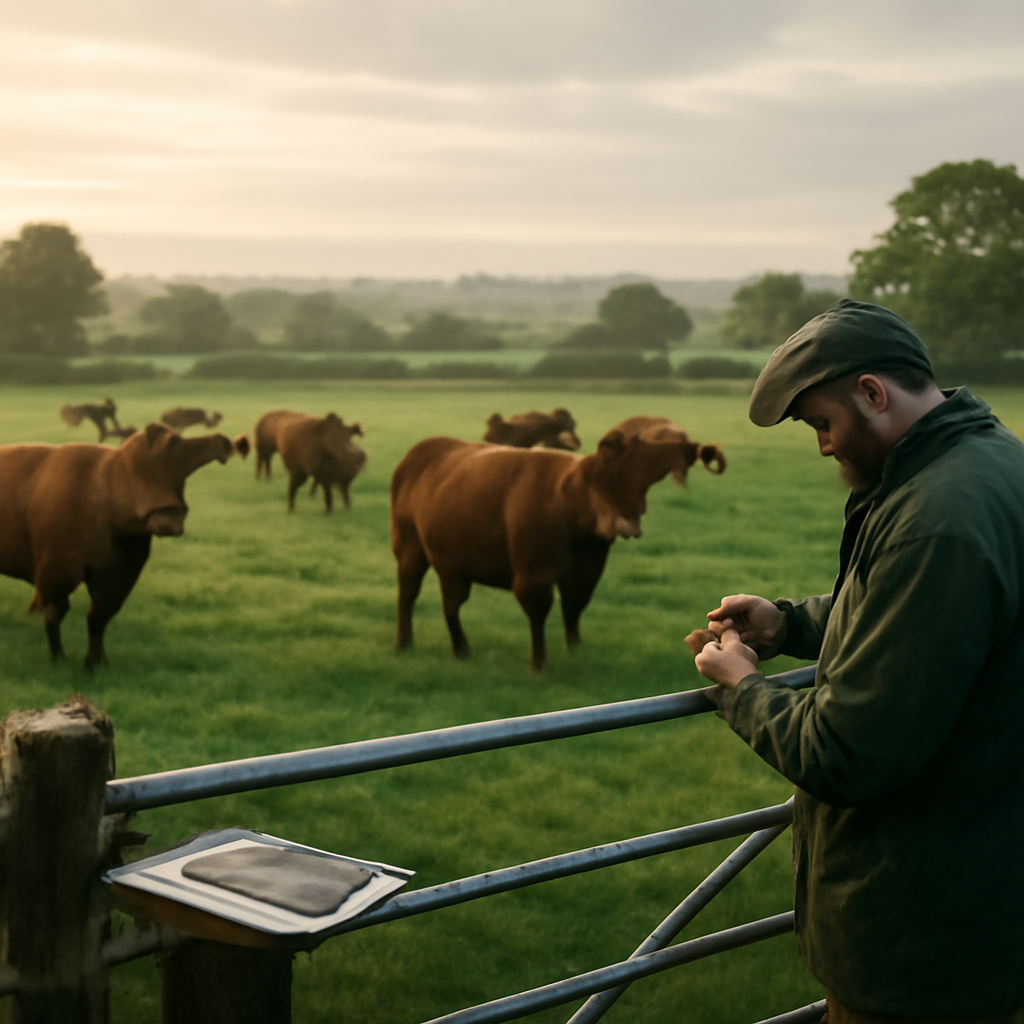
Ireland’s cattle traceability system is built around accurate identification, registration and movement records. The gov.ie Cattle AIM publication brings together the key forms, online services, approved suppliers and guidance farmers need to manage bovine animals compliantly.
Managed by the Department of Agriculture, Food and the Marine, the Animal Identification and Movement (AIM) system supports food safety, disease tracing and the verification of cattle movements throughout the animal’s life.
gov.ie Cattle AIM: What Farmers Need to Know
The Irish bovine identification framework has four connected parts:
- Ear-tagging: Calves must receive two matching yellow ear-tags within 20 days of birth.
- Registration and passports: Each calf must be registered, with a passport issued for the animal.
- Herd registers: Keepers must maintain current records of births, movements, deaths and animals entering or leaving the holding.
- AIM database: Births, movements and disposals are recorded centrally to provide an animal’s traceability history.
The passport must accompany the animal whenever it moves. These records help establish the origin and history of cattle entering the food chain and assist authorities in responding to infectious disease risks.
Approved cattle identification tags
The publication lists approved bovine ear-tag suppliers and the identification products authorised for use in Ireland. Listed suppliers include Agritags, Datamars Agri Limited, Cormac Tagging Ltd and Mullinahone Co-operative Dairy Society Limited, trading as Eurotags.
Available products include conventional tags, electronic identification tags and tissue tags suitable for BVD testing. Farmers should order tags directly from an approved supplier and ensure the tag type is suitable for their herd-management requirements.
Using the AIM Online System through Agfood.ie
Registered keepers can access online AIM facilities through Agfood.ie. These services can help farmers:
- Register calf births
- Apply for certificates required for certain cattle movements
- Check animals recorded in the herd
- Confirm movements into and out of the holding
- View an individual animal’s recorded history
- Check recent TB and brucellosis test dates
For private farm-to-farm movements, a Certificate of Compliance may be required before the animal leaves the holding. Both the source and destination keepers must confirm the movement within seven days. Deaths occurring on the farm must also be notified to the Department.
Read more
Why cattle traceability matters
A reliable AIM record protects the integrity of Irish beef and supports veterinary authorities during disease investigations. It also supplies information for agricultural statistics, certification and scheme-compliance checks.
The wider public-service landscape includes organisations such as gov.ie, the Revenue Commissioners, the Health Service Executive (HSE), An Garda Síochána and the National Transport Authority (NTA), but cattle identification and movement administration sits primarily with the agriculture department and registered keepers.
Explore more
Frequently asked questions
How soon must a calf be tagged?
The AIM guidance states that calves must be fitted with two identically numbered ear-tags within 20 days of birth.
How is a calf birth registered?
Keepers can register births online or submit the registration form supplied with the ear-tags. A valid registration leads to the issue of an animal passport.
What should farmers record?
Herd registers should include births, animals entering or leaving the holding, movements and deaths. Records must be kept up to date.
Where can farmers access AIM services?
Online facilities are available through Agfood.ie for farmers registered with the Department’s online services.
Article/Image Courtesy: gov.ie
Key takeaway
The gov.ie Cattle AIM guidance gives Irish farmers a practical framework for tagging, registering and tracking bovine animals. Keeping passports, herd registers and movement notifications accurate is essential for legal compliance, food safety and effective disease control.