

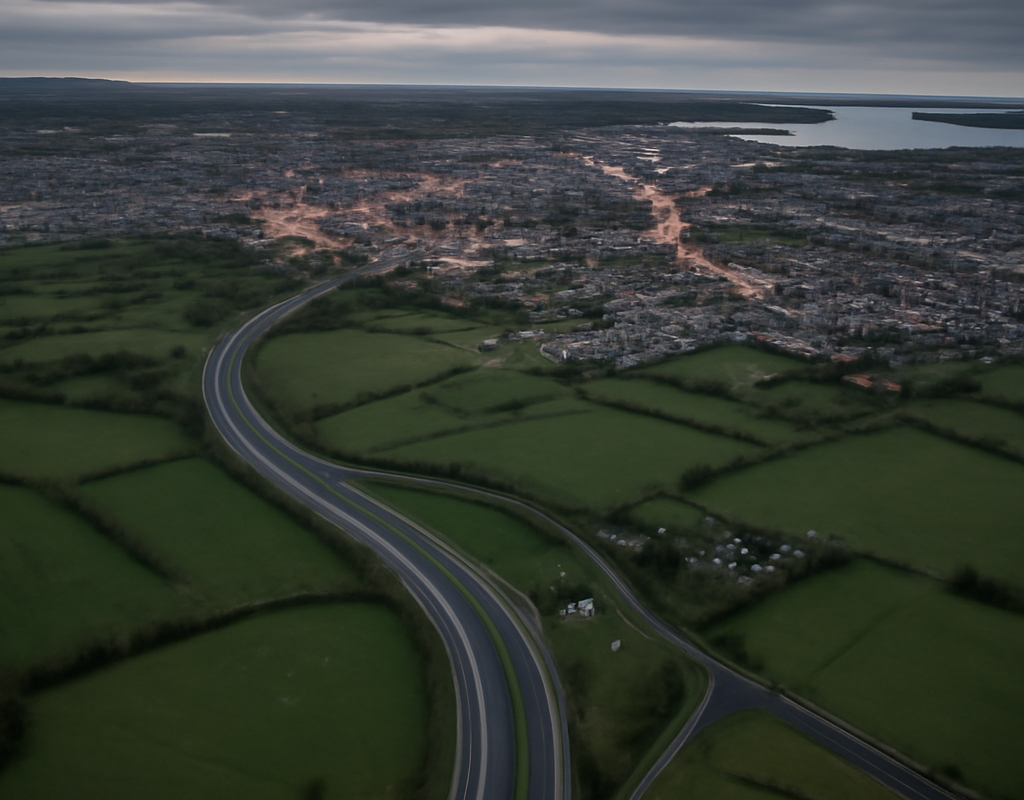
Galway’s proposed ring road is back at the centre of Breaking News after residents and observers raised questions about whether the major infrastructure project would genuinely solve the city’s long-running traffic problems. While supporters see the route as essential for improving regional connectivity, critics argue it cannot be a complete answer to Galway’s gridlock.
The proposed Galway city ring road is estimated to cost about €1 billion. The development has been discussed for decades, but uncertainty remains over its ability to deliver broad improvements for commuters, residents and businesses across the city and surrounding areas.
Galway ring road plan faces mixed reaction
The latest debate centres on the scale and purpose of the proposed road. A ring road could divert some traffic away from central Galway, improve access between communities and create a more reliable route around the city. However, opponents and sceptics question whether additional road capacity alone will resolve congestion.
Galway’s traffic problems are shaped by several factors, including limited crossing points over the River Corrib, commuter growth, pressure on key routes and the movement of traffic between the city, Connemara and eastern Galway. That means the effect of a new road would depend on how it connects with existing streets, public transport and future development.
For people searching for Galway News and the latest updates on transport policy, the central issue is not simply whether the ring road should proceed. It is whether the project forms part of a wider strategy capable of changing how people travel across the region.
Why the project matters to Galway
The proposed route is intended to improve movement around Galway rather than provide a single fix for every traffic delay. By offering an alternative route around the urban area, it could reduce pressure on some existing roads and make journeys more predictable for certain users.
Supporters are likely to point to several potential benefits:
- Reduced traffic on congested routes through and around Galway city.
- Improved connections between western communities and the wider road network.
- More reliable access for commercial vehicles and regional services.
- Greater capacity to support housing, employment and economic development.
Yet these potential benefits do not guarantee that congestion will disappear. New roads can attract additional traffic, particularly where car travel remains the easiest option. The ring road may also shift pressure from one location to another unless it is accompanied by investment in public transport, walking and cycling infrastructure.
A long-running expectation for residents
The project has been part of Galway’s transport conversation for many years. For some residents in areas west of the city, the prospect of a bypass or ring road has shaped expectations about future access and connectivity.
One resident who moved from Dublin to County Galway 26 years ago recalled settling in Na Forbacha after growing up in Galway city. At the time, the Connemara Gaeltacht village felt remote, but the expectation was that a ring road would connect the area within a relatively short period.
That account reflects a wider frustration: major transport schemes can influence where people buy homes, establish businesses or plan their daily lives, even when delivery remains uncertain. Delays therefore have practical consequences beyond construction schedules.
Read More
Follow DailyDigest for more reporting on Galway infrastructure, Irish transport policy and public services across Ireland.
Can a ring road solve Galway’s gridlock?
The short answer is no single road can be expected to resolve all of Galway’s traffic problems. A ring road could address particular bottlenecks, but its success would depend on the wider transport network and how the city manages growth.
Key questions include:
- Which existing routes would see meaningful reductions in traffic?
- How would the road connect with public transport and local streets?
- What environmental and community effects would arise along the route?
- Would the project encourage more car-dependent development?
- What complementary measures would be delivered at the same time?
These questions are especially important as Galway continues to balance housing demand, employment growth and the protection of rural and coastal communities. A major road project must be assessed not only by its construction cost, but also by its long-term impact on land use, emissions, journey times and quality of life.
Public transport remains part of the solution
Debate over the ring road also highlights the need for a broader approach to transport in Galway. Better bus services, safer cycling routes, improved walking connections and more effective traffic management could help reduce dependence on private cars.
For commuters, the practical question is whether a future transport system will provide genuine choices. If public transport is frequent and dependable, some journeys can shift away from the road network. If alternatives remain limited, even a large new route may eventually become congested.
The project’s estimated €1 billion cost makes these decisions particularly significant. Investment at that level could reshape Galway’s development for generations, so residents will want clear evidence about expected outcomes, environmental safeguards and the timetable for delivery.
What happens next?
The ring road remains a developing infrastructure issue, and the available information does not establish that construction is imminent or that all planning and funding questions have been settled. Further decisions will be required before the project can move from proposal to delivery.
Residents and road users will be watching for clarity on:
- Planning and environmental assessment milestones.
- Funding arrangements and projected costs.
- The final route and its effects on communities.
- Integration with Galway’s public transport and active travel plans.
- The expected timeline for construction and opening.
Until those details are confirmed, the debate is likely to continue between those who view the ring road as overdue infrastructure and those who believe Galway needs a more balanced transport package.
Frequently asked questions
What is the proposed Galway city ring road?
It is a major planned road project intended to provide an alternative route around Galway and improve connections between areas west and east of the city.
How much is the Galway ring road expected to cost?
The proposed development has been estimated at approximately €1 billion.
Will the ring road end Galway’s traffic congestion?
No. It may relieve pressure on some routes, but congestion is influenced by housing, commuting patterns, public transport and the wider road network.
Why are views on the project divided?
Supporters see it as essential for connectivity and regional development, while critics question its cost, environmental impact and ability to address the underlying causes of gridlock.
Conclusion
The Galway ring road remains one of the most consequential transport proposals in the region, but the current debate shows why it should not be presented as a universal cure for congestion. Galway needs reliable roads, effective public transport and careful planning that reflects the needs of residents and communities. As this Breaking News story develops, the key test will be whether the proposed €1 billion investment delivers a genuinely connected and sustainable city rather than simply moving traffic problems elsewhere.