



Europe news is being shaped tonight by a deepening political crisis in Albania, where tens of thousands of demonstrators again filled the streets of Tirana. What began as anger over a controversial luxury resort plan has now grown into a wider revolt against Prime Minister Edi Rama, corruption allegations and the direction of the country’s democracy.
For the 35th consecutive night, protesters gathered in the Albanian capital on Saturday, marching along the city’s main boulevard toward Skanderbeg Square. While crowd estimates shown in media footage suggested a huge turnout, there was no independent verification of the exact number. Even so, the scale and persistence of the demonstrations mark one of the most intense moments in recent Albanian political life, and the story is drawing interest far beyond the Balkans in both ireland news and broader irish news coverage of Europe.
Europe News: Why Albania’s protests keep growing
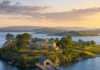
The demonstrations were initially triggered by outrage over a planned luxury coastal resort in a protected natural area. The project has drawn particular scrutiny because of its reported connection to Jared Kushner, the son-in-law of U.S. President Donald Trump. That issue gave the protests their first spark, but the movement has expanded well beyond a single development dispute.
Protesters are now demanding:
- The resignation of Prime Minister Edi Rama
- A temporary replacement government
- Constitutional reform
- Stronger action against corruption
Chants of “New Albania” and “Edi Rama, resign” echoed through the capital, underlining how the unrest has become a broader political challenge rather than a single-issue demonstration. For readers following Europe news, this shift is significant: environmental concerns have fused with anti-corruption demands and wider frustration over governance.
Read more:
Symbols, spectacle and the “pink flamingo revolution”
Saturday’s protest was marked by heavy symbolism, something that has helped the movement capture attention across international Europe news platforms. Demonstrators erected a tall bust of Rama before pulling it down with ropes, in a scene widely seen as echoing the toppling of communist dictator Enver Hoxha’s statue in February 1991.
The timing added another layer. The protest coincided with Rama’s 62nd birthday, and some in the crowd carried mock “birthday cakes” made of cement, an apparent jab at construction-led politics and disputed development projects. Others sang an ironic version of “happy birthday” aimed at the prime minister.
One of the most striking visuals came from pink flamingo balloons carried by protesters. The flamingos have become an emblem of the movement because of concerns that wildlife and protected habitats could be harmed by the resort project. Over time, the demonstrations have picked up the nickname the “pink flamingo revolution.”
That visual identity has made the unrest instantly recognizable, helping it stand out in a crowded Europe news cycle and giving the protest movement a symbol that blends environmental and political messaging.
Clashes near police station raise tensions
After around two hours of protesting, a large group moved toward a police station and demanded the release of people detained during Thursday’s demonstration near parliament. The night then took a more confrontational turn.
According to reports, protesters broke windows at the police station, and police responded with a water cannon to disperse the crowd. The escalation is likely to sharpen questions about how Albanian authorities are handling the unrest and whether the standoff between the government and demonstrators is entering a more volatile phase.
For observers of irish news and ireland news with an interest in European stability, the development is notable because Albania has long sought to present itself as a country moving toward stronger democratic standards and closer European integration. Prolonged civil unrest, especially when tied to corruption claims and police confrontation, risks damaging that image.
Explore more:
What this means for Albania and the wider region
Albania’s latest unrest reflects several overlapping pressures:
- Public mistrust: The protests suggest a growing belief among many citizens that political institutions are not responding to public concerns.
- Corruption fears: Allegations around influence, land use and elite-backed projects have become rallying points.
- Environmental anxiety: Development in protected areas is proving politically explosive.
- Democratic pressure: Calls for constitutional reform indicate dissatisfaction with the current political framework, not just the current leadership.
The protests may also become a test of whether Albania’s government can calm tensions without further confrontation. If the movement keeps expanding, the pressure on Rama could intensify domestically and internationally.
FAQs
Why are people protesting in Albania?
The protests began over a disputed luxury resort development in a protected coastal area reportedly linked to Jared Kushner, but they have since broadened into anti-government and anti-corruption demonstrations.
What are the protesters demanding?
Demonstrators are calling for Prime Minister Edi Rama to resign, for a temporary replacement government, constitutional reform and stronger action against corruption.
Why are pink flamingos part of the protest?
Pink flamingos have become a symbol of the movement because protesters say the planned resort threatens local wildlife and natural habitats.
Was there violence during the latest protest?
Yes. After the main march, some protesters moved to a police station, where windows were broken. Police used a water cannon to disperse the crowd.
Conclusion
This Europe news story is no longer just about a single resort project. In Albania, a dispute over development has evolved into a sustained public challenge to political power, corruption and state legitimacy. If the nightly protests continue, Tirana may remain at the center of Europe news, with consequences that reach well beyond Albania’s borders.