


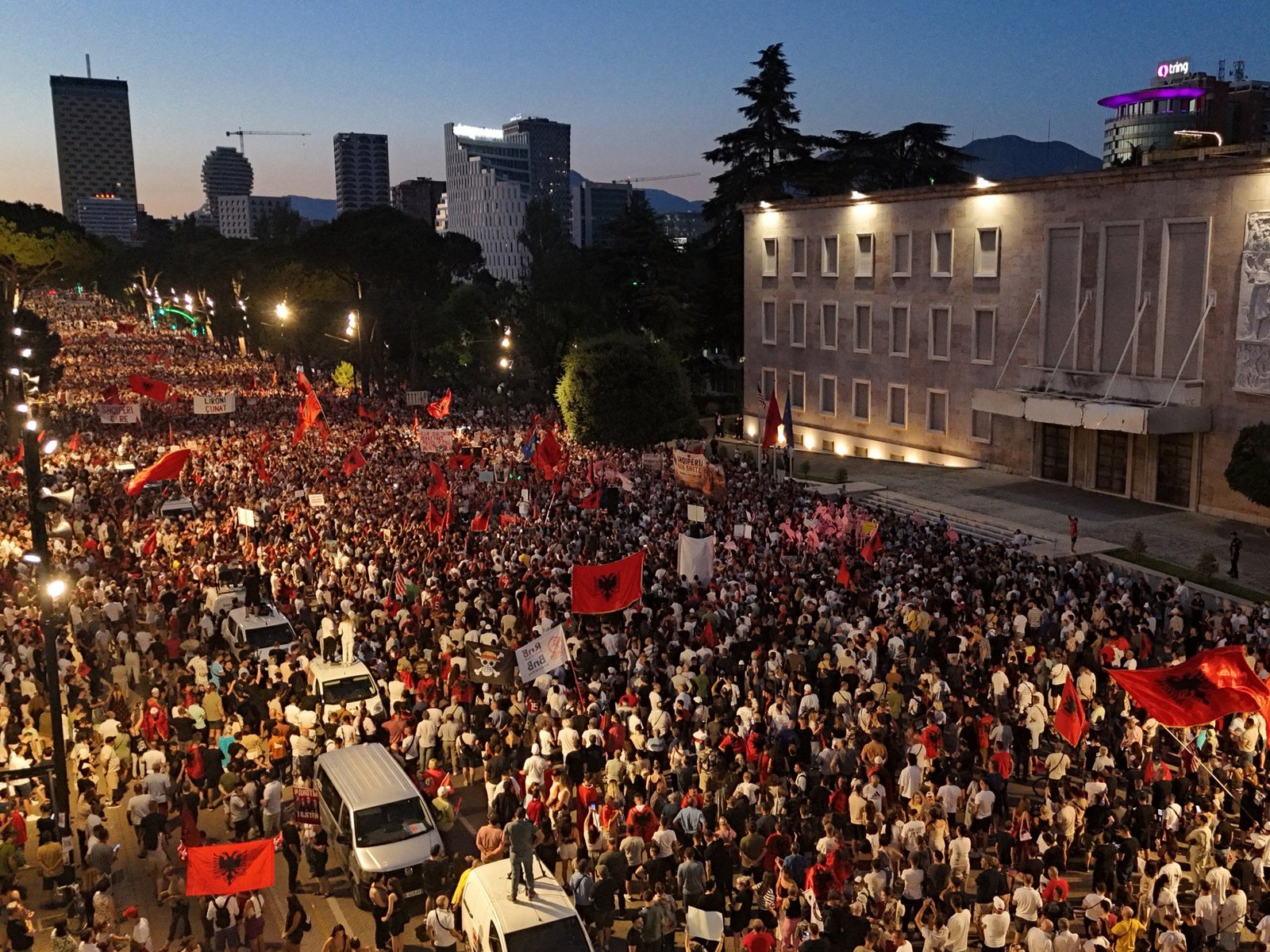
An Albanian court has ordered the release of most protesters detained after a tense demonstration over a luxury resort project linked to Jared Kushner, turning the story into a major Europe news flashpoint with wider political implications. The ruling comes as rallies in Tirana grow from a local environmental dispute into a broader movement against corruption and Prime Minister Edi Rama’s government.
According to court proceedings in Tirana, 19 protesters arrested after recent unrest were brought before judges on allegations including disobeying police orders, organising an illegal gathering and disturbing public order. Their lawyers said the court decided that five would face no charges, while 12 must report periodically to judicial police and two will remain under house arrest.
Outside the court, supporters celebrated the decision, chanting slogans in favour of the detainees. The scenes underscored how the case has become one of the most closely watched developments in irish news searches and wider ireland news interest in European political protests, especially where environmental protection, elite investment and governance intersect.
Europe News: Why Albania’s Protest Movement Is Growing
The protests began in late May after fencing and heavy machinery appeared near a protected coastal area where a luxury resort is planned. The project has been linked to Jared Kushner, the son-in-law of US President Donald Trump, and has become a lightning rod for criticism inside Albania.
What started as a campaign against development in a sensitive natural zone has since widened into a broader anti-government movement. Demonstrators are now also calling for accountability, cleaner governance and the resignation of Prime Minister Edi Rama.
- Environmental concerns over development near a protected coast
- Public anger over alleged corruption and political favouritism
- Growing distrust of state institutions
- Escalating calls for political change in Tirana
Many protesters have adopted chants such as “New Albania” and “Edi Rama, resign”, signalling that the demonstrations are no longer only about a single construction project.
Read more: latest Ireland breaking political analysis and top Ireland current affairs updates | in-depth Irish news coverage and Ireland news stories shaping Europe
What Happened During the Latest Tirana Clashes?
The latest wave of unrest intensified last Thursday when hundreds of protesters gathered outside Albania’s parliament for the second time in one week. Demonstrators attempted to block access and confront lawmakers, prompting a forceful police response.
Authorities used tear gas, pepper spray and water cannon to disperse the crowd after some protesters pushed against police lines and threw eggs, stones and other objects. Officials said 15 police officers were injured and 25 demonstrators were detained during the confrontation.
That violence marked a clear change from the largely peaceful nightly protests that had drawn thousands onto the streets since the movement began. On Saturday, tens of thousands reportedly returned to Tirana in the biggest rally so far, again calling for the release of detainees.
Key developments from the court decision
- 19 detainees were reviewed by the court in Tirana.
- Five were released without charges.
- 12 were ordered to check in regularly with judicial police.
- Two were placed under house arrest.
- The ruling fuelled fresh momentum for the protest movement.
How the Resort Dispute Became a National Political Issue
The resort project was first unveiled in 2024, but public outrage intensified only after visible construction-related activity appeared on the coast this spring. For many Albanians, the development became symbolic of a deeper problem: the belief that powerful political and business interests are benefiting from state decisions at the expense of public trust and environmental safeguards.
This is why the story has moved beyond a single planning dispute and into mainstream Europe news coverage. It touches on issues that resonate across the region, including transparency, land use, democratic accountability and the influence of high-profile foreign-connected investors.
Earlier this year, Albania also saw separate unrest over corruption allegations involving senior officials. Although Deputy Prime Minister Belinda Balluku was dismissed after earlier pressure, suspicion toward the government has remained high.
Explore more: Europe luxury development trends and long-form reporting on elite property projects | best Ireland news updates for readers following Europe protests and government reform stories
Why This Story Matters Beyond Albania
This case is drawing international attention because it combines several high-profile elements: a protected coastline, a politically sensitive investment, allegations of corruption and a widening anti-government street movement. For audiences following Europe news, it is a reminder that local land disputes can quickly evolve into nationwide political crises.
It also shows how courts can become central in moments of unrest. By easing restrictions on most of the detained protesters, the Tirana court has given demonstrators a symbolic victory, even as legal proceedings continue for some of those arrested.
FAQ
Why were the protesters detained?
The detainees were accused of offences including disobeying police orders, organising an illegal protest and disturbing public order during clashes in Tirana.
What is the protest about?
The movement began in opposition to a luxury resort planned near a protected coastal area and has since expanded into anti-corruption and anti-government demonstrations.
How many protesters were freed?
Nineteen detainees were reviewed by the court, with five released without charges, 12 given reporting obligations and two placed under house arrest.
Why is Jared Kushner’s name involved?
The resort project at the centre of the controversy has been linked to Kushner, making the dispute more internationally visible.
Conclusion
The court’s decision to free most of the detainees is likely to energise Albania’s protest movement rather than calm it. As this Europe news story develops, the central question is no longer just about a resort on a protected coast, but whether public anger over corruption and political power can force broader change in Albania.