

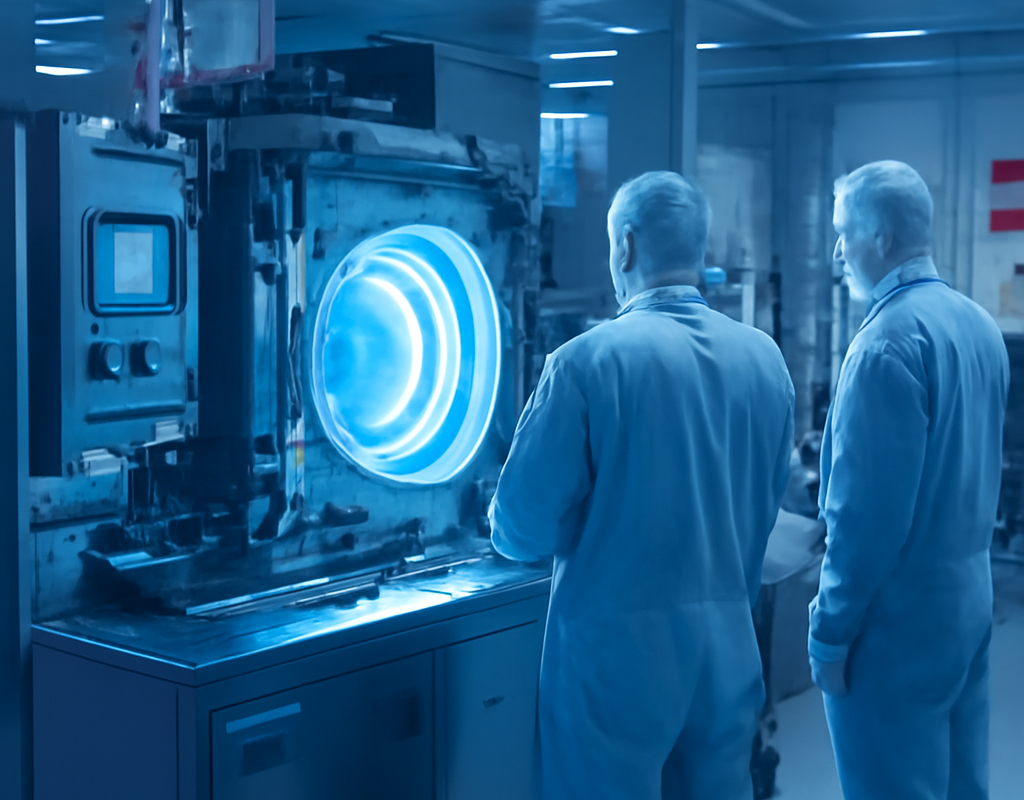
Standfirst: The European Commission has approved €319 million in state aid for a semiconductor factory in Austria. The decision highlights Europe’s effort to strengthen chip production and reduce dependence on overseas suppliers.
The European Commission has approved €319 million in state aid for an Austrian semiconductor factory, marking a significant step in Europe’s strategy to expand domestic chip manufacturing. The funding is intended to support industrial capacity in a sector considered essential to digital infrastructure, telecommunications, vehicles and advanced technology.
The decision is an EU state-aid approval rather than a new law or EU-wide subsidy scheme. It allows the Austrian authorities to provide the approved support under European state-aid rules, subject to the conditions attached to the Commission’s decision.
What the European Commission approved
State aid normally requires scrutiny because government support can distort competition within the European single market. The European Commission assesses whether public funding serves a legitimate objective and whether its benefits outweigh potential effects on competitors.
In this case, the Commission approved €319 million for an Austrian semiconductor factory. The source information does not specify the company, the factory’s precise location, the timetable for construction or the detailed conditions attached to the funding. Those details should be confirmed through the Commission’s formal decision and Austrian government documentation.
The approval does not mean that all European chip producers will receive comparable funding. It concerns a specific Austrian industrial project and reflects the EU’s wider interest in building more resilient supply chains for strategically important technologies.
Why semiconductor production matters to Europe
Semiconductors are used in products ranging from smartphones and computers to electric vehicles, medical equipment, industrial machinery and defence systems. Disruptions in chip supplies can affect manufacturing well beyond the technology sector.
Europe has strong research, equipment and industrial capabilities, but it also relies on international supply chains for parts of semiconductor production. Expanding manufacturing within the EU is intended to improve resilience and support higher-value industrial activity.
The Austrian project fits into a broader European policy debate around:
- Increasing chip production and advanced manufacturing capacity
- Reducing exposure to supply-chain disruption
- Supporting research, development and skilled employment
- Attracting private investment in strategic technologies
- Improving Europe’s position in global technology competition
However, public funding alone cannot remove all risks. Semiconductor plants require large capital investment, specialist workers, reliable energy supplies, advanced equipment and access to customers. Europe’s competitiveness will also depend on whether projects can operate commercially over the long term.
How this fits EU state-aid rules
EU state-aid rules are designed to protect fair competition between member states. Without those rules, wealthier governments could potentially provide much larger subsidies than countries with fewer public resources, giving companies in one market an unfair advantage.
The Commission can approve aid when it supports objectives such as regional development, research and innovation, environmental goals or strategic industrial capacity. Approval generally depends on factors including the amount of support, the project’s purpose, its expected benefits and safeguards against unnecessary market distortion.
The Austrian government remains responsible for delivering the support. The European Commission’s role is to assess compatibility with the EU’s competition framework; it does not itself build or operate the factory.
What the decision means for Austria and the EU
For Austria, the funding could strengthen its role in Europe’s technology manufacturing network and support investment in a highly specialised sector. The wider benefits may include demand for engineering, construction, research and supply-chain services, although the source information does not provide confirmed employment or investment figures.
For the EU, the decision is another example of how Brussels is using competition and state-aid powers to support industrial policy. It also illustrates the tension between two goals: encouraging strategic investment while preventing subsidy competition from fragmenting the single market.
The move is relevant to current European news because semiconductor capacity affects economic security, digital sovereignty and industrial resilience across member states. It is not, however, evidence that Europe has become self-sufficient in chips.
Does the decision affect Ireland?
The aid is directed at an Austrian project, so it does not create a direct funding entitlement for Irish companies. Ireland may nevertheless be affected indirectly because semiconductor investment can influence supply chains, research partnerships and competition for technology-related capital across the European single market.
Irish businesses involved in technology, electronics, data infrastructure or advanced manufacturing could benefit from stronger European supply networks over time. Any direct effect would depend on the factory’s products, customers and links with companies in other member states.
What happens next?
The next steps will be national implementation and project delivery in Austria. The Austrian authorities and the beneficiary will need to comply with the conditions of the approved aid. Further information should emerge through official Commission and Austrian documents, including details of the project’s scope, schedule and monitoring arrangements.
The decision also places attention on whether the investment produces the promised industrial benefits without undermining competition elsewhere in the EU. Future EU policy will continue to balance strategic autonomy with the need to keep the single market open and competitive.
Key takeaway
The €319 million approval is a targeted European Commission state-aid decision for an Austrian semiconductor factory, not a new EU-wide law. Its importance lies in the broader effort to expand Europe’s chip capacity, strengthen critical supply chains and support a more resilient technology industry.