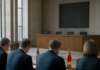
India has used the latest BRICS summit to bring major powers with sharply different interests into the same room, creating a rare diplomatic moment as wars, trade tensions and competition with Western institutions reshape international politics. The meeting in Delhi placed Narendra Modi alongside Xi Jinping, Vladimir Putin and other leaders seeking greater influence over global decision-making.
Although the gathering produced a joint declaration, the summit also exposed the limits of cooperation among countries divided by border disputes, military conflict and competing strategic ambitions. Its biggest achievement may have been creating space for dialogue rather than reaching a decisive agreement on the future of the global order.
BRICS Summit highlights India’s diplomatic balancing act
Opening the summit, Modi argued that BRICS members should increasingly become “rule-shapers” rather than “rule-takers”. The message reflected India’s ambition to give emerging economies a stronger voice while avoiding the creation of an explicitly anti-Western alliance.
The group includes China, Russia, Iran, India, South Africa and newly involved partners from the Middle East and elsewhere. These governments do not share a single ideology or foreign-policy agenda. India and China have experienced deadly tensions along their disputed border, while Iran and the United Arab Emirates have stood on opposing sides of regional conflicts.
For China, Russia and Iran, BRICS offers a way to reduce dependence on US- and European-led financial and political systems. India, however, has stressed that the organisation is not directed against any particular country. That careful positioning allows Delhi to maintain relationships with both Western powers and governments challenging Western influence.
Joint declaration avoids the most divisive disputes
The New Delhi Declaration was adopted despite earlier failures by BRICS ministers to agree on joint statements. Yet the document achieved consensus partly by using cautious language and avoiding subjects on which members are deeply divided.
On the Middle East conflict, leaders called for maximum restraint and condemned attacks on civilian infrastructure and peaceful nuclear facilities. The declaration supported a two-state solution and opposed forced displacement, while referring to established United Nations positions rather than assigning responsibility to a specific government.
Notably, the declaration did not mention Russia’s war in Ukraine, a subject included in some previous BRICS statements. It also criticised rising tariffs and unilateral sanctions without naming the United States. This approach allowed members to express concern about trade restrictions while reducing the risk of a direct confrontation with Washington.
- BRICS members called for restraint in the Middle East.
- The declaration supported a two-state solution.
- Russia’s war in Ukraine was omitted from the document.
- Trade barriers and unilateral sanctions were criticised without naming the US.
Trade and a changing global economy
Trade pressure has become a central concern for many BRICS economies. Leaders are examining alternatives to existing systems, including deeper cooperation in local currencies and possible links between central-bank digital currencies for cross-border payments.
However, the summit did not announce a single replacement for the current international financial order. The discussions instead pointed to a gradual effort to increase economic coordination, reduce vulnerability to sanctions and expand commercial ties between developing economies.
Iran and the UAE use summit for high-level diplomacy
One of the most significant meetings on the sidelines involved Iranian President Masoud Pezeshkian and Abu Dhabi Crown Prince Sheikh Khaled bin Mohamed bin Zayed Al Nahyan. Their discussion represented an important diplomatic opening between countries affected by years of regional tension.
For Tehran, the summit provided an opportunity to demonstrate that it still has international partners despite military pressure and economic sanctions. Pezeshkian also sought stronger economic links with BRICS members, including India, Malaysia and Ethiopia.
The meeting illustrated how BRICS can function as more than a formal economic grouping. Its gatherings provide a venue where rivals can meet without relying entirely on Western-led institutions or established diplomatic channels.
Modi and Xi signal cautious improvement in relations
Xi Jinping’s visit to Delhi was his first in seven years and carried particular significance because of the difficult relationship between China and India. Relations deteriorated after a deadly border confrontation in 2020, while a major trade imbalance continues to favour China.
The two leaders held a cordial meeting and agreed, according to official accounts, to strengthen business ties, improve transport connections and address obstacles to trade. Xi’s brief visit and decision not to attend the host’s gala dinner underlined that the relationship remains cautious rather than fully repaired.
Even so, direct engagement between the two governments could help reduce tensions and create practical cooperation. Progress is likely to depend on whether diplomatic warmth is matched by action on border security, market access and transport links.
What the BRICS summit means for global politics
The Delhi summit demonstrated that BRICS can bring together governments that disagree on security, trade and regional conflicts. It also showed why building a unified alternative to Western influence will be difficult.
Members broadly agree that developing countries should have greater influence in global institutions. They do not yet agree on what a replacement system should look like, how it would operate or which countries would set its rules. India’s strategy is therefore likely to remain one of strategic autonomy: cooperating with multiple sides while resisting pressure to join a rigid geopolitical bloc.
Read more: Ireland and international affairs
Read more about Ireland breaking news and major world developments affecting Irish readers, including the latest Irish news and international affairs.
Explore more global analysis
Explore more coverage of Dublin news today, Irish politics news and international diplomacy at Media Digest, or browse global affairs and business analysis from Luxe Digest.
Conclusion
The BRICS summit produced no sweeping blueprint for a new world order, but it delivered something politically valuable: an opportunity for rivals to meet, negotiate and test the possibilities of cooperation. India’s careful diplomacy kept the group together without forcing members into a strongly anti-Western position. The next test will be whether these conversations lead to practical progress on trade, transport, finance and regional security—or remain largely symbolic.