

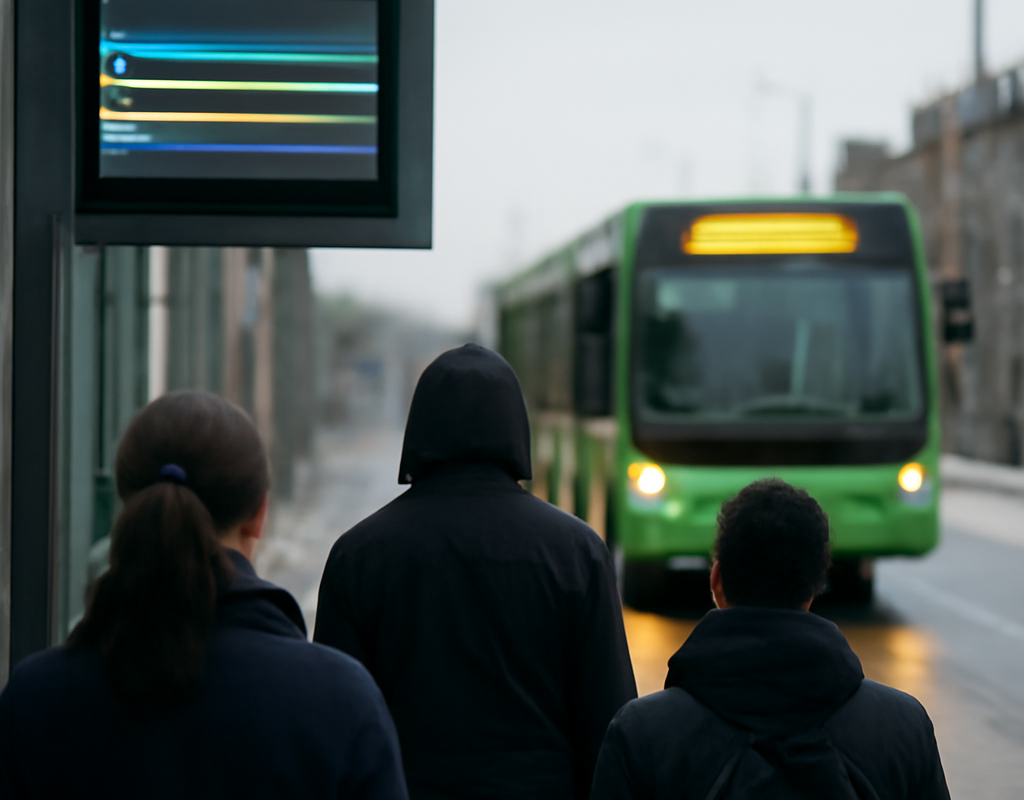
Passengers could soon find it easier to know when their bus is arriving, thanks to plans to expand real-time information displays at stops across Ireland. The development is significant for commuters who currently rely on mobile apps, printed timetables or uncertain estimates when services are delayed.
This Breaking News update comes as public transport authorities continue to improve passenger information and modernise bus infrastructure. While the available source information is limited, the focus is clear: give people more reliable updates at the point where they are waiting.
What is happening with real-time bus stop displays?
Real-time bus stop displays are designed to show live service information, including expected arrival times, route details and, where available, disruption notices. Unlike a traditional timetable, which shows scheduled departures, a real-time display can reflect the position and progress of vehicles on the road.
The proposed improvement would be particularly useful in busy urban areas, where traffic congestion can make scheduled times difficult to follow. It may also help passengers decide whether to continue waiting, use another route or make alternative travel arrangements.
The initiative forms part of a wider effort to make Public Transport Ireland more accessible and dependable. Clearer information can be valuable not only to daily commuters, but also to visitors, older passengers and people who do not regularly use transport apps.
Why the change matters for passengers
Real-time information addresses one of the most common frustrations in bus travel: not knowing whether a service is late, approaching or has been cancelled. A display at the stop can provide an immediate answer without requiring passengers to have a smartphone, mobile data or familiarity with a particular app.
- Greater certainty: passengers can see updated arrival estimates rather than relying only on a printed schedule.
- Better accessibility: information is available to people who may not use digital transport tools.
- Improved journey planning: live updates can help passengers choose between routes or services.
- More confidence in public transport: transparent information can make bus travel feel more predictable.
For people connecting with Irish Rail, flights or other bus services, even a small improvement in information can make a noticeable difference. Real-time updates are especially important when delays affect work, school appointments or onward travel.
How the technology works
Real-time passenger information normally combines data from vehicle tracking systems with information about routes and scheduled services. GPS equipment or onboard communications can identify a bus’s location, while software uses that data to estimate when it will reach each stop.
The accuracy of an arrival prediction depends on several factors, including traffic, roadworks, weather and the quality of the tracking data. A display should therefore be understood as a live estimate, not a guarantee that a bus will arrive at an exact minute.
Reliable performance also depends on regular maintenance. Screens need power, connectivity and technical support, while the underlying data must be updated when routes, stops or timetables change.
What it could mean for Dublin and other Irish cities
The greatest benefit is likely to be felt in areas with frequent services and heavy congestion. Dublin News coverage often highlights the pressure placed on roads and public transport by commuter demand, making accurate passenger information particularly important in the capital.
Similar systems could also support passengers in Cork, Galway, Limerick and other towns and cities. The practical impact will depend on how widely displays are installed, which stops are prioritised and whether information is presented consistently across operators.
For regional passengers, technology at the stop could complement existing online tools rather than replace them. People may still use apps for planning a complete journey, while the physical display provides reassurance once they reach the stop.
Questions passengers may have
Will every bus stop receive a real-time display?
There is no confirmation in the supplied information that every stop will be equipped. Rollouts of this kind are generally affected by funding, infrastructure, passenger demand and technical requirements.
Will the displays show cancellations and delays?
Real-time systems can display disruption messages as well as estimated arrivals, although the information shown will depend on the system and the data supplied by the relevant operator.
Are mobile apps being replaced?
No. Physical displays and mobile services can work together. Apps are useful for planning, while stop displays provide accessible information for passengers already waiting.
What should passengers do during a disruption?
Passengers should check the display, official operator channels and journey-planning services before travelling. Where a delay is substantial, allow extra time and consider alternative routes if available.
What happens next?
The next stage will be important for establishing how the plan is delivered in practice. Passengers will want clarity on locations, installation dates, the routes covered and how frequently information is refreshed.
Authorities and operators will also need to ensure that live data is accurate and that displays remain useful during major disruption. Clear notices about cancellations, diversions and replacement services can be just as important as arrival times.
For now, the development signals continued investment in passenger information. As Ireland seeks to encourage more people to use buses, dependable updates at the roadside could become an essential part of the travel experience.
Conclusion
Real-time bus stop displays could make everyday journeys more predictable by giving passengers clear, up-to-date information while they wait. This Breaking News story matters because better information is a practical improvement: it can reduce uncertainty, support accessibility and help people respond to delays.
The key question now is how widely the displays will be introduced and how accurate the live data will be. For commuters and occasional users alike, the success of this public transport upgrade will be measured not by the screens themselves, but by whether they provide information passengers can trust.