

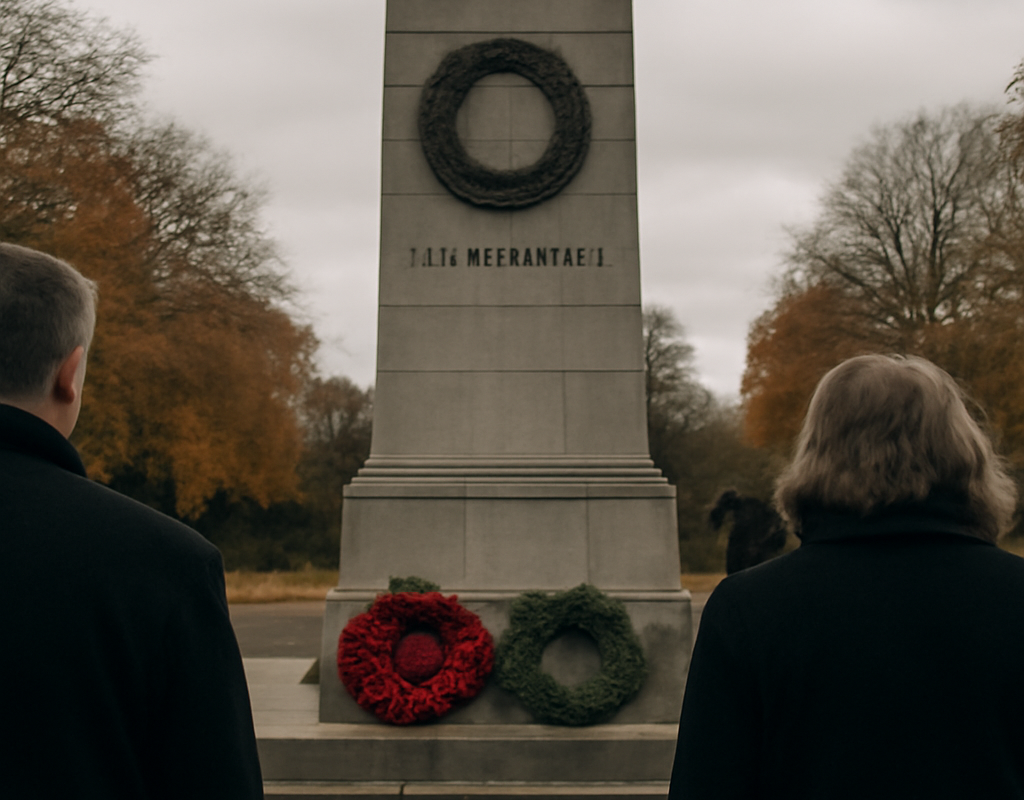
Micheál Martin has laid a wreath at the Enniskillen Remembrance Sunday memorial, marking 40 years since the IRA bombing that killed 11 people and later claimed a 12th victim. The Taoiseach joined hundreds of mourners in County Fermanagh as communities across Northern Ireland commemorated those who died in war and conflict.
What happened at the Enniskillen commemoration?
Micheál Martin attended the ceremony at the Cenotaph in Enniskillen on Sunday, November 8th, alongside Northern Ireland Secretary Chris Bryant and head of the Northern Ireland Civil Service Jayne Brady.
Bryant placed a poppy wreath on behalf of the UK Government, while Martin laid a laurel wreath at the memorial. His attendance continued a tradition started by former Taoiseach Enda Kenny in 2012, when the Irish Government began taking a more visible role at the Enniskillen ceremony.
The event took place on the anniversary of the bombing in 1987, which targeted people gathered for Remembrance Sunday. The attack happened only minutes before the scheduled ceremony was due to begin.
Enniskillen bombing remembered 40 years later
Eleven people died in the no-warning explosion on November 8th, 1987. Dozens more were injured. A 12th victim died 13 years later after never regaining consciousness from a coma caused by injuries sustained in the bombing.
The memorial ceremony remains one of the most significant Remembrance Sunday events in Northern Ireland. It brings together people from different traditions to remember the victims and honour those who died in military service.
For many families in Enniskillen, the anniversary is both a public act of remembrance and a deeply personal occasion. The continued attendance of senior political figures reflects the lasting impact of the bombing and the importance of acknowledging all victims of violence.
- The bombing took place in Enniskillen on November 8th, 1987.
- Eleven people were killed immediately and a 12th victim died in 2000.
- Micheál Martin laid a laurel wreath at Sunday’s memorial.
- Chris Bryant placed a wreath on behalf of the UK Government.
A tradition of official recognition
Enda Kenny’s attendance at the memorial in 2012 was widely regarded as an important symbolic step. It reflected greater recognition in the Republic of Ireland for Irish people who served and died in the British Army during the First World War.
The decision to attend the Enniskillen ceremony has also carried wider significance because of the town’s history and the sensitivities surrounding remembrance on the island of Ireland. The presence of the Taoiseach signals support for the families affected by the attack while respecting the traditions associated with the ceremony.
In 2024, then-Taoiseach and current Tánaiste Simon Harris did not attend the memorial. The decision was linked to the absence of a representative from the Northern Ireland Executive.
Follow further Ireland News and Northern Ireland News developments at DailyDigest.
Michelle O’Neill absent from official remembrance events
Stormont First Minister Michelle O’Neill did not attend Remembrance Sunday events in an official capacity. The absence followed a dispute connected to the Drumcree parade issue.
Deputy First Minister Emma Little-Pengelly of the Democratic Unionist Party has stopped joint engagements with O’Neill. Under powersharing conventions, she is also preventing the First Minister from attending official engagements alone.
That meant O’Neill was unable to formally represent the Northern Ireland Executive at the remembrance events. The dispute added a political dimension to a day that is normally focused on mourning, reflection and respect for the war dead.
A Sinn Féin spokesperson said remembrance should remain above party politics and criticised the decision to block O’Neill’s attendance. The party argued that the ceremony could have provided an opportunity to build understanding and advance reconciliation.
Why the ceremony matters in Northern Ireland
Remembrance events have a particular importance in Northern Ireland, where public ceremonies can carry different meanings for unionist, nationalist and republican communities. The Enniskillen memorial is especially significant because it commemorates people killed while gathering for a traditional remembrance service.
The participation of representatives from both the Irish and British governments demonstrates the cross-border and shared nature of the commemoration. It also underlines the continuing effort to recognise suffering across political and community divisions.
While Sunday’s ceremony was centred on the Enniskillen victims and those who died in war, the dispute over official attendance showed that questions of representation and symbolism remain sensitive within Stormont.
What happens next?
Further remembrance events took place across Northern Ireland on Sunday. The political dispute involving the Stormont First Minister and Deputy First Minister is expected to continue separately from the commemorations.
For families and the Enniskillen community, the central focus remains remembering those killed and injured in the 1987 bombing. Martin’s attendance and wreath-laying provided a formal expression of respect from the Irish Government on the 40th anniversary.
Frequently asked questions
When did the Enniskillen bombing happen?
The bombing happened on November 8th, 1987, shortly before an Armistice Day remembrance ceremony was due to begin.
How many people died?
Eleven people died in the immediate aftermath. A 12th victim died 13 years later after remaining in a coma.
Who attended the 2026 ceremony?
Taoiseach Micheál Martin attended alongside Northern Ireland Secretary Chris Bryant and Northern Ireland Civil Service head Jayne Brady.
Why was Michelle O’Neill absent?
She was prevented from attending in an official capacity amid a dispute involving Deputy First Minister Emma Little-Pengelly and the fallout from the Drumcree parade issue.
Conclusion
This Breaking News Ireland development marks a solemn anniversary for Enniskillen and the wider island. Micheál Martin’s wreath-laying honoured the 12 victims of the bombing and reaffirmed the importance of remembrance, while the dispute over Michelle O’Neill’s official attendance highlighted the political sensitivities that still surround public commemoration in Northern Ireland.