

Ukraine dominated the European Political Community summit in Dublin on Thursday, as European leaders pressed for a direct role in any future peace negotiations between Russia and Ukraine. The talks gained fresh urgency when US negotiators Steve Witkoff and Jared Kushner travelled from Moscow to Dublin to brief Ukrainian president Volodymyr Zelenskiy.
The meetings placed Ireland at the centre of a major diplomatic effort, although there was no confirmed breakthrough on ending the war. European leaders remained divided over who should represent the continent if negotiations advance, while several governments warned against discussing Europe’s security arrangements without European participation.
Ukraine takes centre stage at Dublin summit
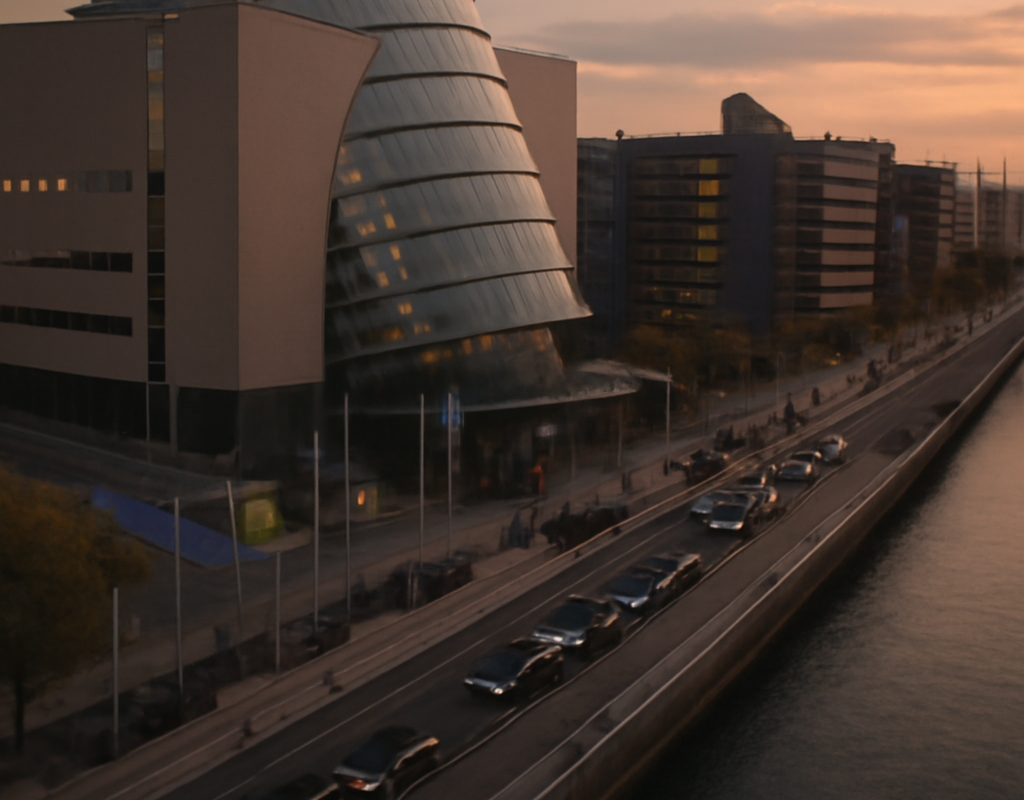
Taoiseach Micheál Martin hosted the ninth European Political Community meeting at the Convention Centre Dublin, welcoming leaders from across Europe along with Canadian prime minister Mark Carney and senior representatives of international organisations.
The war in Ukraine dominated discussions throughout the day. Leaders repeatedly argued that Europe must have a formal voice in any talks involving Russia, the United States and Ukraine because the conflict directly affects European security.
European Council president António Costa said the future of European security could not be decided without Europe. The message was echoed by leaders including Poland’s prime minister Donald Tusk, who rejected the idea that a new security structure could be created simply at the request of Moscow or Washington.
- The European Political Community summit was held in Dublin.
- Ukraine was the central issue discussed by European leaders.
- US negotiators briefed Volodymyr Zelenskiy after talks with Vladimir Putin.
- No peace agreement or immediate breakthrough was announced.
- European leaders called for a seat at future negotiations.
US envoys brief Zelenskiy after Moscow meeting
Late on Thursday, Witkoff and Kushner flew from Moscow to Casement Aerodrome in Baldonnel. They had met Russian president Vladimir Putin before travelling to Ireland, where the US delegation held discussions with Zelenskiy in a meeting facilitated by the Irish Government.
Kushner said the US had argued that European countries should be included in future negotiations. He described recent discussions as intense and said the meeting with Putin had been detailed and productive, but he did not provide specific information about a possible settlement.
Witkoff also said the US was working on behalf of president Donald Trump to help end the war. The comments suggested movement on the question of European participation, but they did not indicate that Russia had accepted a ceasefire or abandoned its broader demands.
Zelenskiy welcomed what he described as progress on ensuring that Europe would have a voice in negotiations. He argued that the conflict was taking place on European soil and that Ukraine’s future relationship with the European Union made European involvement essential.
Concerns remain over Russia’s negotiating position
Despite the diplomatic activity, Ukrainian representatives reportedly told European allies that recent talks in Abu Dhabi had not provided evidence that Moscow had softened its objectives. Briefings shared with senior European officials indicated that Ukraine remained unconvinced that Putin was ready to agree a genuine peace settlement.
European governments were also concerned by Russia’s insistence that negotiations should address wider questions about the continent’s security architecture. Some leaders fear that Moscow could use those discussions to weaken Nato’s eastern presence or divert attention from the immediate goal of securing a ceasefire.
That concern was reflected in Tusk’s warning that Europe should not accept a new security arrangement imposed by outside powers. The position highlights the central challenge facing European governments: supporting diplomacy while avoiding concessions that could undermine national and collective security.
Who would speak for Europe?
Although leaders broadly supported European participation, there was no agreement on who should represent the continent at a negotiating table. The European Union, Nato and individual countries would all have interests in any settlement, while the United Kingdom, Canada and Norway also play important roles in European security.
Italian prime minister Giorgia Meloni said the EU needed to speak with one voice, warning that its current position appeared fragmented. Costa rejected the suggestion that European governments were fundamentally divided, while Martin described the process of representing Europe as a collective effort.
A senior Brussels source said it was too early to focus on appointing a single envoy. Any agreement would likely require input from EU institutions, Nato and individual European states, particularly because the consequences of a settlement would extend beyond the battlefield.
Security measures affect Dublin city centre
The summit brought extensive security measures to central Dublin. Parts of the city centre were closed, and the restrictions appeared to lead many people to work from home. Leaders attended official meetings during the day before a Government-hosted dinner at the National Gallery of Ireland.
About 1,000 people attended an anti-war protest in Dublin. Gardaí prevented protesters from reaching the conference venue and later the National Gallery. Minor scuffles were reported and two men were arrested for public order offences.
The security operation and traffic restrictions were a visible reminder that international diplomacy was taking place in the heart of the capital. For residents and commuters, the summit created disruption alongside its wider political significance.
Follow further Ireland News and Dublin News developments at DailyDigest.ie.
What happens next in the Ukraine talks?
The immediate next step is continued diplomatic engagement between the United States, Russia, Ukraine and European governments. The Dublin meeting may have strengthened the case for European participation, but the shape of that involvement remains unresolved.
Several issues will determine whether the process develops:
- Whether Russia accepts a meaningful European role in negotiations.
- Whether the US, Ukraine and European governments can agree on representation.
- Whether discussions move towards a ceasefire rather than broader security demands.
- Whether Ukraine receives credible guarantees for its future security.
No timeline for a peace agreement was announced in Dublin. The absence of a breakthrough means the diplomatic process remains at an early and uncertain stage.
Why does the Dublin summit matter?
The summit matters because it exposed the competing priorities surrounding any future peace process. The United States wants to advance negotiations, Ukraine wants meaningful involvement and security guarantees, while European governments insist that decisions affecting the continent cannot be made without them.
Was a peace deal agreed?
No. The meetings produced no confirmed peace agreement or ceasefire. US officials reported discussions with Putin and Zelenskiy, but the details of any future negotiation remain unsettled.
What role did Ireland play?
Ireland hosted the European Political Community summit and facilitated the meeting between the US negotiators and Zelenskiy at Baldonnel. The Taoiseach also held bilateral discussions with visiting leaders.
Conclusion
This Breaking News Ireland story places Dublin at the heart of Europe’s debate over the future of Ukraine and the continent’s security. The summit produced diplomatic engagement, but not a settlement. Its clearest message was that any lasting agreement will require European involvement, while the difficult questions of representation, security guarantees and Russia’s intentions remain unresolved.