

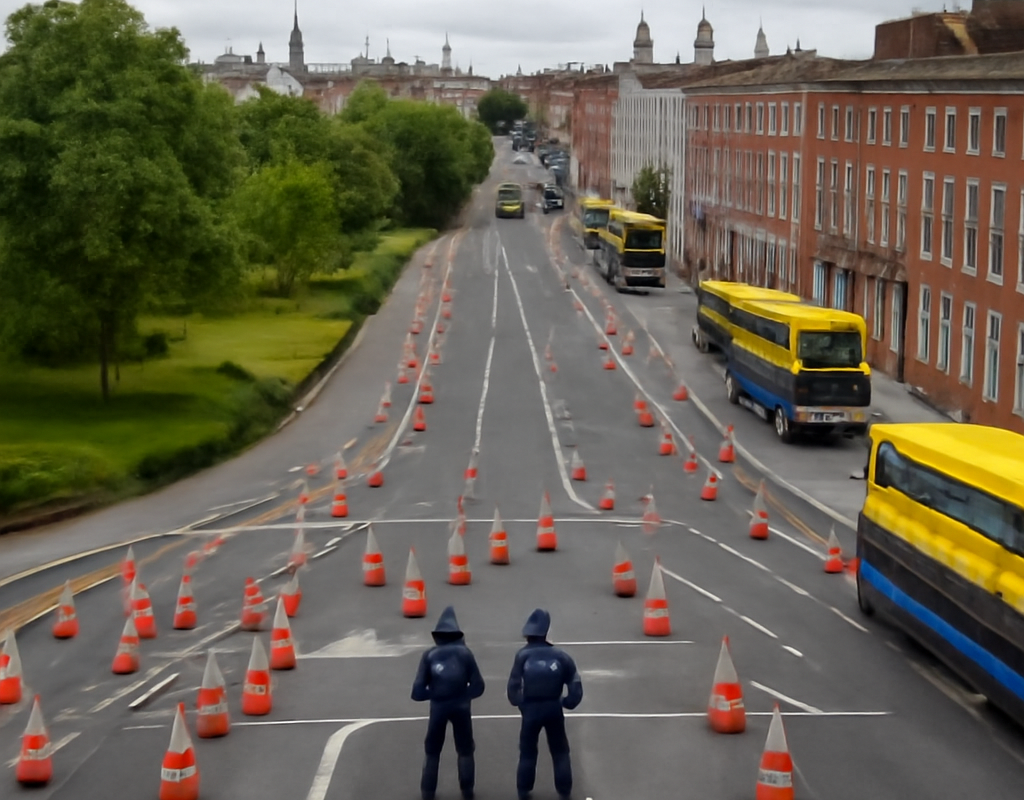
Dublin is preparing for significant travel disruption next week as Ireland hosts two major EU presidency meetings. The security operation will be the largest ever carried out by An Garda Síochána, with road closures, traffic restrictions and changes to public transport expected across parts of the capital.
What is happening in Dublin?
Two EU meetings will take place in Dublin on Thursday and Friday next week. The events are expected to bring senior political figures and international delegations to the city, prompting an extensive policing and security response.
Gardaí have warned that the operation will create substantial disruption for motorists, commuters, residents and visitors. Authorities are preparing traffic management measures in advance, including the use of barriers and Garda traffic cones in areas connected with the meetings.
Dublin road closures and traffic restrictions
Road users should expect temporary closures and restrictions in central Dublin as security arrangements are put in place. The exact impact may vary by location and time, particularly around venues used by visiting delegations.
Drivers travelling through the city centre could face delays, diversions and slower journeys. People making essential trips are advised to allow additional time and check official Garda and transport updates before setting out.
The disruption may affect:
- Commuters travelling into and across Dublin city centre
- Residents living near meeting venues and security zones
- Businesses receiving deliveries in restricted areas
- Visitors travelling to hotels, public buildings and central attractions
- Emergency and essential service access routes
Public transport disruption expected
Public transport services may also be affected by road closures and rolling security measures. Bus routes could be diverted, shortened or delayed, while passengers using rail services may need to allow extra time to reach stations and complete connecting journeys.
Anyone travelling by bus, train or other public transport should check the latest operator notices before leaving home. Real-time information may be particularly important because arrangements can change as the security operation develops.
Ireland’s biggest policing operation
An Garda Síochána has described the security response as the largest policing operation in the history of the State. Members of the Defence Forces have also been visible in Dublin ahead of the meetings, including near Merrion Square.
The scale of the operation reflects the number and seniority of those expected to attend, as well as the need to secure venues, routes and public spaces. A visible security presence is likely to remain in place before and during the meetings.
For the public, that may mean checkpoints, controlled access, temporary barriers and a greater Garda presence in affected districts. These measures are designed to support the safe running of the events but are likely to affect normal movement through the capital.
When will the disruption happen?
The two meetings are scheduled for Thursday and Friday next week. Some preparations, including traffic management infrastructure and security deployment, are already underway.
Disruption may be most noticeable during periods when official delegations travel between locations. That means delays could occur at short notice even where a road is not closed for the entire day.
- Before the meetings: Barriers, traffic cones and security measures are installed in relevant areas.
- During Thursday and Friday: Road restrictions and public transport disruption are expected to be at their greatest.
- After the meetings: Restrictions should be removed progressively, although some delays may continue while equipment and security resources are withdrawn.
What should Dublin commuters do?
Commuters can reduce the risk of missed appointments by planning ahead and checking information close to departure time. Travellers should not rely solely on a normal route or timetable during the summit period.
- Check Garda notices and transport operator updates before travelling.
- Allow more time for journeys, connections and walking between stops.
- Consider travelling outside peak periods where possible.
- Use alternative routes and avoid central areas unless necessary.
- Follow instructions from Gardaí, transport staff and event security personnel.
- Do not stop or park near barriers, restricted routes or emergency access points.
Why the operation matters
The meetings come during Ireland’s EU presidency and place Dublin at the centre of high-level European discussions. Hosting events of this scale brings diplomatic and political importance, but it also creates practical challenges for the city.
The policing operation must balance the protection of visiting leaders with the continued movement of residents, workers and businesses. Clear communication will be important as authorities respond to changing traffic conditions and security requirements.
Frequently asked questions
When will Dublin experience the greatest disruption?
The most significant disruption is expected on the Thursday and Friday when the two EU meetings take place, although preparations have already begun.
Will Dublin roads be closed?
Temporary road closures and traffic restrictions are expected in areas connected with the meetings. Drivers should check official notices for location-specific information.
Will public transport operate normally?
Public transport is expected to face delays, diversions or other changes because of road restrictions and security movements. Passengers should check live updates with their operator.
Who is carrying out the security operation?
An Garda Síochána is leading the policing operation, with Defence Forces personnel also visible in Dublin ahead of the meetings.
What happens next?
Further details on closures, diversions and access arrangements are expected to emerge through official channels as the summit approaches. Travellers should check the latest information on the day rather than assuming that current routes and timetables will remain unchanged.
For Dublin residents and visitors, the clearest takeaway is simple: plan early, allow extra time and avoid unnecessary travel through the city centre during the two meeting days.
Conclusion
This Breaking News Ireland story is likely to have a direct effect on daily travel across Dublin next week. The State’s largest-ever policing operation will support two important EU meetings, but it will also bring road closures, traffic delays and public transport disruption. Checking official updates and planning alternative journeys will be the best way for commuters and visitors to manage the impact.