

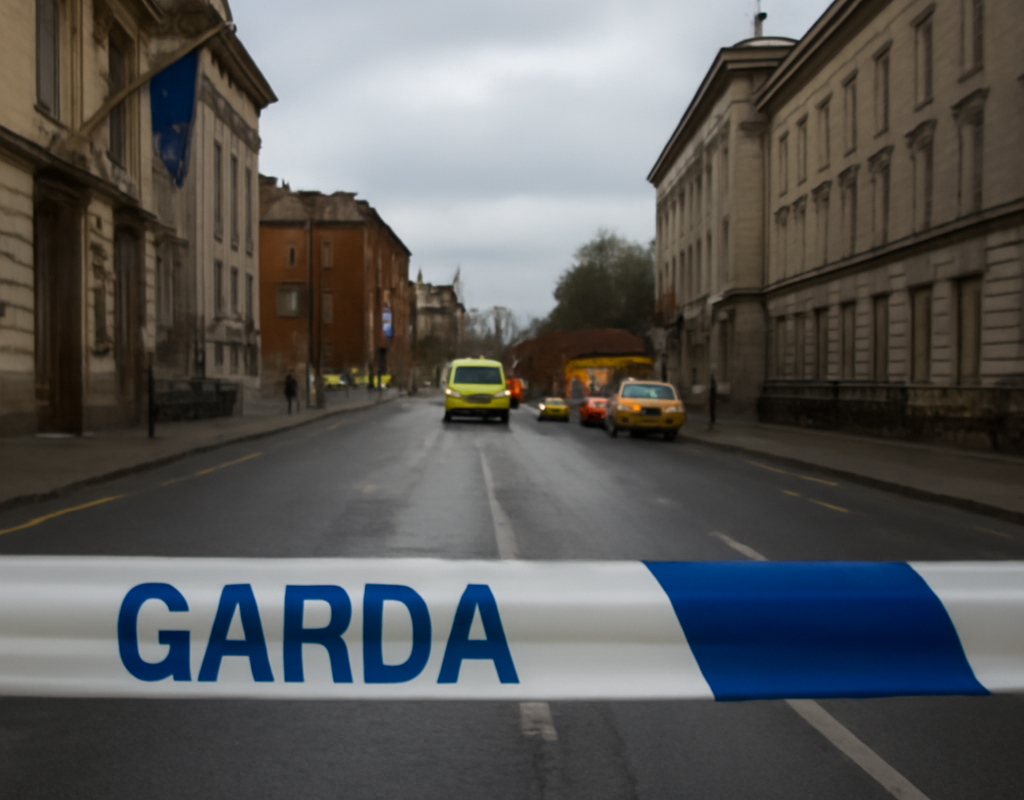
Dublin bomb hoaxes are drawing renewed attention to the security challenges facing Ireland as the country prepares for its upcoming EU Council Presidency. The incidents have raised questions about how false threats, disruption and disinformation can be used in the so-called grey zone between ordinary criminality and open conflict.
This developing story matters beyond the immediate response to individual hoaxes. It touches on public safety, Garda resources, critical infrastructure and Ireland’s ability to protect major national and European events from hostile interference.
Breaking News: Why Dublin bomb hoaxes matter
Bomb hoaxes are deliberately false reports claiming that an explosive device has been placed at a location. Even when no device is found, each report can trigger evacuations, road closures, searches and significant demands on emergency services.
In Dublin, the impact can be especially disruptive because government buildings, transport hubs, diplomatic sites and major public venues are concentrated in a relatively compact area. A false alarm may affect commuters, residents, businesses and visitors while specialist personnel establish whether a genuine danger exists.
The wider concern is that repeated hoaxes could be used to create uncertainty rather than cause physical damage. That is a central feature of hybrid warfare and grey-zone activity: pressure is applied through intimidation, disruption, manipulation or covert actions while remaining below the threshold of conventional armed conflict.
What is hybrid warfare and the grey zone?
Hybrid warfare refers to the coordinated use of different tools to weaken or pressure a state. These can include cyberattacks, espionage, online manipulation, economic pressure, sabotage and the exploitation of social divisions.
The grey zone describes the space between peace and clearly declared war. Activities in this space are often designed to be difficult to attribute, difficult to classify and costly to ignore. A false emergency may appear to be a local criminal act, but a pattern of incidents could generate wider disruption and public anxiety.
That does not mean every bomb hoax is directed by a foreign state. Investigators must establish the facts of each case, including motive, intent and any links between incidents. The security significance lies partly in the possibility that everyday vulnerabilities could be exploited by a more organised campaign.
Potential effects of repeated false threats
- Emergency-service pressure: Gardaí, bomb-disposal specialists and other responders must treat threats seriously until they are assessed.
- Public disruption: Evacuations and closures can affect workplaces, schools, transport and access to public services.
- Economic costs: Businesses and event organisers may face delays, cancellations and additional security requirements.
- Psychological impact: Repeated alerts can increase anxiety and undermine confidence in public spaces.
- Strategic distraction: Officials may be forced to divert attention from other security and policing priorities.
Ireland’s EU Presidency raises the security stakes
Ireland’s next EU Council Presidency will place additional attention on Dublin and other locations involved in European meetings and official events. The presidency typically requires extensive planning across government departments, An Garda Síochána, local authorities, transport providers and international partners.
Large diplomatic programmes create a broad security footprint. Authorities must consider venues, accommodation, aviation, road movements, protests, cyber risks and emergency communications. False threats can complicate those plans even when they do not identify a credible device.
The presidency also gives Ireland a prominent international role. Disruption around high-profile events could therefore have an impact beyond the immediate location, particularly if incidents are amplified through social media or used to portray the State as unable to protect visiting officials.
Read More
Follow further Ireland News coverage on public safety, national security and major events.
How authorities respond to a bomb hoax
When a threat is reported, Gardaí assess the information and determine whether protective measures are required. Depending on the circumstances, this can include establishing cordons, directing people away from an area, searching premises and coordinating with specialist units.
Members of the public should not approach suspicious objects or share unverified claims. Anyone who receives a direct threat or sees something suspicious should contact emergency services and provide as much accurate information as possible, including location, time and the nature of the concern.
Authorities also face a communications challenge. They must provide enough information to keep people safe without releasing operational details that could assist someone seeking to cause disruption. Clear, timely updates are particularly important during incidents involving busy transport routes or public buildings.
What happens next?
The key questions for investigators are whether the incidents are connected, who made the reports and what objective they were intended to achieve. Those questions may involve conventional Garda investigation, digital evidence, intelligence assessment and cooperation with national and international security partners.
Officials are also likely to review protective arrangements for EU-related events. That review may cover access controls, threat reporting, resilience planning, cyber security and the ability of public bodies to maintain essential services during a prolonged series of false alarms.
For readers, the practical advice is straightforward:
- Rely on updates from An Garda Síochána, government departments, transport operators and emergency services.
- Do not circulate unverified posts, images or alleged warnings.
- Follow evacuation and access instructions promptly.
- Report suspicious activity through official channels rather than confronting anyone.
Frequently asked questions
Are bomb hoaxes treated as serious offences?
Yes. A false bomb report can cause public fear, emergency deployment, disruption and financial loss. The legal consequences depend on the circumstances and evidence gathered by investigators.
Does a bomb hoax prove hybrid warfare is taking place?
No. A single hoax does not establish a state-backed or coordinated campaign. The hybrid-warfare concern arises when hostile actors may exploit repeated incidents or combine them with other forms of interference.
Why is the EU Presidency relevant?
The presidency brings meetings, international visitors and increased attention to Ireland. That creates additional security and operational responsibilities for the State.
The wider meaning for Ireland
The Dublin bomb hoaxes demonstrate why modern security planning must address more than conventional attacks. Public institutions also need resilience against false information, malicious disruption and incidents designed to consume resources without causing a direct physical strike.
Ireland’s response will depend on accurate intelligence, coordinated emergency planning and public confidence in official information. The immediate priority remains establishing the facts of each incident, while the longer-term task is ensuring that disruption cannot easily undermine national preparedness.
The central takeaway from this Breaking News Ireland story is clear: false threats may leave no explosive device behind, but they can still impose real operational, economic and psychological costs. As Ireland prepares for a major European role, resilience in the grey zone will be an increasingly important part of public security.