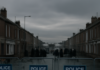
The Drumcree standoff in Portadown has entered its third day, with hundreds of residents and supporters still gathered on the Garvaghy Road and Orange Order members remaining near Drumcree Church. Northern Ireland Secretary Chris Bryant is expected to hold further talks as efforts continue to prevent a renewed confrontation.
Drumcree standoff continues in Portadown
The dispute follows the blocking of a contentious Orange Order parade from proceeding along the Garvaghy Road on Sunday. Since then, residents have maintained a presence on the road, while the Police Service of Northern Ireland has continued to restrict movement near the church entrance.
The atmosphere on Garvaghy Road was reported to be calm overnight. People remained near tents and gathered supplies, including tea and sandwiches, while musicians played close to the junction leading towards Drumcree. Supporters also travelled from south of the Border to join the residents’ protest.
At Drumcree Church, several Orange Order members remained in place. Earlier attempts to proceed with the parade were stopped by PSNI officers, with police blockades positioned at both ends of the narrow approach to the church.
Latest Irish News: Bryant to hold further talks
Chris Bryant said discussions would continue after what he described as positive conversations on Monday. Further meetings are expected in Hillsborough, although the timing may be affected by his scheduled appearance at the Labour Party conference in Manchester.
The Northern Ireland Secretary has been attempting to find a route through the impasse by meeting representatives of the residents, Sinn Féin and the Orange Order. The sides remain divided over the conditions required for any resolution.
- Residents are seeking the appointment of an international mediator.
- The Orange Order wants a written guarantee that permission to march remains in place.
- Police continue to prevent the disputed parade from entering the Garvaghy Road.
- Further political discussions are expected later in the day.
Bryant has indicated that he believes a possible solution exists, but there has been little public evidence of a compromise so far.
Follow the latest Northern Ireland News and public-service developments at DailyDigest.ie.
Political pressure grows at Stormont
The standoff has also created tension within the Stormont institutions. Speaker Edwin Poots described First Minister Michelle O’Neill’s absence from the Assembly during questions about the crisis as “unprecedented”. O’Neill had encouraged protesters to remain on the road until at least midnight on Monday.
Former taoiseach Bertie Ahern urged political leaders to avoid returning to what he called the “tribal past”. Speaking as the confrontation entered its third day, he warned that short-term political calculations could damage the institutions and undermine progress made since the Good Friday Agreement.
Ahern called on the First Minister and Deputy First Minister to meet and work towards de-escalation. He also said the dispute had never been fully resolved and should now be brought to a lasting conclusion.
The next Stormont election is expected in May 2027, adding political sensitivity to the current dispute. However, there is no confirmed indication that the Executive will collapse, and the immediate focus remains on preventing further escalation around Drumcree.
Why the Garvaghy Road dispute matters
Orange Order parades have long been a central issue in Northern Ireland, particularly where proposed routes pass through predominantly nationalist areas. Drumcree became one of the most prominent flashpoints during the 1990s, when repeated disputes over the Garvaghy Road contributed to serious unrest.
Under Northern Ireland’s parading legislation, protests against parades must be notified and considered through the Parades Commission process. The gathering on the Garvaghy Road was not a notified protest, according to the information available, creating an additional legal and policing complication.
The dispute therefore involves more than a single march. It touches on competing claims about tradition, consent, equality, public order and the rights of residents. Any agreement must address both the proposed parade route and the confidence of communities affected by it.
What happens next in the Drumcree standoff?
The immediate priority is to keep the situation peaceful while political representatives search for an agreement. Talks are expected to resume after Bryant’s return from Manchester, but the two principal sides remain far apart.
Residents have indicated that they intend to remain on the road, while Orange Order members continue to gather at Drumcree Church. The PSNI’s role will be to manage access, maintain public safety and enforce any applicable decisions without allowing the situation to develop into wider disorder.
Readers should rely on official PSNI statements, Stormont announcements and updates from the Parades Commission for confirmed developments. The position can change quickly if either side alters its plans.
Frequently asked questions
What is the Drumcree standoff?
It is a dispute over an Orange Order parade route along Portadown’s Garvaghy Road. Residents and supporters have blocked the route, while Orange Order members remain near Drumcree Church.
How long has the current standoff lasted?
The current confrontation entered its third day on Tuesday, following the blocked parade on Sunday.
Who is leading the talks?
Northern Ireland Secretary Chris Bryant is facilitating discussions with representatives connected to the residents, the Orange Order and political parties.
What is the role of the Parades Commission?
The Parades Commission is the adjudication body responsible for considering parade notifications and imposing conditions where necessary under Northern Ireland’s parading framework.
Conclusion
The Drumcree standoff remains unresolved, with residents still occupying the Garvaghy Road and Orange Order members held near the church by PSNI blockades. The next round of talks will be crucial, but the absence of an obvious compromise means tensions remain high. For Northern Ireland, the central test is whether political dialogue can prevent a historic flashpoint from becoming a new source of prolonged instability.