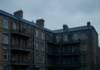
Dozens of rental bans were issued at Buckingham Village in Dublin after landlords failed to address serious housing standards concerns, including dark hallways, obstructions and wider problems in the complex’s shared areas. The Dublin City Council enforcement history shows that the 125-unit development accounted for almost half of all rental prohibition notices issued by the council in 2022.
What happened at Buckingham Village?
Buckingham Village, a large apartment complex in Dublin’s northeast inner city, has been repeatedly listed by Dublin City Council since 2018. Rental prohibition notices prevent a landlord from offering a property to tenants until substantial improvements have been completed.
The notices followed a sequence of enforcement steps. When the council receives a complaint, an official can inspect the property and issue an improvement letter. If the problems remain unresolved, the council may issue a formal improvement notice. A prohibition notice is used only after those earlier interventions have been ignored.
- Buckingham Village contains 125 apartments.
- Twenty-seven flats were subject to rental prohibitions by 2022.
- The complex represented 47 per cent of Dublin City Council’s prohibition notices that year.
- Only one apartment currently remains on the prohibition list, according to the council.
Latest Dublin news: rental bans peaked in 2022
Dublin City Council first began issuing prohibition notices at Buckingham Village in 2018. By 2022, 27 of the complex’s apartments were covered by rental bans—more than one in every five units.
The concentration was particularly significant. Buckingham Village accounted for 47 per cent of all prohibition notices issued by Dublin City Council during 2022. Across the period from 2018 to 2024, 10 per cent of the 297 properties served with prohibition notices across Dublin city were located in the complex.
The number of notices remained high in 2024, when 24 Buckingham Village apartments were listed. A large number of flats were subsequently removed from the register, leaving one unit on the list at present.
Why properties are removed from the list
Dublin City Council says properties can be removed after landlords complete the required work. Units may also leave the register if they are sold or withdrawn from the rental market.
However, the available information does not establish how many Buckingham Village apartments were removed because improvements were completed, rather than because ownership changed or the homes were taken out of the rental sector. That distinction matters for tenants and housing campaigners assessing whether conditions have genuinely improved.
Concerns extend beyond individual apartments
The enforcement history has drawn attention to the condition of the complex’s common areas. Reports describe windowless internal corridors where some lights do not work, leaving sections in darkness. Obstructions have also been observed in hallways, while some apartments were reported to be missing door handles.
These issues affect more than the appearance of the development. Poor lighting and blocked circulation areas can create practical safety concerns for residents, visitors and emergency access. They also highlight the difference between correcting defects inside individual rental units and maintaining shared spaces across an entire complex.
Belinda Nugent of the Inner City Organisations Network said the development requires major redevelopment. Independent local councillor Nial Ring described Buckingham Village as a long-standing problem and criticised its dilapidated appearance.
For more housing and public services coverage, visit DailyDigest Ireland.
What Dublin City Council’s enforcement process means
A prohibition notice is not the first action taken against a landlord. It represents an escalation after earlier warnings and improvement requirements have not produced the necessary changes.
The council has said that the measure cannot be used as an initial enforcement step. This process is intended to give landlords an opportunity to address breaches before the property is prevented from being rented.
For tenants, the system is important because it provides a formal route for raising concerns about rental standards. A complaint may trigger an inspection, but enforcement action depends on the council’s assessment and the landlord’s response to notices.
Who owns apartments in the complex?
Property and company records indicate that many apartments were acquired over time by developer John McCann. His holdings were later transferred to Northside Apartments, a company controlled by two of his daughters. The company currently owns approximately 80 of Buckingham Village’s 125 units, according to the reported records.
It is not known how many of those apartments were covered by prohibition notices. A solicitor for Northside Apartments said any rectification notices served on the company were dealt with promptly and that no tenant in its apartments was evicted as a result of such a notice.
The solicitor also said Northside Apartments was not responsible for apartments owned by other parties. Ownership across a multi-unit development can therefore make accountability more complex, particularly where concerns involve shared corridors and other common facilities.
What happens next for residents?
The immediate focus is likely to remain on whether the remaining listed apartment is brought into compliance and whether broader conditions in the complex improve. The removal of most units from the prohibition list does not, by itself, provide a complete picture of the state of the development.
Residents and housing advocates may also seek clearer information on:
- which apartments were improved before being removed from the register;
- whether any homes were sold or withdrawn from the rental market instead;
- how common-area defects are being addressed; and
- what continuing inspections are planned by Dublin City Council.
As Ireland’s rental market remains under pressure, enforcement records provide an important indicator of how housing standards are being managed. They also show why tenants should report serious defects and seek advice when landlords do not respond.
Frequently asked questions
What is a rental prohibition notice?
It is a council order preventing a landlord from offering a property for rent until substantial required improvements have been completed.
How many Buckingham Village apartments were banned from being rented?
Twenty-seven apartments were subject to prohibition notices by 2022. In 2024, 24 remained listed, while one apartment is currently listed according to Dublin City Council.
Does a prohibition notice automatically evict tenants?
No. A notice prevents the property from being offered for rent, but the company representing Northside Apartments said no tenant in its apartments was evicted because of such a notice.
Why were apartments removed from the prohibition list?
The council says properties are removed when required improvements are made, or when units are sold or withdrawn from the rental market. The precise reason for each removal is not publicly clear from the available information.
Why this Dublin housing story matters
The Buckingham Village case illustrates how housing enforcement can build over years before reaching the prohibition stage. It also raises questions about the condition of common areas, ownership responsibility and the transparency of council records.
For readers following Breaking News Ireland and the latest Irish news, the key takeaway is clear: a fall in the number of rental bans does not necessarily mean every underlying problem has been resolved. Continued inspections, transparent records and action on shared facilities will determine whether conditions at Buckingham Village genuinely improve.