

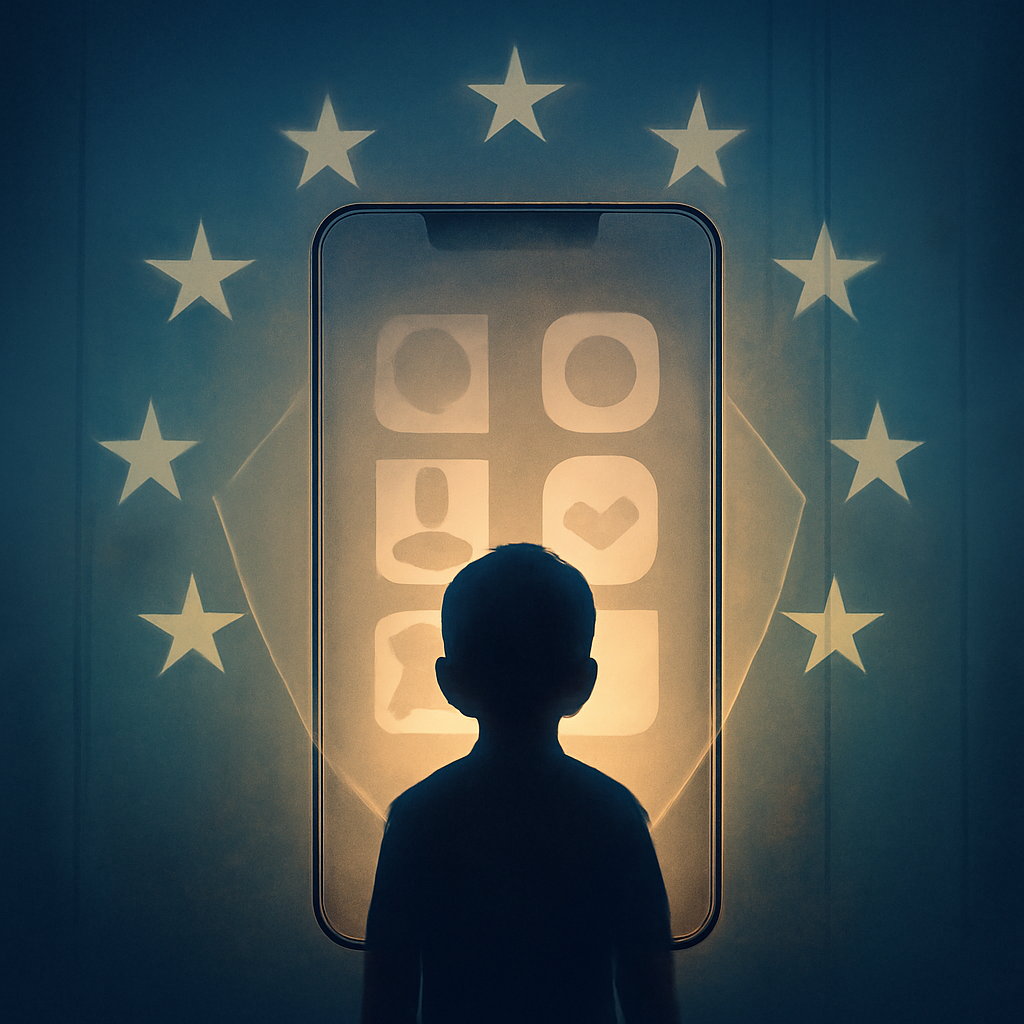
Children could lose their voice online if Europe introduces blanket social media age limits, Ireland’s Special Rapporteur on Child Protection has warned. Aisling Parkes said the proposed approach should focus less on excluding young people and more on making technology companies responsible for creating safer, age-appropriate platforms.
Breaking News: Why social media exclusion is being challenged
The European Commission is expected to unveil its EU Kids Act this week. The proposed legislation is designed to establish common rules across the European Union for children’s access to social media, online services and artificial intelligence tools.
Under the planned tiered system, children would not be permitted to create their own social media accounts until they reach the age of 15. The legislation is also expected to include requirements for safer digital design and protections covering AI chatbots and so-called AI companions that are already used by children and teenagers.
Parkes has cautioned that a fixed age threshold could prevent younger children from expressing themselves, accessing information and taking part in decisions that affect their lives. She said children should be assessed as individuals, taking account of their age, circumstances and developing ability to make decisions.
What the proposed EU Kids Act could mean for children
The EU Kids Act is intended to create a consistent framework for child safety online. At present, families and platforms operate within a complicated mix of national rules, company policies and age-verification systems.
The proposed measures are expected to focus on two connected areas:
- Age access: A tiered system would determine when children could independently establish social media accounts.
- Platform responsibility: Companies such as Meta and TikTok would face stronger obligations to provide safe design and reduce risks to minors.
- AI safeguards: Similar protections would apply to AI chatbots and digital companions that interact with young users.
- Child wellbeing: The rules are intended to address risks linked to the online environment rather than placing the entire burden on families.
The debate reflects a wider tension in Ireland News and European policy: how to protect children from harmful online experiences while preserving access to education, communication, participation and freedom of expression.
Read More
Follow the latest developments in Ireland News, including public policy, children’s rights and digital regulation.
Rapporteur calls for children to be heard
Speaking on RTÉ radio’s Today with David McCullagh, Parkes said children and young people should be directly involved in discussions about online access. Her argument is that young users understand how digital services operate in practice and should not be treated solely as passive recipients of regulation.
She said education was an essential part of the response. Rather than relying only on a ban or exclusion, children should receive practical guidance on privacy, online relationships, manipulation, harmful content and responsible use of digital tools.
Parkes also argued that technology companies have the financial and technical resources to improve their products. In her view, platforms should carry a greater share of responsibility for identifying risks, designing appropriate safeguards and operating ethically around children.
Freedom of expression and child safety
The concern about age limits is not only a technology issue. It is also connected to children’s rights, participation and freedom of expression.
International children’s rights principles support an individual approach that recognises a child’s evolving capacities. This does not mean that every child should have unrestricted access to every online service. It does mean that policymakers must consider whether an absolute age barrier is proportionate and whether it unintentionally silences younger users.
A blanket rule could affect children differently. Some may use social media to keep in contact with family, access support networks or participate in communities. Others may face greater exposure to harassment, addictive design, inappropriate content or pressure to share personal information.
The challenge for the European Commission will be to design rules that address those risks without treating all children as having identical needs or circumstances.
French ruling adds to the European debate
The discussion follows an August decision by France’s Constitutional Council. It found that a proposed ban on social media for under-15s affected freedom of expression in a way that was not appropriate, necessary or proportionate.
That ruling does not determine the outcome of the EU process, but it illustrates the legal difficulties surrounding age-based restrictions. Any European approach is likely to face scrutiny over whether it balances child protection with fundamental rights.
What happens next in this Ireland Today story?
The European Commission is expected to present the EU Kids Act this week. The proposal will then require consideration through the European legislative process before any final rules take effect.
Important questions will include:
- How will platforms verify a user’s age?
- Will parents or guardians have a role in account access?
- How will the rules apply across different services and countries?
- What safeguards will be required for AI chatbots and companions?
- How will children’s rights and freedom of expression be protected?
Implementation will also matter. Age restrictions can be difficult to enforce without collecting additional personal data, creating another privacy concern. Policymakers will need to explain how verification systems can protect children without exposing families to unnecessary surveillance or data collection.
Frequently asked questions
What is the EU Kids Act?
The EU Kids Act is a proposed European framework intended to introduce consistent child-safety rules for social media, online platforms and certain AI services.
What age limit is being proposed?
The planned tiered system would prevent children from independently creating social media accounts until the age of 15, although the final details remain subject to the EU process.
Why is the proposal being criticised?
Aisling Parkes has warned that excluding children by age could restrict their participation and freedom of expression. She has called for education and stronger platform responsibility alongside any limits.
Will the rules apply to AI?
The proposed framework is expected to include AI chatbots and digital companions that interact with children and teenagers.
Conclusion: safer platforms should not silence children
This Breaking News Ireland development highlights the difficult balance between protecting children online and respecting their rights. Age limits may form part of the solution, but the warning from the Special Rapporteur is clear: responsibility cannot rest solely with children and families.
The EU Kids Act will be judged not only by the restrictions it introduces, but by whether it makes platforms safer, supports digital education and gives children a meaningful voice. The strongest approach will protect young users while ensuring that Breaking News about online safety leads to better design and accountability—not simply exclusion.