

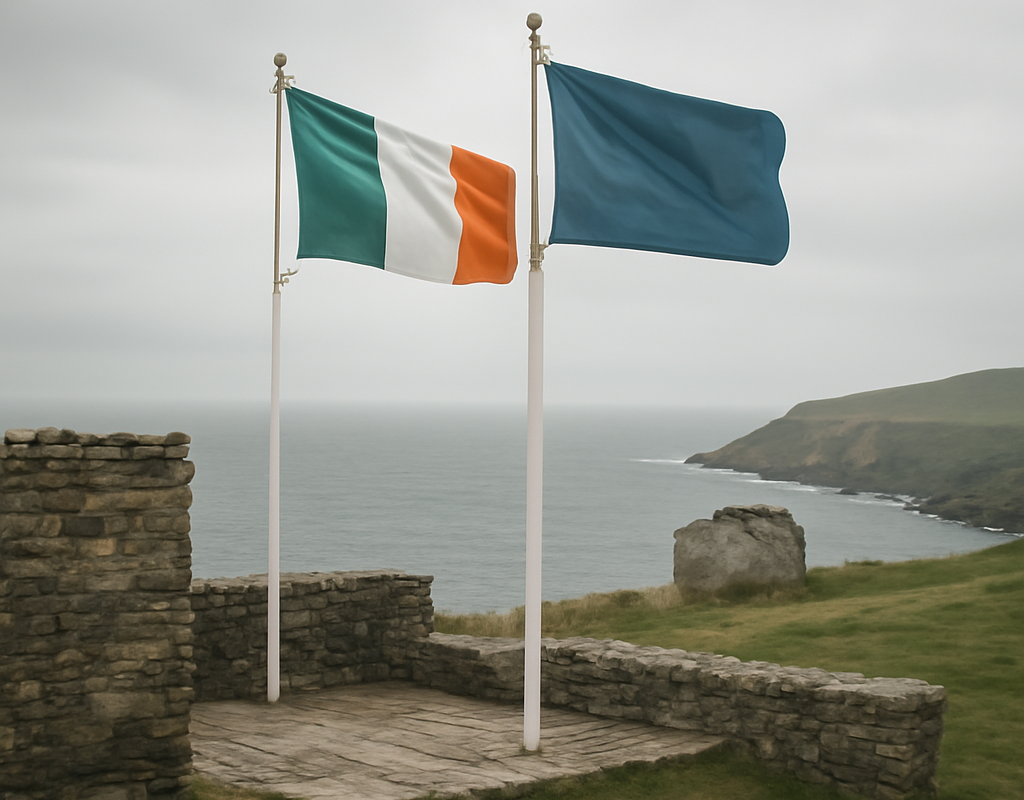
Ireland’s tricolour and national anthem are among the country’s most recognisable symbols, but their place in a future united Ireland is becoming an increasingly important public question. As constitutional debate develops, discussions about shared identity, official symbolism and inclusion are likely to move closer to the centre of Ireland’s national conversation.
Breaking News: Why national symbols matter in a united Ireland debate
The debate over a united Ireland is not limited to constitutional arrangements or the operation of government. It also raises practical questions about how people across the island would see themselves reflected in the institutions and symbols of a new political settlement.
The Irish tricolour and “Amhrán na bhFiann” are strongly associated with the State and its history. For many people, they represent independence, national identity and the Irish language. Others, particularly within the unionist and British-identifying traditions, may not view those symbols as representing their identity.
That difference is central to any serious conversation about post-unity arrangements. A future settlement would need to address not only legal and political structures, but also the symbols used at public ceremonies, sporting events, schools and government institutions.
What could change after Irish unity?
No agreed framework currently determines whether the tricolour or the national anthem would remain unchanged in a united Ireland. Any decision would depend on political negotiations, public consultation and the constitutional arrangements approved by voters.
Possible approaches could include retaining existing symbols, creating additional shared symbols or adopting new arrangements for official occasions. The issue could also involve flags, an anthem, public holidays, emblems and the language used by state institutions.
These choices would carry considerable emotional weight. Symbols are visible signs of belonging, and even apparently small decisions can influence whether communities feel included in a new state.
The Irish tricolour
The green, white and orange flag is commonly understood as representing a hoped-for reconciliation between different traditions on the island. Its design gives it a prominent place in Ireland’s civic and historical identity.
At the same time, the meaning people attach to the flag can differ depending on family history, political outlook and community background. A future discussion would therefore need to distinguish between the historical meaning of the tricolour and how it is experienced by citizens with different identities.
“Amhrán na bhFiann”
Ireland’s national anthem is performed at official events and major sporting occasions. Its historical origins connect it to the revolutionary period, which gives the song particular significance for many people.
Questions about the anthem could include whether it should remain the sole official anthem, whether an additional song should be recognised, or whether a new arrangement should be created for shared events. Any proposal would likely generate strong public debate and require careful consideration of language, history and accessibility.
Why inclusion would be a key test
A central challenge in any constitutional change would be ensuring that people do not feel expected to abandon their identity in order to participate in public life. That includes Irish nationalists, unionists, British-identifying citizens and people who hold mixed or neither identity.
The Good Friday Agreement established the principle that people in Northern Ireland can identify as Irish, British or both, and can change that identification. Any future arrangements concerning national symbols would need to be considered in that wider context.
For readers, the practical significance is clear: decisions about ceremonies, public buildings, schools and sporting representation could affect everyday experiences of citizenship. The discussion is therefore about more than visual design or musical tradition.
Follow developing Ireland News and constitutional coverage at DailyDigest Ireland.
How would decisions be made?
There is no single automatic process for deciding national symbols in the event of constitutional change. The outcome would depend on the details of any unity proposal and the institutions created to implement it.
A credible process could involve:
- Public consultation across communities and regions.
- Engagement with political parties, civic organisations and cultural groups.
- Consideration of language and cultural rights.
- Parliamentary debate and legal review.
- Referendums or other democratic approval mechanisms where required.
The precise sequence cannot be confirmed while the constitutional question remains unresolved. It is also possible that different symbols could be used for different purposes, with arrangements designed to balance continuity and inclusion.
Why this is part of a wider conversation
Debates about symbols often surface alongside broader questions about public services, policing, healthcare, education, taxation and representation. Those issues would likely have a more direct effect on daily life, but symbols can become powerful indicators of whether a political project is viewed as fair.
For that reason, discussions about the tricolour and anthem should not be dismissed as ceremonial matters. They reflect deeper questions about history, legitimacy and the identity of the state.
Frequently asked questions
Would the tricolour automatically remain the flag of a united Ireland?
Not automatically. Any future decision would depend on the constitutional and political arrangements agreed as part of a unity process.
Would Ireland need a new national anthem?
There is no confirmed requirement for a new anthem. Options could include retaining the existing anthem, recognising an additional song or considering a different arrangement.
Who would decide?
The decision would be shaped by the constitutional process, elected representatives, public consultation and any democratic votes required under the final arrangements.
Why are national symbols politically sensitive?
Flags and anthems connect public institutions with history and identity. If a community does not feel represented by them, the symbols can become a source of division rather than shared belonging.
What happens next?
There is no immediate change to Ireland’s national symbols. The issue is part of a developing debate about what a future united Ireland might look like and how it could accommodate different traditions.
Any meaningful proposal would need to be specific, transparent and developed with public participation. Until that process begins, claims about a confirmed replacement flag or anthem should be treated with caution.
The clearest takeaway from this discussion is that a united Ireland would involve more than changing borders or institutions. The future of the tricolour and national anthem would test whether a new political settlement could create symbols that are both historically grounded and genuinely shared.