

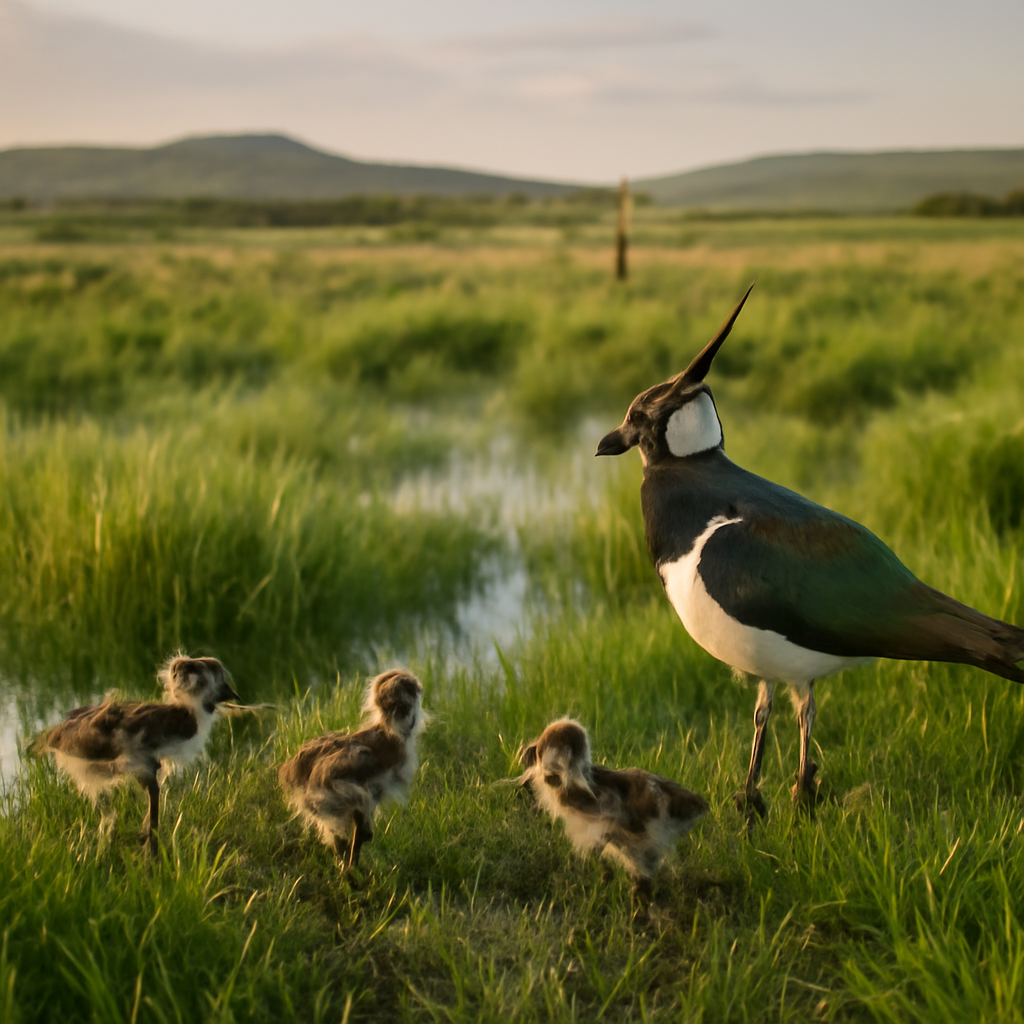
Ireland’s endangered lapwing has received a major conservation boost after 143 chicks were raised at Annagh Marsh Nature Reserve in Co Mayo this summer. BirdWatch Ireland said the result marks a “bumper breeding season” for a species whose numbers have fallen sharply across the country.
The development is significant for Ireland’s farmland and wetland birds. At Annagh Marsh on the Mullet Peninsula, just eight lapwings were breeding in 1985. By 1996, the population had fallen to two pairs, leaving the species at serious risk of disappearing from the reserve.
Lapwing breeding season delivers important boost
BirdWatch Ireland recorded at least 143 chicks from 67 breeding pairs during the latest season. The reserve is particularly important because it supports roughly 10 per cent of Ireland’s national breeding population, estimated at about 600 pairs.
Despite the recent progress, the wider picture remains concerning. BirdWatch Ireland said the number of breeding lapwings nationally is around 90 per cent below pre-1990s levels. The recovery at Annagh Marsh therefore represents meaningful progress, but not a reversal of the species’ national decline.
- At least 143 chicks were raised at Annagh Marsh this summer.
- The chicks came from 67 breeding pairs.
- Only eight breeding lapwings were recorded at the reserve in 1985.
- The population fell to two pairs by 1996.
- The reserve now holds about 10 per cent of Ireland’s breeding lapwings.
Explore more environmental and rural affairs coverage at DailyDigest.ie.
How conservation work helped protect the birds
BirdWatch Ireland began habitat restoration work at Annagh Marsh in 2001. The programme produced early improvements, but breeding numbers declined again by 2004.
Conservationists subsequently identified foxes as the main predators threatening lapwing eggs. In autumn 2011, BirdWatch Ireland installed a predator exclusion fence around the breeding area. The protected zone was later expanded with assistance from two local farmers.
The fencing was upgraded in 2024 to keep out otters and American mink, which were identified as two further significant predators. BirdWatch Ireland said breeding numbers have continued to rise since the upgrade.
What the predator fence does
The structure combines closely spaced wire mesh with four strands of high-voltage electric fencing. The mesh is designed to prevent foxes from entering, while the electrified upper section discourages animals from climbing or jumping over the barrier.
This approach is intended to protect eggs and young chicks during the most vulnerable stages of the breeding cycle. The project also demonstrates how targeted habitat management and predator control can support threatened bird populations.
Why the lapwing matters to Ireland
The lapwing is a native Irish bird recognised by its distinctive crest, black-and-white plumage and iridescent green, purple, blue and gold colouring. It is also known as the “peewit”, a name inspired by its sharp, two-syllable call.
For many ornithologists, the lapwing has become a symbol of Ireland’s natural heritage. A committee of the Irish Wildbird Conservancy, the predecessor of BirdWatch Ireland, declared it the national bird in 1990. However, the designation has never been formally adopted by the Irish Government.
The species’ decline reflects broader pressures facing farmland birds, including habitat loss, changes in land management and predation. Wetland reserves such as Annagh Marsh provide important breeding habitat, but long-term recovery also depends on protecting suitable landscapes beyond individual conservation sites.
What happens next for the endangered lapwing?
The latest figures give conservationists reason for cautious optimism. A strong breeding season can increase the number of young birds entering the population, helping to strengthen the reserve’s colony over time.
However, lapwing chicks remain vulnerable before they reach maturity. Continued monitoring, habitat management and protection from predators will be needed to maintain the progress recorded in Mayo.
The wider challenge is to ensure that conservation gains are not isolated. The experience at Annagh Marsh suggests that practical measures, local cooperation and sustained investment can make a difference when they are applied in the right habitat.
Frequently asked questions
How many lapwing chicks were raised in Mayo?
BirdWatch Ireland recorded at least 143 lapwing chicks at Annagh Marsh Nature Reserve during the summer breeding season.
Why is the lapwing endangered in Ireland?
The species has experienced a severe population decline linked to pressures including habitat changes and predation. National breeding numbers are estimated to be about 90 per cent below pre-1990s levels.
Where is Annagh Marsh Nature Reserve?
Annagh Marsh is located on the Mullet Peninsula in Co Mayo. The reserve supports around 10 per cent of Ireland’s breeding lapwings.
Is the lapwing officially Ireland’s national bird?
No. The lapwing was declared the national bird by a committee of the Irish Wildbird Conservancy in 1990, but it has never been officially designated as the national bird by the Government.
Conclusion
The endangered lapwing’s bumper breeding season at Annagh Marsh is one of the more encouraging pieces of Ireland conservation news this year. Raising 143 chicks shows that carefully managed habitat and predator protection can deliver results, even after decades of decline. The clear takeaway is that the lapwing’s future remains fragile, but the work in Co Mayo offers a practical model for protecting one of Ireland’s most distinctive native birds.