

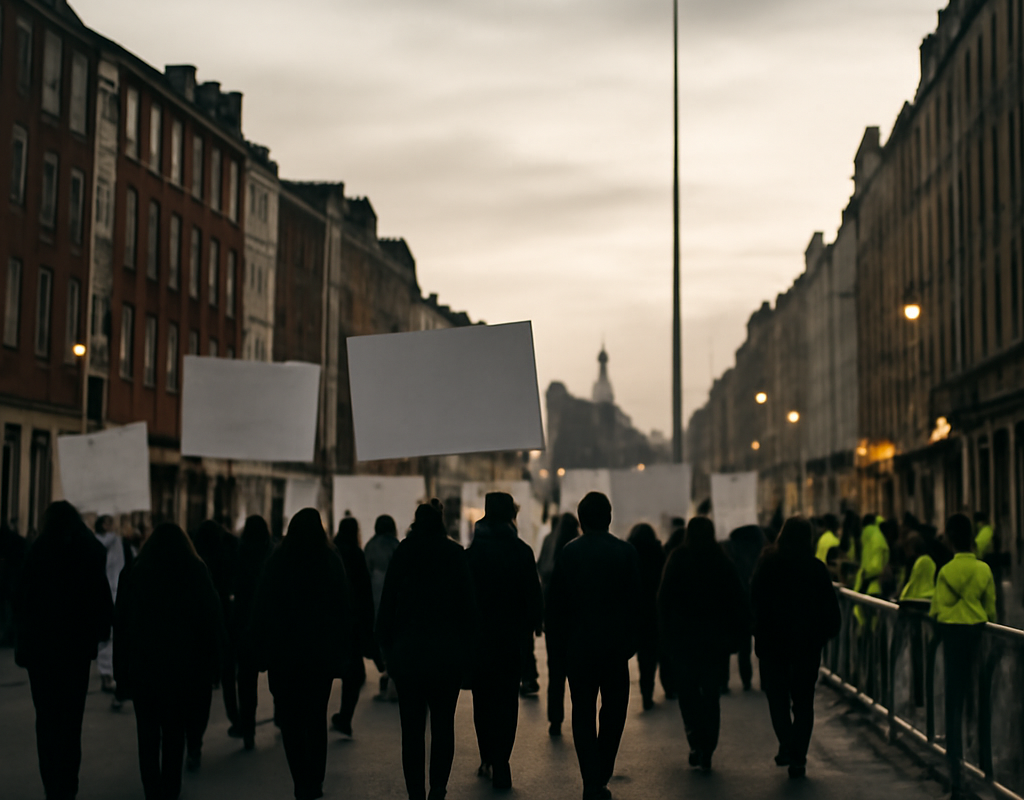
Hundreds of protesters marched through Dublin on Thursday calling for peace in Ukraine, Irish neutrality and an end to further military spending in Europe. The demonstration took place as European leaders gathered in the capital for a European Political Community summit.
The rally, attended by approximately 1,000 people, was among the main Breaking News developments in Ireland on November 12th, with demonstrators prevented from moving closer to the venue where EU leaders and other senior figures were attending a dinner.
What happened at the Dublin protest?
Protesters marched from O’Connell Street before gathering on Molesworth Street, where speakers addressed the war in Ukraine, Ireland’s military neutrality and rising defence expenditure across Europe.
A heavy Garda presence was visible along the route. Demonstrators were stopped from continuing down Nassau Street towards the National Gallery, where leaders attending the summit had gathered.
The protest was organised around opposition to increased military spending and support for a negotiated settlement to the conflict. Participants carried banners and argued that Ireland should use its position as a neutral country to advocate for peace rather than deeper military involvement.
Richard Boyd-Barrett urges negotiations
People Before Profit TD Richard Boyd-Barrett was among the principal speakers at the rally. He said Ireland should be promoting peace in Ukraine instead of increasing expenditure linked to war.
Boyd-Barrett described the conflict as stagnant and said large numbers of Ukrainians and Russians had been killed or forced into military service. He argued that continued reliance on a military solution was failing to bring the war to an end.
Addressing questions about whether Ukraine should surrender territory as part of a possible peace agreement, the TD referred to Ireland’s own history and the peace agreement signed with Britain. He said a settlement could recognise an ongoing national aspiration while ending a conflict that was causing further deaths.
His comments reflect a wider debate in Irish politics about how neutrality should operate in the context of Russia’s invasion of Ukraine. The issue has become increasingly prominent as European governments discuss defence budgets, weapons support and long-term security arrangements.
Who attended the rally?
The crowd included people opposed to military expenditure and supporters of Irish neutrality. Other speakers included Social Democrats TD Sinead Gibney and actor Liam Cunningham.
Organisers and speakers focused on several connected concerns:
- Ending the war in Ukraine through diplomacy and negotiations
- Protecting Ireland’s military neutrality
- Opposing further European military spending
- Highlighting the impact of conscription and battlefield deaths
- Questioning Ireland’s role in wider European security policy
One claim raised during the rally concerned Ukrainian residents living in Ireland who had allegedly returned to Ukraine to fight. That claim was made at the protest and was not independently verified in the available report.
Approximately 1,000 people attended the Dublin rally. The march began on O’Connell Street and ended with a gathering on Molesworth Street. Gardaí prevented protesters from continuing towards the National Gallery, where summit guests were attending a dinner.
The protest took place during a major European summit
The demonstration coincided with a meeting of the European Political Community in Dublin. The summit brought together European leaders, including Ukrainian president Volodymyr Zelenskiy, British prime minister Andy Burnham and Canadian prime minister Mark Carney.
The gathering placed Ireland’s approach to the war under particular attention. While protesters called for an end to military escalation, the Taoiseach reaffirmed Ireland’s support for Ukraine during the wider summit discussions.
That contrast illustrates the difficult political balance facing the Irish Government. Ireland has traditionally maintained a policy of military neutrality, but it has also provided humanitarian and political support to Ukraine since Russia’s full-scale invasion.
Why the Dublin protest matters
The demonstration highlights the continuing public debate over neutrality, European defence policy and the future of the war. It also shows how international summits can bring competing positions into close proximity: leaders discussing support for Ukraine, and protesters demanding that Europe prioritise negotiations over military spending.
For many people in Ireland, the debate is not limited to foreign policy. It also concerns the allocation of public money, the country’s constitutional and political traditions, and the possible consequences of a changing European security environment.
The protest remained focused on political messaging and was closely monitored by Gardaí. The available report did not indicate major injuries or significant disorder.
What happens next?
The debate over Irish neutrality and European defence spending is likely to continue after the summit ends. Government decisions on security cooperation, support for Ukraine and future defence policy will remain politically sensitive.
Any new announcements from the Irish Government or European leaders could add to the developing Ireland Headlines story. Further demonstrations may also take place if European governments approve additional military funding or expand their commitments to Ukraine.
Frequently asked questions
Where did the protest take place?
The march travelled from O’Connell Street to a rally on Molesworth Street in central Dublin.
Why were people protesting?
Demonstrators were calling for peace negotiations in Ukraine, defending Irish military neutrality and opposing further military spending in Europe.
How many people attended?
Approximately 1,000 people took part in the rally, according to the report.
Were protesters allowed to approach the summit venue?
No. Gardaí prevented the march from continuing down Nassau Street towards the National Gallery, where summit guests were attending a dinner.
Conclusion
The Dublin protest placed calls for peace and Irish neutrality at the centre of a day dominated by high-level European diplomacy. As leaders reaffirm support for Ukraine and discuss Europe’s security future, protesters are demanding that Ireland resist further military escalation and promote negotiations instead.
The central takeaway from this Breaking News story is that the argument over Ireland’s international role is far from settled. The summit may have ended, but the public and political debate over neutrality, defence spending and peace in Ukraine is set to continue.