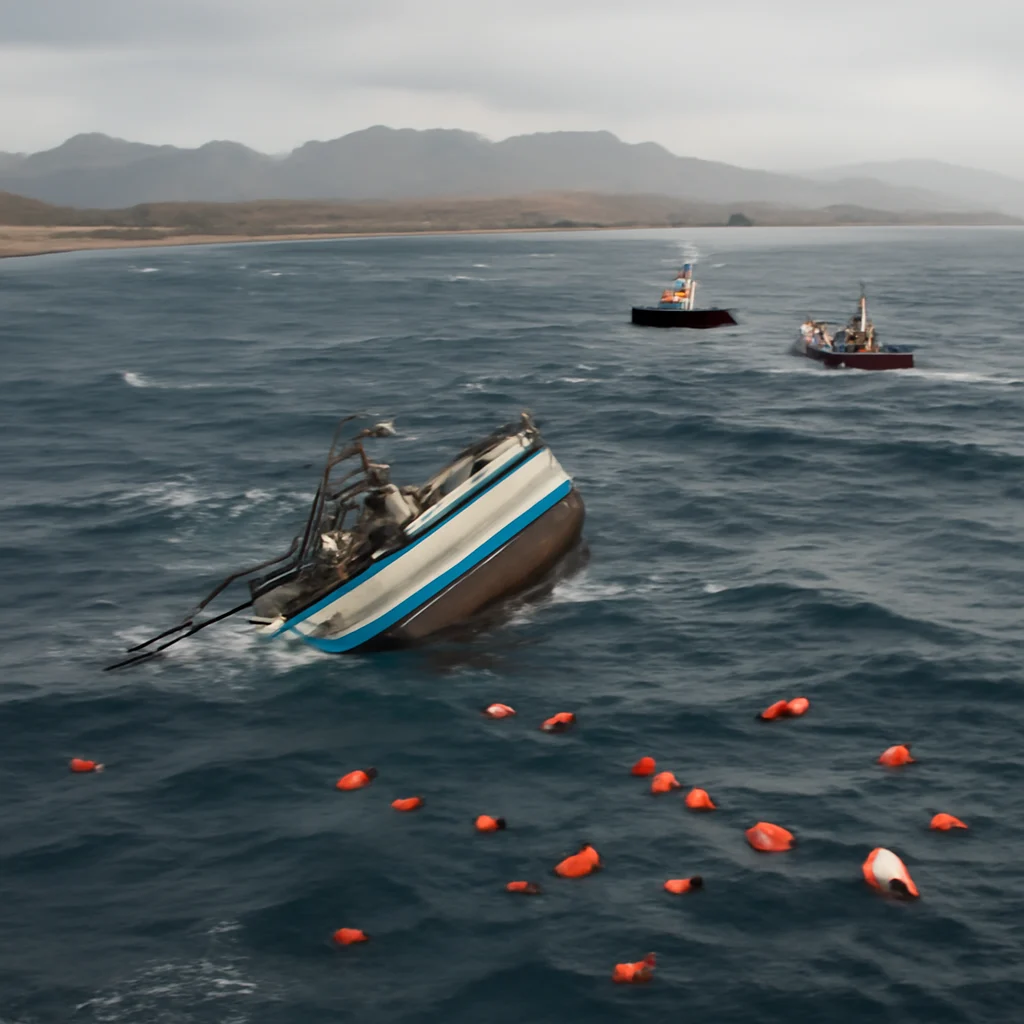
At least 139 migrants have died and 84 remain missing after a vessel travelling from Djibouti to Yemen capsized in the Bab el-Mandeb migration corridor, according to the International Organization for Migration (IOM). The disaster happened overnight between 8 and 9 October near Guhere, north of Obock, and search and rescue efforts are continuing.
The boat was carrying 305 people when it sank off the Djiboutian coast. More than 80 survivors, all Ethiopian nationals, have been assisted by local authorities and IOM teams. The confirmed death toll rose after an additional 30 bodies were recovered, following an initial count of 109.
What happened off the coast of Djibouti?
The vessel was travelling towards Yemen when it capsized near Guhere. The route across the Bab el-Mandeb Strait is used by migrants from the Horn of Africa seeking to reach Yemen and, in some cases, Gulf countries.
Among the first 109 bodies recovered were 52 men, 42 women and 15 children. The children included nine girls and six boys. The final number of victims could rise because 84 people are still unaccounted for and rescue operations have not yet concluded.
The IOM said its teams are working alongside Djiboutian authorities to provide emergency assistance, including support for survivors and families seeking information about missing relatives.
Why migrants take the Djibouti-Yemen route
The IOM says tens of thousands of people travel through Djibouti from the Horn of Africa each year. Many are seeking economic opportunities, but the journey is made more dangerous by unsafe vessels, unpredictable sea conditions and instability along the wider route.
The agency identified poverty, insecurity and the effects of climate change as factors pushing people to undertake the crossing. Migrants may first travel into Djibouti from Ethiopia before attempting the maritime journey to Yemen.
- The route crosses the Bab el-Mandeb Strait between the Horn of Africa and Yemen.
- Many travellers are Ethiopian nationals.
- The crossing can involve overcrowded and unsuitable boats.
- People may continue towards Gulf countries after reaching Yemen.
Recent movement from Ethiopia into Djibouti
The IOM said its Displacement Tracking Matrix recorded more than 20,000 incoming movements from Ethiopia into Djibouti since 10 September. The figure refers to observed movements during that period and does not necessarily represent unique individuals or people who later attempted the sea crossing.
The latest tragedy follows another shipwreck off Djibouti in March, when nine migrants died and 45 were reported missing while attempting to reach Yemen. The repeated incidents highlight the risks along a migration corridor that remains active despite the dangers.
Humanitarian response and missing people
Search and rescue operations are ongoing. IOM staff and local authorities are supporting survivors while efforts continue to recover bodies and establish the whereabouts of those still missing.
Alexandre Coissac, the IOM chief of mission in Djibouti, described the incident as a devastating loss of life and said the organisation’s thoughts were with survivors and families who had lost relatives or were still waiting for news.
The immediate priorities are locating missing people, identifying those who died, assisting survivors and ensuring that families receive reliable information. The scale of the emergency may also require continued medical and psychological support for people who endured the shipwreck.
What the disaster means for Europe
This is a disaster in the Horn of Africa and is not an EU decision or a European Union border incident. However, the route is part of wider migration movements linking Africa, Yemen and the Gulf, with humanitarian and protection consequences that can extend beyond the immediate region.
For European policymakers, the incident underscores the importance of safe routes, search and rescue capacity, regional cooperation and accurate information about dangerous journeys. It also demonstrates why migration reporting should distinguish between people’s reasons for travelling, their legal status and the risks they face.
There is no indication in the available information that the European Union has taken a specific decision in response to this shipwreck. Any future European involvement would need to be confirmed by the relevant institutions or governments.
What happens next?
Authorities and humanitarian workers will continue search operations and assistance for survivors. The death toll and missing-person figure may be revised as rescue and recovery work progresses.
Families are likely to need support in tracing relatives and obtaining confirmed information. Further details from Djiboutian authorities or the IOM may clarify the identities of those who died, the number of survivors and the circumstances surrounding the sinking.
Conclusion
The Djibouti boat disaster has left at least 139 migrants dead, with 84 still missing after an overcrowded vessel capsized while travelling towards Yemen. The tragedy highlights the severe dangers along the Bab el-Mandeb migration route and the humanitarian pressures driving people from the Horn of Africa to attempt the crossing. The immediate focus remains on search and rescue, survivor assistance and providing families with verified information.