Friday, May 29, 2026
Home Travel Why Longjing Tea Is Worth the Journey to Hangzhou’s Misty Hills

Why Longjing Tea Is Worth the Journey to Hangzhou’s Misty Hills

0
13

Longjing tea, often called Dragon Well, is more than a famous Chinese green tea—it is a seasonal craft tied to place, patience and skill. In Hangzhou, where the most prized leaves are harvested from hillside gardens near West Lake, travelers can discover why authentic Longjing tea is so revered and why tasting it at the source matters more than ever.

What Makes Longjing Tea So Special?

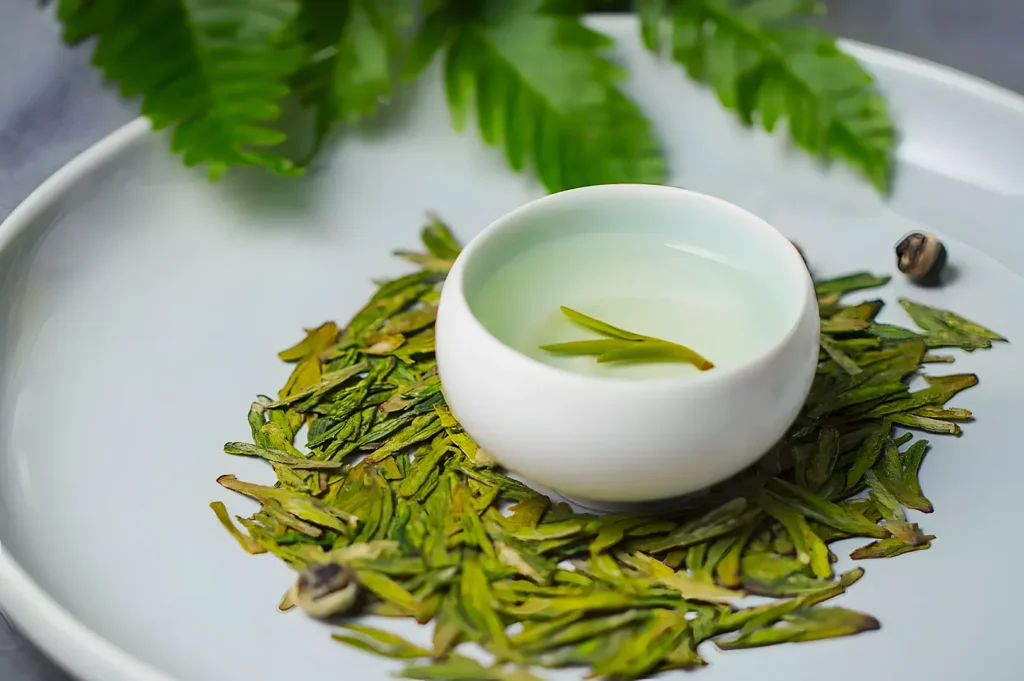
Longjing tea has centuries of prestige, with a reputation built on its flat spear-shaped leaves, pale green liquor and refined chestnut-like aroma. The finest batches come from early spring, especially the highly sought-after mingqian harvest, picked before the Qingming solar term in early April.

Its appeal comes from a combination of factors:

  • Terroir: Hangzhou’s misty hills and gentle spring weather help create tender, sweet leaves.
  • Timing: Even a few days can change flavor, texture and value.
  • Craftsmanship: Traditional pan-firing by hand shapes the leaves and preserves their fragrance.

How Traditional Longjing Tea Is Made

After plucking, artisans fire the leaves in hot woks, using careful hand movements to stop oxidation and press the leaves into their signature form. This labor-intensive process helps produce the delicate sweetness and layered aroma that tea lovers associate with top-grade Longjing tea.

Although machine processing is becoming more common, traditional producers argue that hand-firing still gives the tea greater depth and a more lingering finish.

Why Visiting Hangzhou Matters

Counterfeit products and broad use of the Longjing name have made authenticity a growing concern. Visiting Hangzhou’s tea villages offers one of the best ways to experience genuine Longjing tea and understand its origins.

Popular ways to explore include:

  • Touring tea farms in Longwu and West Lake areas
  • Watching live pan-firing demonstrations
  • Joining guided tastings at tea museums or institutes

The best travel window is mid-to-late March through early April, when the spring harvest is underway.

The Takeaway on Longjing Tea

Authentic Longjing tea is not just a drink; it is a living tradition shaped by climate, geography and generations of expertise. For travelers and tea enthusiasts alike, the clearest way to appreciate Longjing tea is to experience it in Hangzhou, where every cup reflects the brief, precious rhythm of spring.

Image courtesy of BBC Travel/Getty Images

To arrive in Longjing Village is to step into a living painting. Nestled in the misty mountains of Hangzhou’s Xihu District, surrounding the tranquil expanse of West Lake, this historic tea village breathes with a quiet reverence and embodies the rich Chinese culture that has nurtured tea traditions for centuries. A gentle morning mist clings to the terraced tea fields, and the air itself carries the clean, vegetal scent of fresh leaves.

It is here, in this serene valley, that the legendary Longjing tea was born during the Southern Song Dynasty. The history of Hangzhou Longjing tea is inseparable from this very soil, and for any true tea lover, a visit to Longjing Tea Village Hangzhou is a pilgrimage to the heart of one of China’s greatest green teas. Many visitors embark on a guided tour to fully immerse themselves in the tea culture, experiencing firsthand the craftsmanship and heritage behind Dragon Well tea. This is where the story of Dragon Well begins.

Longjing Village: The Heart of West Lake Longjing Tea

Longjing Village holds an almost mythical status in the world of tea. As the original birthplace of Dragon Well tea, its geographical and historical significance cannot be overstated. Located in Zhejiang Province, within the protected boundaries of the West Lake Scenic Area (also called Xihu Scenic Area), this site possesses a terroir that is both unique and irreplaceable. The specific microclimate created by the surrounding mountains and the lush valley, combined with the rich, acidic soil and pristine air quality, provides the perfect conditions for cultivating the highest quality Longjing tea produced anywhere in China.

The tea bushes that cling to the slopes of Shifeng Mountain and the neighbouring hills benefit from this exceptional environment. The mountains act as a natural barrier, trapping moisture and shielding the delicate plants from harsh winds. This protection allows the tea leaves to develop a complex, nuanced flavour profile that is impossible to replicate. While Longjing tea is grown in other areas, true connoisseurs understand that the tea from this original capital city site is the benchmark against which all others are measured. It is the heart of West Lake Longjing, a place where geography and history converge in every leaf.

The Legend and History of Longjing Tea

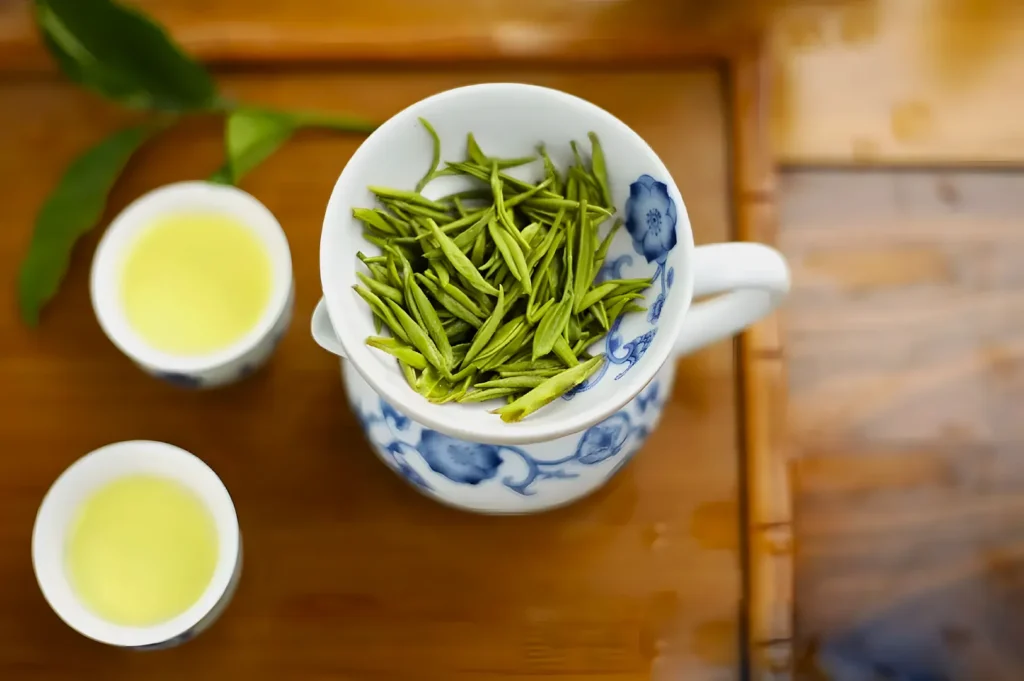
A ceramic cup with blue floral patterns holds fresh green tea leaves. Two cups of yellow-green tea sit beside it on a wooden tray, creating a calm, inviting scene.

The story of Longjing tea is woven from both history and legend. The name “Dragon Well” is said to have originated from a local well near the village, where the dense water would create sinuous, dragon-like patterns when disturbed by rain. Local lore held that this well was home to a dragon that controlled the rainfall, ensuring the prosperity of the tea bushes. This connection between the mythical dragon and the life-giving water imbued the tea with a sacred quality from its earliest days.

The tea’s status was forever cemented during the Qing Dynasty with a famous visit from the Qianlong Emperor. Captivated by the tea’s exceptional taste and the beauty of the region, Emperor Qianlong designated eighteen specific tea bushes near Hugong Temple as producers of imperial tribute tea. This imperial endorsement elevated what was once a humble village tea, already revered since the Southern Song Dynasty, to one of the most celebrated green teas in all of China. It became a symbol of refinement, culture, and imperial favour, a legacy that continues to this day.

Walking Through Longjing Tea Village Today

To visit Longjing Village today is to experience a rare and authentic slice of Chinese tea culture. A walk through the village in the lovely morning light reveals a town that moves at a different pace. As you meander along Longjing Road, you will pass charming tea houses (also called teahouses) that dot the path, their doors open in quiet invitation. The profound beauty of the surrounding forest and mountains provides a breathtaking backdrop to the daily life unfolding within the village.

Here, you will see local families, often with a woman at the helm of the family business, who have cultivated their own tea leaves for generations. This is not a town built for tourists, but a living community where the rhythms of life are dictated by the seasons of the tea plant. The interesting and authentic tea culture that persists here makes it a trip worth taking for any serious tea drinker. It is an opportunity to connect with the people whose hands have picked and fired the tea, offering a depth of understanding that can never be found in a shop far from the source.

The Tea Plantations and Tea Fields of Longjing Village

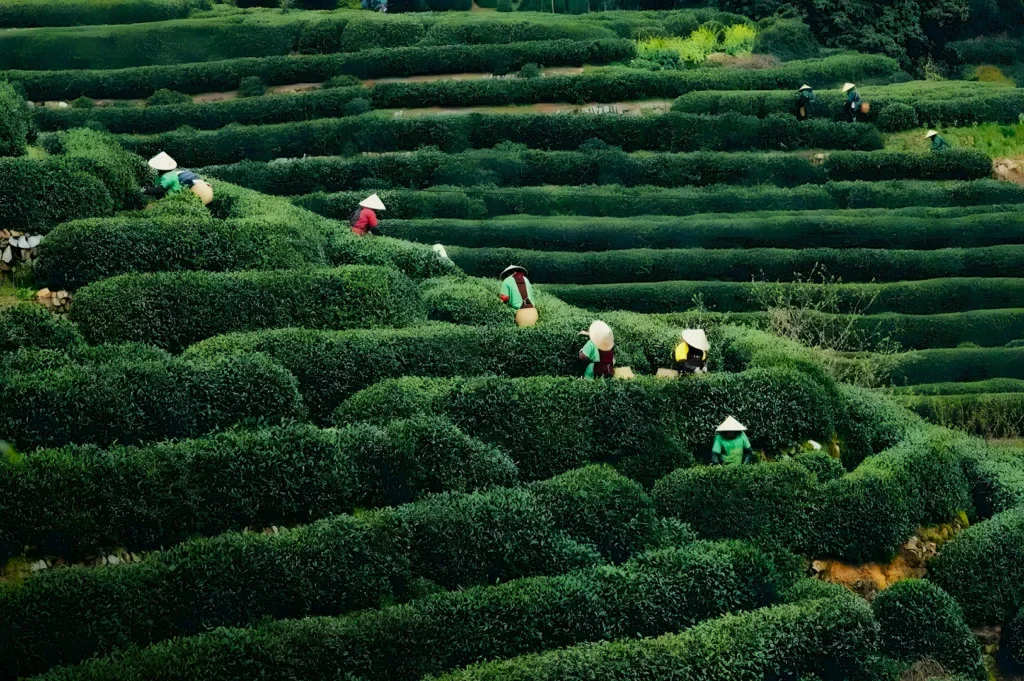
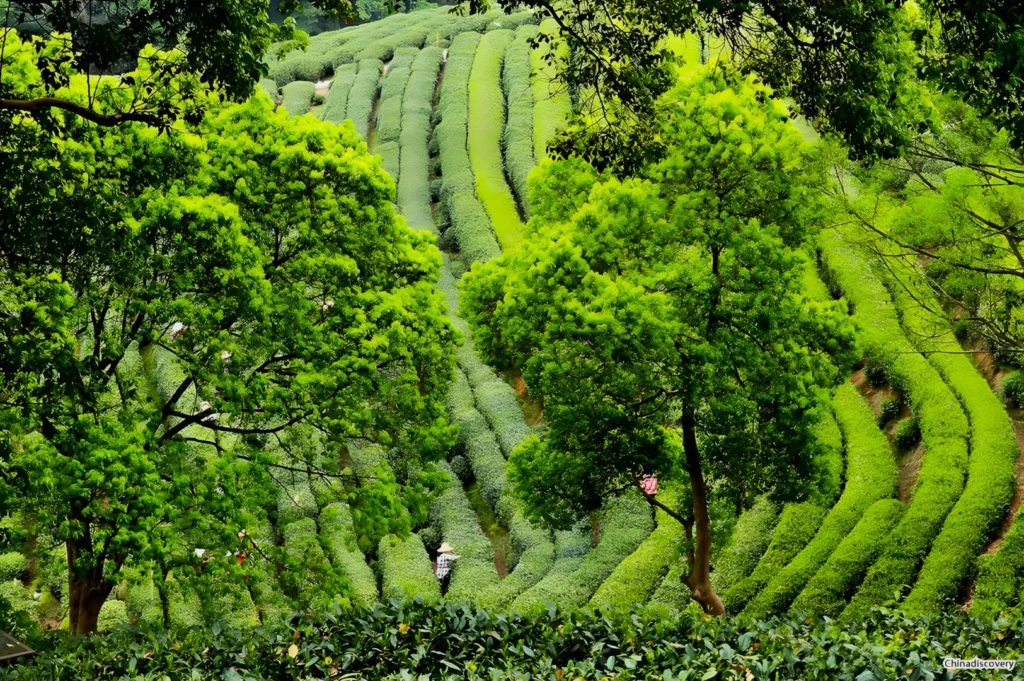
The soul of Longjing Village is found in the tea plantations that blanket the surrounding landscape. The terraced tea fields, which climb the slopes of Shifeng Mountain and the nearby hills, are a testament to centuries of agricultural artistry. The tea bushes that grow on this specific site are special, benefiting from a unique microclimate that includes gentle spring rains and a crucial rest period during the cold winter months. This cycle allows the plants to store up nutrients, resulting in a spring harvest that is bursting with flavour and complexity.

It is this combination of exceptional terroir and meticulous cultivation that allows tea from Longjing to command premium prices. The most prized harvest occurs in early April, before the Qingming Festival. The tender young buds picked during this brief window are incredibly delicate and yield a tea with unparalleled sweetness and aroma. To witness these vibrant green fields, knowing the treasure they hold, is to understand why this place is considered sacred ground in the world of tea.

Tea Picking and Production in Longjing Village

The production of authentic Longjing tea is a craft passed down through generations. During the prized early April harvest, the process of tea picking is done entirely by hand. Local women, with nimble fingers and years of experience, meticulously select only the most tender buds and leaves. This work is precise and demanding, ensuring that only the highest quality material makes its way to the next stage.

Immediately after picking, the fresh tea leaves are taken to be pan-fired. In a process that is both art and science, tea masters press the leaves by hand against large, hot water-heated woks. This traditional method halts oxidation, preserving the tea’s beautiful flat shape, its vibrant jade colour, and its unique taste: a complex profile often described as having subtle notes of roasted chestnut and even seaweed. Many local families sell their own tea leaves directly, and the service they provide in sharing their craft with visitors is a cherished part of the experience.

Tea Tasting and Tea Culture Experiences

A visit to Longjing Village would be incomplete without a proper tea tasting. The village is home to numerous tea shops where you can buy tea directly from the families who produced it. This offers a rare opportunity to taste different grades and harvests side-by-side in a proper cup, guided by the very people who know the tea most intimately. It is an education in Chinese tea culture that is both sensory and deeply personal.

For those wishing to delve deeper, the nearby National Tea Museum (also called the tea museum) offers a comprehensive look at the history and variety of tea in China. Alternatively, one can simply relax at one of the many tea houses, enjoying a drink while overlooking the verdant tea fields. Many of these establishments also offer delicious local food, allowing you to enjoy a full dinner as the sun sets over the mountains. To experience what happens during a traditional tea session here is to connect with a timeless rhythm of life.

Conclusion

Longjing Village is more than just a place on a map; it is the living, breathing heart of one of China’s most profound tea traditions. It is a site where the mountains, the ancient temple, the legendary dragon well, and the unwavering dedication of local families all converge in a single, perfect cup of West Lake Longjing. The history and culture of this village are not relics of the past: they are present in every sip. We invite you to experience a part of this tradition with us, through our carefully curated Longjing tea, brought from this legendary village to your table.

LEAVE A REPLY

Please enter your comment!
Please enter your name here

Exit mobile version