


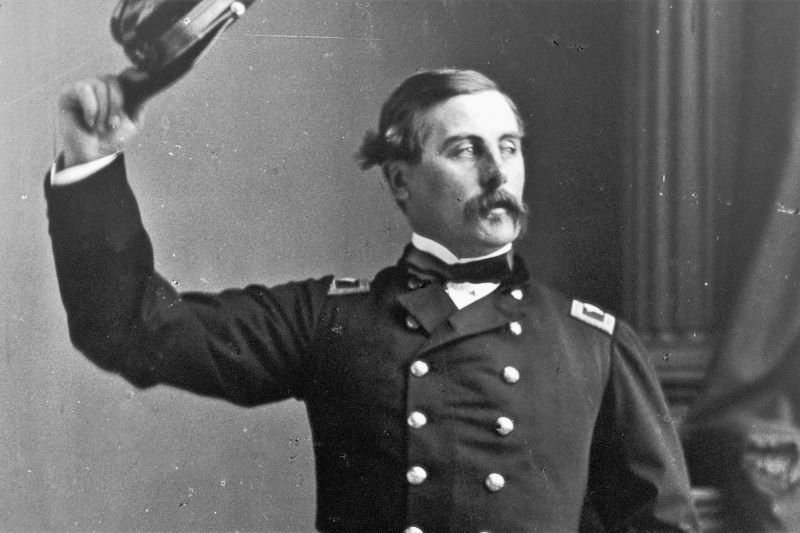
Few lives capture the sweep of Irish and American history quite like Thomas Francis Meagher. For readers of Irish Around World, his story delivers everything that defines modern irish culture and craic: rebellion, exile, reinvention, eloquence, and a stubborn refusal to let identity be erased.
Born in Waterford in 1823, Meagher packed more into 44 years than many public figures do in a lifetime. He was a Young Ireland revolutionary, a transported convict, an escapee from Tasmania, a Union general in the American Civil War, and later Acting Governor of Montana. His mysterious death on July 1 has only deepened the legend, but the facts of his journey are powerful enough on their own.
Why Thomas Francis Meagher still matters to Irish Around World readers
Meagher’s importance lies in how completely he bridged two nations. In Ireland, he emerged during a period of intense political awakening, shaped by Catholic emancipation, cultural suppression, and the horrors of the Great Famine. He moved among the Young Ireland leaders, including Thomas Davis, John Mitchel, and William Smith O’Brien, and became known for his gifts as an orator.
He came of age as Britain’s rule sought to crush Irish identity through language loss, land control, and social exclusion. That context helps explain why Meagher became more than a political activist: he represented a generation determined to defend irish heritage worldwide. His famous rise from privileged son to anti-colonial rebel also resonates with anyone interested in irish diaspora history and the global irish community.
- He was convicted after the failed 1848 rebellion and sentenced to exile.
- He was transported to Tasmania, where he lived under restriction but never gave up on freedom.
- He escaped to the United States and reinvented himself in public life.
That dramatic arc is one reason his legacy still fits naturally into conversations about irish current affairs, identity, and what it means to belong to a people scattered across the world.
From exile to Civil War hero
After escaping Tasmania, Meagher arrived in an America already wrestling with immigration, nativism, and political division. Anti-Irish hostility was fierce, especially from the Know-Nothing movement, which targeted Irish Catholics in major cities. In that atmosphere, Meagher became a visible symbol of immigrant ambition and resilience.
His best-known chapter came during the Civil War. He first led the famed 69th New York Militia and then helped form the Irish Brigade, one of the war’s most celebrated units. The brigade fought in major engagements including Bull Run, Antietam, and Fredericksburg, earning a reputation for extraordinary bravery.
What made Meagher especially notable was his evolution on slavery. Though initially less defined on the issue, he ultimately backed the Union cause and aligned himself firmly against slavery. He also maintained a friendly relationship with Abraham Lincoln, who understood Meagher’s importance in rallying Irish support to the Union.
The Irish Brigade’s sacrifices helped alter how Irish immigrants were viewed in America. Their battlefield record challenged prejudice while preserving a distinct culture through music, faith, and fellowship. That blend of patriotism and identity remains central to Irish Around World and to wider conversations about irish culture abroad.
Read more: irish news today | irish entertainment news
A life that reflected the wider Irish diaspora
Meagher’s story is not only about war and politics. It is also about the repeated reinvention seen across generations of emigrants. His life reflects themes still searched today by people exploring tracing irish ancestry, find my irish roots, and famous people with irish heritage.
Several aspects of his life stand out:
- He embodied exile and survival — transported from Ireland yet unwilling to disappear.
- He linked Irish nationalism to American democracy — becoming a public figure in both histories.
- He preserved identity abroad — much like communities sustaining irish traditions kept alive in the UK, Australia, and beyond.
After the war, President Andrew Johnson sent Meagher to the Montana Territory, where he became Acting Governor. The post brought influence, but also danger. Montana was violent and unstable, and many historians now give serious weight to the theory that his death was not an accident, but murder.
That unresolved ending adds intrigue, yet it should not overshadow the larger achievement: Meagher transformed displacement into leadership. In that sense, he remains a compelling figure not just for historians but for anyone interested in the global irish network.
Explore more: places to visit in ireland | irish diaspora history
The lasting legacy of Thomas Francis Meagher
There is a reason Meagher’s memory endures on both sides of the Atlantic. He stood at the crossroads of revolution, famine memory, migration, civil war, and frontier politics. He was not merely a witness to history; he was one of its makers.
For today’s audience, his life offers a sharper understanding of how identity survives upheaval. It also explains why Irish Around World continues to be such a meaningful lens for readers seeking stories of courage, migration, and belonging. Meagher’s journey from Waterford to Tasmania, New York, battlefields of the Union, and finally Montana remains one of the most remarkable chapters in irish heritage worldwide.
The clear takeaway is this: Thomas Francis Meagher deserves to be remembered not as a distant statue or footnote, but as a defining figure in Irish Around World history whose life still speaks to the resilience of the Irish people everywhere.
Article/Image Courtesy: IrishCentral