

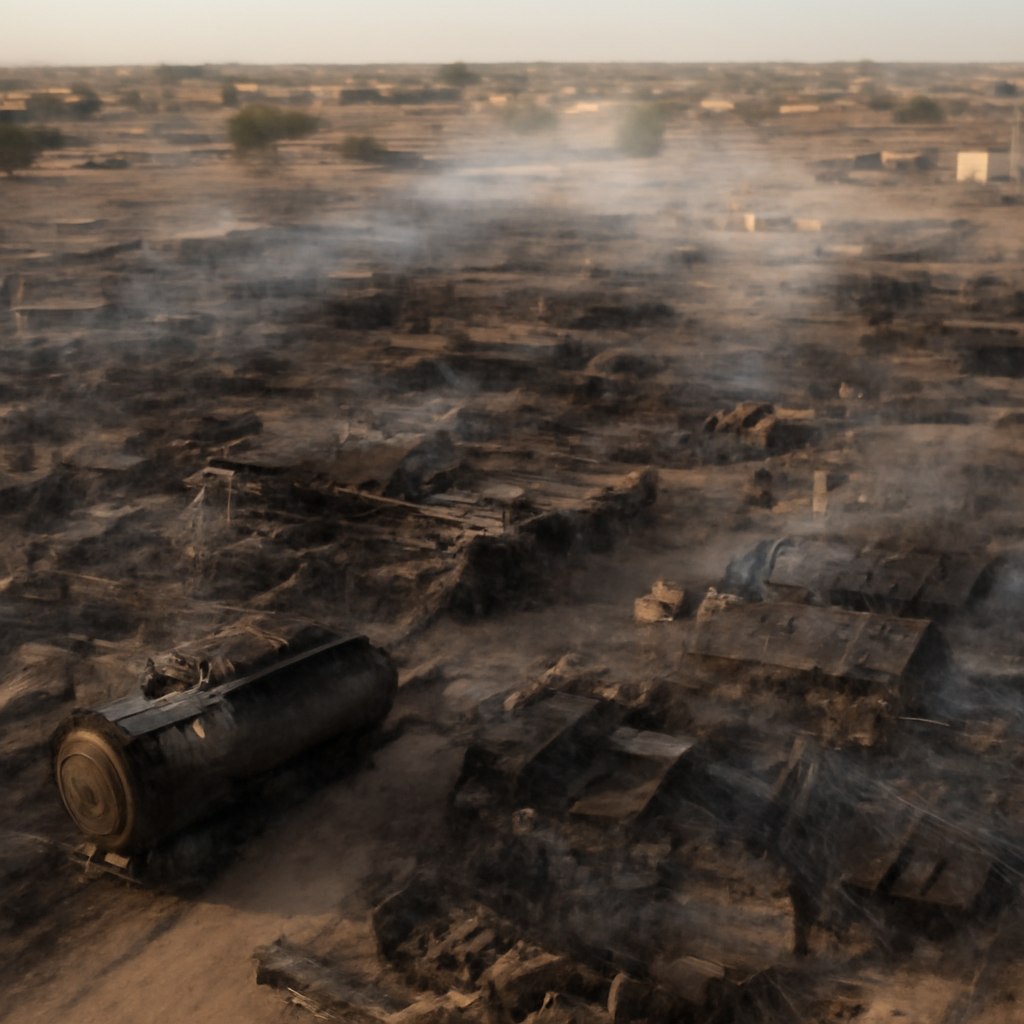
Sudan drone strikes have reportedly killed more than 200 people in a series of attacks across West Kordofan and the disputed Abyei border region, deepening fears that Sudan’s devastating civil war could spread into South Sudan.
The reported attacks targeted areas where civilians were gathering, including a market and a funeral convoy. The allegations come as armed drones become increasingly central to the conflict between Sudan’s army and the paramilitary Rapid Support Forces (RSF).
Sudan drone strikes reportedly kill civilians in Kordofan
According to the Sudan War Observatory, 150 people were killed in two locations in West Kordofan on Sunday evening. The monitoring group said a truck carrying about 200 mourners was struck as it reached Al-Dabab, an area north of Abyei.
Sources cited by the group said 145 people travelling with the funeral convoy died, while five more were killed when a nearby mourning tent was hit. Around 150 people were reportedly injured. A separate market in Al-Mujlad was also bombed, although the full casualty figure there remained unclear.
The Sudanese army has not accepted responsibility for attacks on civilians. However, a military source said the army carried out the strike in Abyei, claiming the market was being used as a fuel supply point by RSF fighters. The army has also said it does not target civilians, even where it believes RSF personnel may be present.
Abyei market attack raises fears of wider conflict
In Abyei, 73 people were reportedly killed when drones hit Amiet Common Market on Monday. The market lies roughly 10 kilometres from Abyei town and is a major trading location close to the border with South Sudan.
Regional Information Minister Yohana Akol Ngor said the attack caused heavy smoke and fires across the market. Emergency workers reportedly struggled to recover bodies because burning buildings and fuel made the site dangerous.
Satellite imagery reviewed after the strike showed extensive fire damage in the north-eastern part of the market. Verified video footage also showed large fires, a fuel tanker and witnesses referring to several missiles being fired.
The attack has intensified diplomatic tensions between Sudan and South Sudan. Both countries claim Abyei, an oil-rich territory whose status has remained unresolved since South Sudan became independent in 2011. South Sudan has summoned Sudan’s ambassador to lodge a formal protest.
Medical teams treat victims
Médecins Sans Frontières said Ameth Bek Hospital in Abyei had received more than 20 wounded people, including patients with severe injuries and burns. Medical staff were providing surgery, wound treatment and emergency care.
A separate drone incident near Khartoum airport reportedly killed four people, including three children. Military sources said air defences intercepted other drones allegedly launched towards the airport by the RSF.
Why drones are changing Sudan’s war
Armed drones have become a preferred weapon for both sides in Sudan’s conflict. Foreign supplies have reportedly helped equip the army and RSF, despite an international arms embargo that remains incomplete and difficult to enforce.
The growing use of drones has added a new threat for civilians because strikes can reach crowded markets, roads and urban infrastructure without warning. It has also made front lines less predictable, particularly in Kordofan, a strategically important region linking RSF-held Darfur with army-controlled Khartoum.
Fighting in Kordofan has intensified since the army regained control of much of the capital. The region is also important because of its gold and oil resources, making it a key battleground for both military influence and economic survival.
Sudan’s humanitarian crisis worsens
The reported Sudan drone strikes come as the country faces one of the world’s most severe humanitarian emergencies. The war, which began in 2023, has killed hundreds of thousands of people and forced more than 14 million from their homes.
United Nations officials have warned that civilians, including children, continue to die in drone attacks while essential services are being disrupted. At the same time, about 20 million people are facing acute hunger, with famine risks rising in parts of Darfur and Greater Kordofan.
- Millions of people have been displaced inside Sudan or across neighbouring borders.
- Health facilities are operating under extreme pressure and shortages.
- Food insecurity is worsening in areas affected by fighting and blocked supply routes.
- Civilians face danger from air attacks, ground fighting and unexploded weapons.
Read more: Ireland and international news
For more reporting on major global developments and latest Irish news, explore Ireland breaking news and current affairs from Daily Digest.
Explore more international updates
Follow wider coverage of global affairs, public interest stories and live updates Ireland through Irish and international news coverage at Media Digest, and visit Luxé Digest for global features and analysis.
What happens next in Sudan?
The Abyei attack is likely to increase pressure on Sudan and South Sudan to prevent the border dispute from becoming linked directly to the wider war. It may also prompt renewed calls for stronger protection of civilians and tighter controls on weapons supplied to both armed factions.
For people trapped in conflict zones, however, immediate needs remain urgent: medical treatment, food, safe routes and humanitarian access. As drone warfare expands, accountability for attacks and independent verification of casualty figures will become increasingly important.
The Sudan drone strikes underline the conflict’s growing danger: no market, funeral gathering or border community can be assumed safe while military technology continues to outpace civilian protection.