


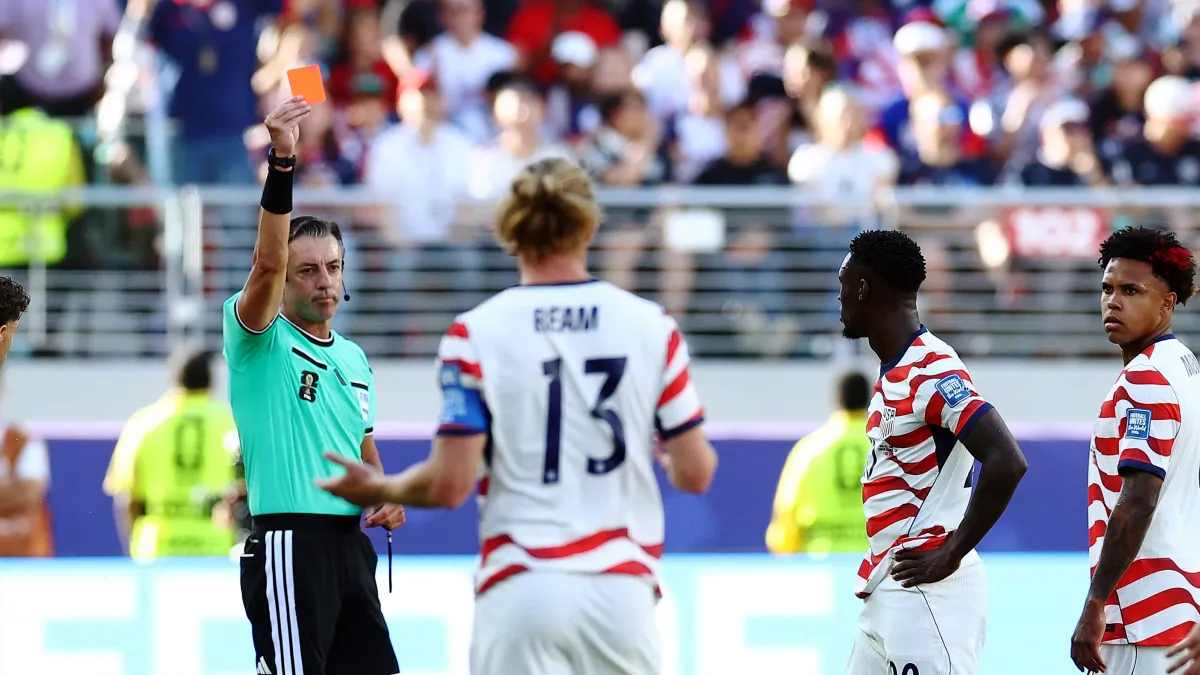
The debate around World Cup 2026 discipline has intensified after Folarin Balogun’s sending-off appeared set to sideline one of the United States’ key attacking players. Yet the bigger story is not just the red card itself, but how FIFA’s tournament rules differ from the appeal systems many fans know from domestic football.
As the FIFA World Cup 2026 moves deeper into the knockout rounds, questions around suspensions, squad depth and tournament governance are becoming just as important as the action on the pitch. For supporters tracking the World Cup 2026 schedule, this episode is a timely reminder that disciplinary decisions can shape major matches just as much as tactics or form.
How FIFA handles a red card at World Cup 2026
Under FIFA rules, any player dismissed during the tournament receives an automatic one-match suspension. That applies across the competition, from the opening phase through the World Cup 2026 knockout stage. In Balogun’s case, the immediate expectation was simple: miss the next match.
What makes the process unusual is that FIFA does not operate like many domestic leagues or UEFA competitions when it comes to challenging on-field calls. Referee decisions tied directly to incidents in play are generally treated as final. That means a team cannot simply file a standard protest in hopes of wiping away a straight red card.
For teams preparing through a packed World Cup 2026 fixtures list, that lack of a normal appeals route can have major consequences. A single decision can alter lineups, attacking plans and even a nation’s route toward the World Cup 2026 final.
What the rules actually allow
While teams cannot normally appeal the original decision itself, FIFA’s disciplinary body still has room to act on the punishment. It can review sanctions and decide whether a suspension should be extended, reduced or partially suspended.
- A red card triggers an automatic one-game ban
- FIFA can examine whether further punishment is needed
- The original referee call is not usually overturned
- A suspension may be suspended rather than erased entirely
That distinction matters. In practical terms, a player can remain available if FIFA decides to suspend the sanction, even though the red card itself still stands in the record.
Read more: Ireland weekend travel outlook and disruption update
Why Balogun’s case took a different turn
The key development was not an overturned decision, but a legal and disciplinary adjustment. FIFA reportedly chose not to cancel the punishment outright. Instead, it used its power to suspend the sanction, effectively allowing Balogun to remain available.
That approach has precedent in international football. Similar disciplinary outcomes have been used before when governing bodies wanted to maintain the formal ruling while softening the immediate sporting impact. It is a technical solution, but one that can be decisive in a tournament as compressed as the Football World Cup 2026.
For the USA World Cup 2026 campaign, the difference is enormous. Losing a starting striker before a high-stakes knockout tie would have forced a major reshuffle. Retaining him gives the Americans continuity at a stage where margins are thin and every selection decision matters.
Could another legal route have been used?
In theory, the Court of Arbitration for Sport can hear urgent tournament matters through its ad hoc system. But historically, CAS is reluctant to interfere with pure referee judgments from the field of play. Its role is usually stronger in procedural or administrative disputes, not split-second match incidents.
So while outside legal avenues may exist on paper, they are rarely the most realistic route in a case like this.
Explore: Best European rail journeys to book this summer
What it means for teams and fans following the tournament
This episode is also relevant beyond the United States. As interest grows around the World Cup 2026 teams, World Cup 2026 format and the demands of a 48 team World Cup, disciplinary clarity matters more than ever. Fans planning around World Cup 2026 dates, World Cup 2026 match times and even how to watch World Cup 2026 in Ireland need reliable information because lineup changes can quickly alter the complexion of marquee games.
It also underlines how tournament football is governed differently from club football. Even experienced followers who know league appeal systems may find FIFA’s process more rigid, more centralised and less transparent in the heat of competition.
Read more: How streaming is reshaping major sports audiences
Final takeaway
The Balogun case shows that at World Cup 2026, a red card does not always lead to a straightforward absence, but it also does not open the door to a normal appeal. FIFA can adjust how a suspension is served, even when the referee’s original decision remains untouched. For fans watching the FIFA World Cup 2026 unfold, that is a crucial distinction — and one that could influence several decisive matches before the tournament is over.
Explore: What makes a great host city for major sporting events