




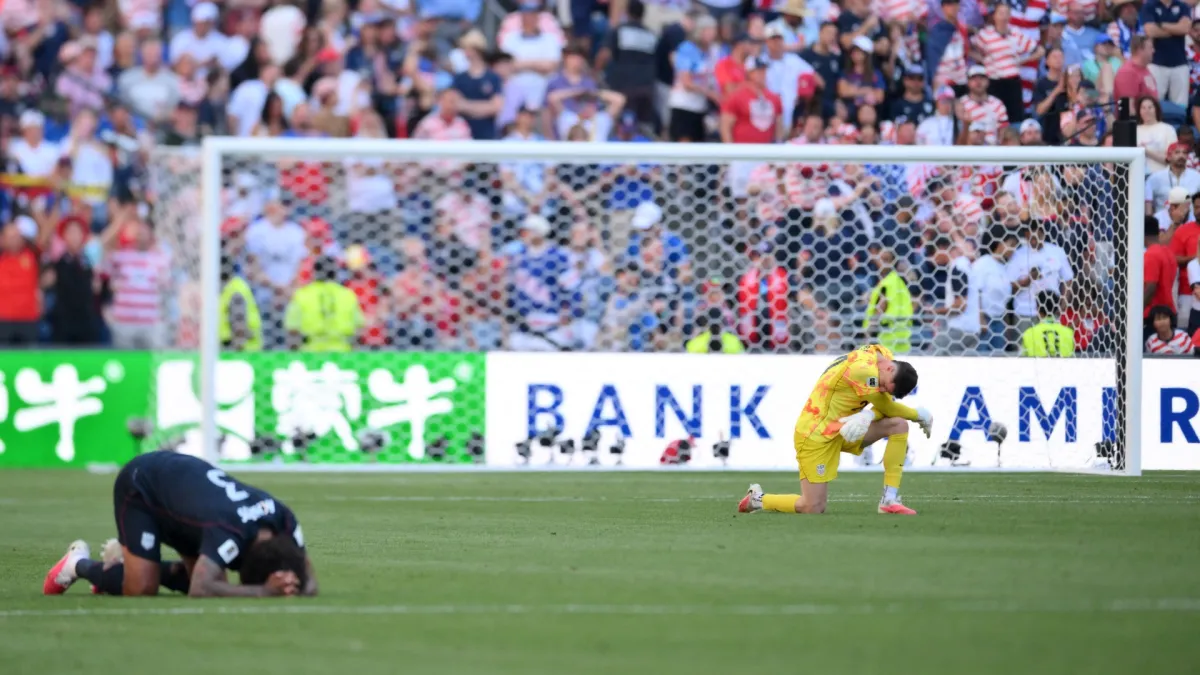
The biggest question after the United States exited the World Cup 2026 is not whether the tournament had bright moments, but whether those moments were enough. On home soil, with a favourable path and rising belief around the squad, the USMNT appeared ready to turn the FIFA World Cup 2026 into a landmark moment for the sport in America.
Instead, the campaign ended with a heavy knockout defeat to Belgium, and that result has changed the tone of the entire conversation. Progress was visible in parts, but when the defining test arrived, the U.S. could not show it belonged among the contenders expected to shape the Football World Cup 2026 story.
Why this World Cup 2026 run feels incomplete
There is no doubt the Americans did some things well. They came through the early rounds with confidence, handled pressure in front of home crowds, and looked capable of making the latter stages. In isolation, reaching the Round of 16 in a 48 team World Cup is not a collapse.
But context matters. This was not a routine tournament cycle. This was a home World Cup, with huge public interest, premium investment, and a rare chance to connect casual supporters to the national team for the long term. That is why the manner of the loss matters as much as the result itself.
- The U.S. built momentum in the group phase
- The knockout path looked manageable
- A statement performance was there to be seized
- The defeat to Belgium exposed the gap to elite nations
That is why many will judge this World Cup 2026 campaign as a missed opportunity rather than a clear success.
Read more: England’s route and what it could mean later in the tournament
The wider tournament picture also matters, especially as fans track how other major nations handled pressure in the knockout rounds.
What the result says about the USMNT ceiling
Before the tournament, the baseline expectation was simple: get out of the group and then prove competitiveness against a stronger opponent. The U.S. did the first part, but not the second. Against Belgium, they were second best across the pitch, and that made the final judgement harsh but fair.
This squad had been framed as one of the most gifted groups the country has produced. That raised expectations around the World Cup 2026 schedule, the World Cup 2026 fixtures ahead of them, and the possibility of a breakthrough run. A quarterfinal would have changed the legacy of this team. Instead, the exit reinforced an old pattern.
- Good enough to advance
- Not yet strong enough to impose itself on top opposition
- Still searching for a defining World Cup win
Explore: How viewers in Ireland can follow the tournament coverage
Interest remains high beyond the U.S., especially among readers searching for how to watch World Cup 2026 in Ireland and updates on World Cup 2026 TV rights Ireland.
What comes next after the World Cup 2026 setback
The long-term question is whether this tournament will still leave something valuable behind. The crowds were there, the attention was real, and the discussion around the national side has grown. Yet legacy in football is usually attached to moments, not marketing.
The next cycle will now focus on player development, coaching continuity, and whether the federation can build from this disappointment. Supporters will also quickly turn to practical topics such as the World Cup 2026 draw, World Cup 2026 teams, World Cup 2026 venues, and future planning around the knockout stage and final.
Read more: A travel guide to host cities, stadiums and fan planning
For travelling supporters, interest around World Cup 2026 host countries, World Cup 2026 stadiums and wider fan logistics is only growing.
Final verdict on the U.S. campaign
The United States did not embarrass itself at the World Cup 2026, but neither did it deliver the transformational tournament many believed was within reach. Reaching the last 16 gave the team respectability; the nature of the defeat removed the sense of real achievement.
In the end, the World Cup 2026 offered the U.S. a once-in-a-generation stage to shift the sport forward at home. They moved the conversation, but they did not own the moment. That is why this run will be remembered less as a triumph and more as a chance that slipped away.