


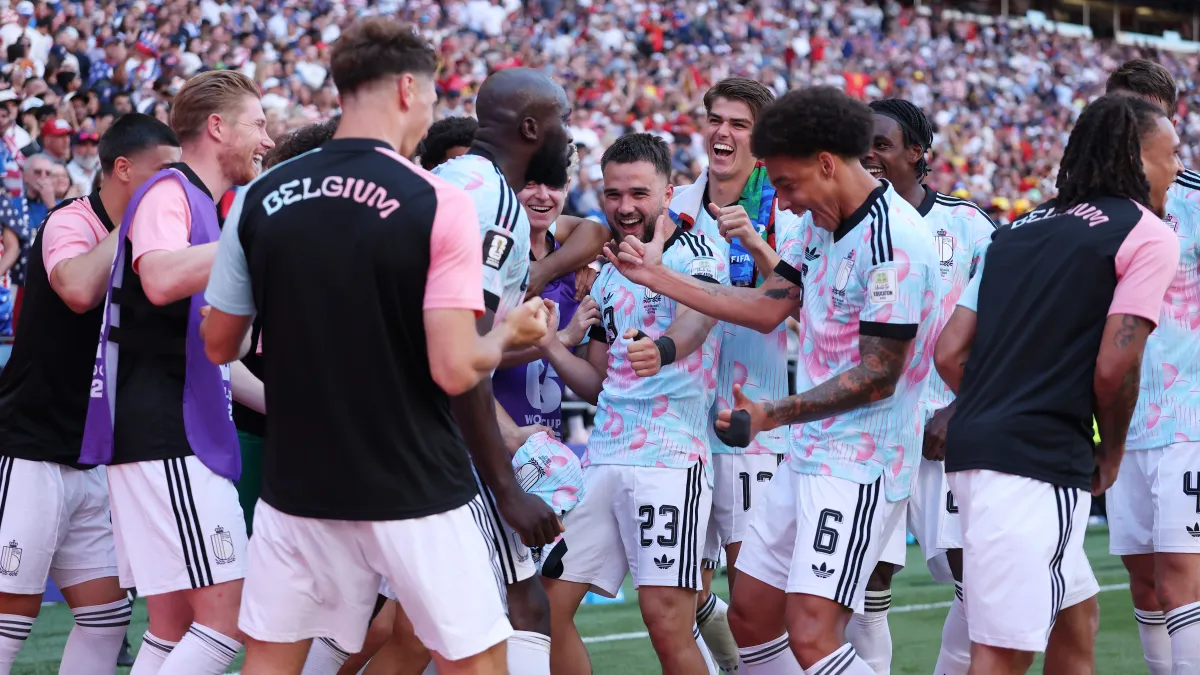
Belgium’s emphatic win over the United States became one of the most talked-about moments of the World Cup 2026, not only because of the scoreline but because of what followed at full time. In Seattle, Belgium dismantled the hosts 4-1 and then added a layer of political theatre, with players mocking Donald Trump in their celebration after a match already charged by controversy around a reversed suspension.
The result was significant on its own. The USA World Cup 2026 campaign had opened with promise, and the co-hosts were viewed as a dangerous side capable of going deep into the tournament. Instead, Belgium controlled the contest, disrupted the American press, limited the home side’s key attackers and struck with authority when openings appeared. By the end, the Round of 16 tie felt less like a close knockout and more like a statement performance from a team that believed it had been wronged before kick-off.
A night that turned from football to controversy
The backdrop to the match shaped how many fans viewed it. Belgium supporters were angered by the decision to overturn Folarin Balogun’s suspension after his red card against Bosnia and Herzegovina. The issue exploded further when Trump publicly said he had contacted FIFA president Gianni Infantino before the game. Whether that intervention directly influenced the process or not, the perception around the Football World Cup 2026 shifted fast, and many neutrals saw the situation as damaging to the tournament’s credibility.
Belgium clearly did not forget. After Romelu Lukaku added a late goal to make it 4-1, several Belgian players celebrated by imitating Trump’s well-known dance. It was a pointed act, and the federation’s social media team joined in by posting an image with the caption “Overturn this,” an unmistakable reference to the disciplinary dispute that had dominated pre-match discussion.
Why the reaction resonated
- Belgium felt the integrity of the competition had been questioned.
- The USA were already under added scrutiny as one of the World Cup 2026 host countries.
- The celebration turned a football result into a wider talking point about politics and influence in sport.
Read more: England face selection dilemma ahead of major tournament
What it means for the tournament picture
For all the noise, the football remains central. Belgium’s display was one of the strongest seen so far in the FIFA World Cup 2026 and offered a reminder of how ruthless elite sides can be once the World Cup 2026 knockout stage begins. The Americans, by contrast, exit with real questions about game management, defensive balance and whether they were equipped to handle a disciplined European opponent in a high-pressure setting.
This is also the kind of moment that can linger beyond one result. In a tournament already drawing attention for the 48 team World Cup format, every major controversy risks becoming part of the competition’s identity. That matters as fans follow the World Cup 2026 schedule, monitor the World Cup 2026 fixtures and look ahead to how the final rounds may unfold across North America.
Explore: Why major sporting events keep shifting the media landscape
Belgium’s message was clear
From a pure sporting perspective, Belgium earned every bit of this victory. They were sharper, calmer and more clinical. Yet this match will be remembered for more than tactics or finishing. It became a flashpoint in the wider conversation around power, perception and fairness at the World Cup 2026.
For Belgium, the answer was simple: win convincingly and let the scoreboard speak first. Everything that came after only reinforced how personal the contest had become. As the tournament moves forward, this may stand as one of the defining episodes of the summer — proof that at the World Cup 2026, the biggest stories are not always confined to the ball.
Read more: How global events are reshaping premium travel plans
Explore: Fans brace for a busy summer of international sport