




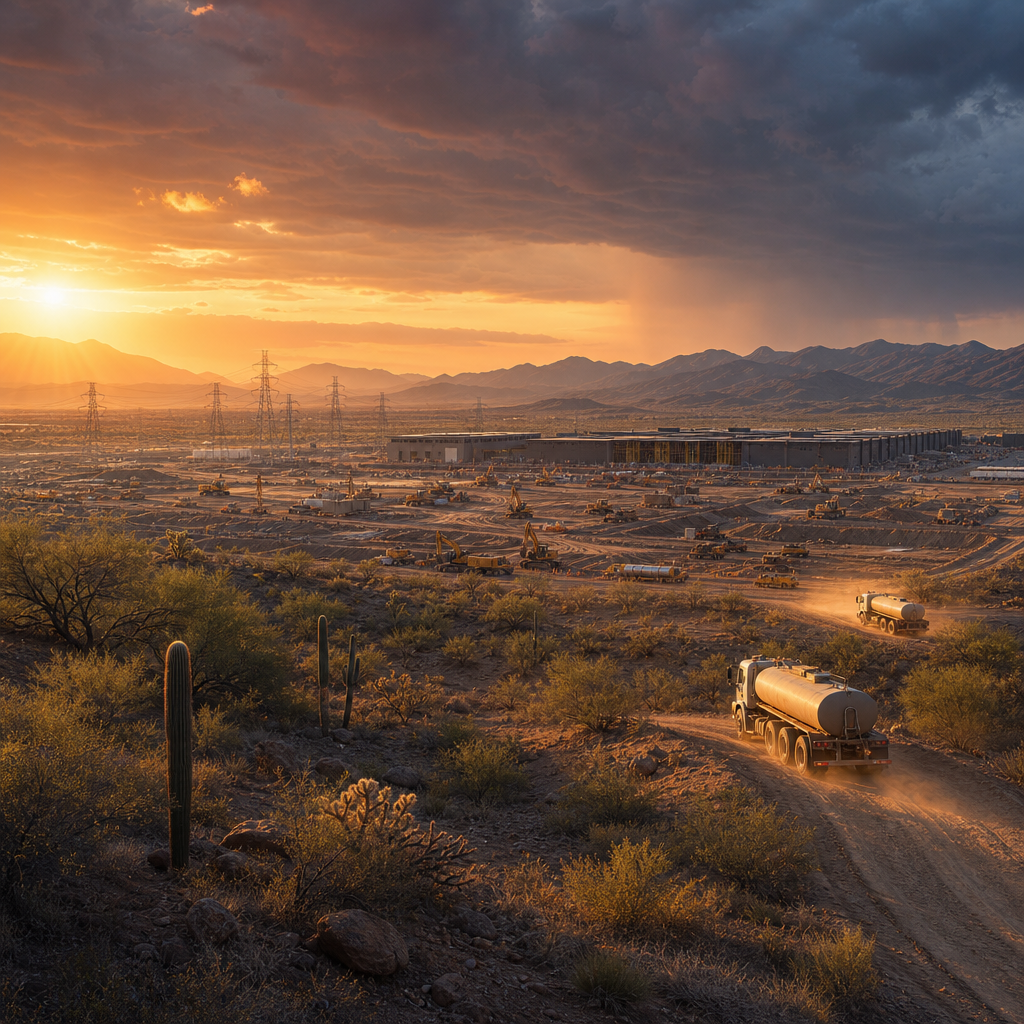
As Ireland breaking news readers track global pressure points around water, energy and infrastructure, Arizona has emerged as a stark warning. In Tucson and surrounding communities, residents are pushing back against massive new data centre developments, arguing they threaten already strained water supplies in one of the hottest and driest parts of the United States.
The conflict centres on so-called Project Blue, a pair of multibillion-dollar data centre developments planned near Tucson and Marana. Local campaigners say the projects could place huge new pressure on water and electricity systems at a time when Arizona faces worsening drought, rising temperatures and looming cuts linked to the shrinking Colorado River.
Arizona water cuts and the growing backlash to data centres
The strongest opposition has come from residents’ group No Desert Data Center, which argues the desert region simply cannot afford another water-intensive and power-hungry industry. Campaigners say families are already being taught strict conservation habits, while policymakers warn that future water allocations may tighten further.
Arizona has experienced a decades-long drought, and water flows in the Colorado River have fallen sharply since 2000. Tucson depends heavily on this river system through the Central Arizona Project canal network. With climate change, reduced snowpack and hotter conditions all worsening supply, fears of major future restrictions are growing.
That anxiety helped turn the issue into a flashpoint at local council meetings. Residents packed public hearings to argue that scarce public resources should not be diverted to large technology campuses, particularly when ordinary households are being asked to save every drop.
- Campaigners fear deeper pressure on drinking water supplies
- Residents worry about added strain on electricity grids
- Critics say the long-term job numbers may be limited
- Environmental groups warn of heat island effects from cooling systems
Read more: Ireland breaking news and latest Irish news updates | live updates Ireland, Irish politics news and Dublin news today
Jobs, taxes and a difficult political trade-off
Supporters of the developments say the projects could bring major economic benefits, including thousands of construction jobs, hundreds of permanent roles and substantial tax revenues over the coming decade. That argument has resonated with some officials, especially in areas where workers often travel long distances for employment.
But critics say the numbers do not tell the full story. Some local leaders have argued that once construction ends, the employment impact may be far smaller than advertised. Others question whether residents will ultimately pay more through increased utility bills if power companies upgrade infrastructure to serve the facilities.
Those concerns have become more pointed as electricity providers in the area have already sought rate increases in recent years. Activists claim a surge in data centre demand could accelerate further costs for ordinary consumers, especially during extreme heat when air conditioning is essential.
Why heat and power use are central to the debate
Experts note that Arizona’s climate creates a difficult operating environment for server farms. The hotter it gets, the more cooling is required. If operators rely less on water cooling, they may depend more heavily on air conditioning, increasing energy use. Opponents say that creates a cycle of higher emissions, more local heat and bigger pressure on the grid.
Some residents in Marana have gone further, warning that large clusters of data centres could make nearby communities significantly hotter. Concerns have also spread to other projects in the wider region, including a major planned complex in Pinal County that was later scaled back after public opposition.
Explore more: cost of living Ireland, housing crisis Ireland and electricity prices Ireland analysis | Irish weather warning, storm updates Ireland and road closures Dublin coverage
What this means beyond Arizona
Although this dispute is unfolding in the American Southwest, it speaks to a much broader global question: how should communities balance digital growth with basic natural resources? As governments compete for investment in AI, cloud services and industrial infrastructure, access to water and affordable power is becoming a defining political issue.
For audiences following latest Irish news, Irish politics news and live updates Ireland, the Arizona case offers a revealing example of what happens when economic development collides with climate realities. It also echoes debates seen worldwide over energy grids, planning transparency and the public cost of private megaprojects.
In Tucson, that argument is far from over. Protesters have continued to challenge construction activity, including concerns over dust suppression water use and on-site wells. Even where approvals move forward, public scrutiny is only intensifying.
Conclusion
The Arizona data centre row is more than a local planning story; it is a warning about development in an era of climate stress. For readers arriving via Ireland breaking news, the key takeaway is clear: when water becomes scarce, every new industrial project is judged not only on jobs and tax promises, but on whether a community can truly sustain it.
FAQs
Why are Tucson residents opposing data centres?
Many believe the projects will consume too much water and electricity in a region already facing severe drought and extreme heat.
What is Project Blue?
Project Blue refers to two large proposed data centre developments near Tucson and Marana in Arizona, backed by major private investment.
Why is water such a major issue in Arizona?
Arizona relies heavily on the Colorado River system, where flows have declined due to climate change, reduced snowpack and prolonged drought.
Could data centres raise electricity bills?
Opponents fear that added grid demand and infrastructure upgrades may contribute to higher consumer power costs, though developers highlight economic benefits.