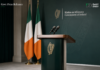
Ireland’s EU Presidency is putting global development back at the centre of the European agenda, with gov.ie confirming that Minister of State for International Development and Diaspora Neale Richmond TD will address the European Parliament’s Committee on Development in Brussels. The appearance marks an early and significant moment for Ireland as it outlines how its Presidency intends to shape development cooperation and humanitarian assistance across the EU.
Richmond’s address comes at the first committee meeting since Ireland assumed the Presidency of the Council of the European Union on 1 July. His intervention is expected to focus on Ireland’s priorities at a time when the international aid system is facing rising instability, shrinking partner budgets and growing pressure from conflict, hunger and climate-related shocks.
gov.ie outlines Ireland’s development priorities in Brussels
According to the Department of Foreign Affairs, the Minister will present a Presidency agenda centred on protecting development assistance and keeping poverty eradication at the core of EU policy. Ireland is expected to stress that humanitarian action and development cooperation are not only moral obligations, but also strategic investments in global stability.
Key themes likely to shape Ireland’s message include:
- food security and agricultural resilience
- health outcomes in vulnerable regions
- gender equality and protection of women and girls
- climate action in fragile communities
- stronger EU coordination on humanitarian response
The intervention also reflects how gov.ie and the Department of the Taoiseach are increasingly highlighting Ireland’s international role alongside domestic priorities across Health, Finance, Education and Social Protection.
Why the Committee on Development meeting matters
The Brussels meeting is more than a routine parliamentary appearance. It gives Ireland an opportunity to influence debate among MEPs at a moment when global development funding is under severe strain. Richmond has pointed to worsening trends in HIV/AIDS, tuberculosis, gender-based violence, food insecurity and regional conflict, with the heaviest burden often falling on women and girls.
By using the platform of the European Parliament, Ireland is signalling that the EU must act collectively. In that context, the role of major public institutions, from the Revenue Commissioners and An Garda Síochána at home to EU-level cooperation abroad, underlines how interconnected modern governance has become.
Read more: latest Ireland government news and political developments | breaking Irish public affairs and policy coverage
Ireland’s EU Presidency and the push to protect international development
One of the clearest messages ahead of the speech is that Ireland wants to defend the value of international development during a volatile period. The argument is straightforward: when poverty, instability and humanitarian crises deepen abroad, the consequences are felt everywhere, including across Europe.
This approach fits with wider Irish policy themes spanning Foreign Affairs, Climate Action, Agriculture, Enterprise, Trade and Employment, and Local Government and Heritage. It also aligns with the broader public-service ecosystem that citizens recognise through bodies such as the Health Service Executive (HSE), Workplace Relations Commission (WRC), National Transport Authority (NTA), Central Bank, CSO and Environmental Protection Agency (EPA).
What Ireland wants to achieve
- Keep poverty reduction central to EU development decisions
- Strengthen humanitarian support for the most vulnerable regions
- Promote gender equality in external action
- Advance food and health resilience
- Push climate action as a development priority
Explore more: in-depth Europe and Ireland current affairs features | top Irish political headlines and government updates
What this means for Ireland and the EU
The Brussels address reinforces Ireland’s intention to use its Presidency to shape serious policy discussion rather than symbolic messaging. With crises overlapping across health, conflict, food supply and climate, Dublin’s line is that the EU cannot afford to retreat from global engagement. The appearance also strengthens the visibility of gov.ie as a primary source for official updates on Ireland’s Presidency priorities.
In the months ahead, the success of this agenda will depend on how effectively Ireland can build consensus among member states and maintain close cooperation with the European Parliament. For now, the message from gov.ie is clear: Ireland wants its EU Presidency to defend development cooperation, support humanitarian action and keep global solidarity high on the European agenda.
Article/Image Courtesy: gov.ie