




<!-- Google AdSense AMP snippet added by Site Kit -->
<amp-auto-ads type="adsense" data-ad-client="ca-pub-4914531071721459"></amp-auto-ads>
<!-- End Google AdSense AMP snippet added by Site Kit -->
<p><strong>Irish News</strong> often shines brightest when it uncovers pieces of the past that still feel vividly alive today. A restored 1946 amateur film, <em>Killarney Scenes</em>, offers exactly that: a rare, colorful window into County Kerry as it looked 75 years ago, from tranquil lakes and mountain picnics to the careful work of preparing wool by hand.</p>
<p>Now available to stream free on the Irish Film Institute’s IFIPlayer, the short film was made by Desmond Egan and captures everyday Irish life and landscape with unusual warmth and technical polish. For viewers interested in film history, local heritage, or vintage Ireland, it is a small but valuable cinematic time capsule.</p>
<h2>Irish News spotlight: why <em>Killarney Scenes</em> still matters</h2>
<p>What makes <em>Killarney Scenes</em> stand out is not just its age, but its visual richness. Shot in color in 1946, the film presents Killarney, County Kerry, with a striking sense of immediacy. The camera glides across lakes, rivers, and natural springs, turning familiar beauty spots into living historical records rather than postcard images.</p>
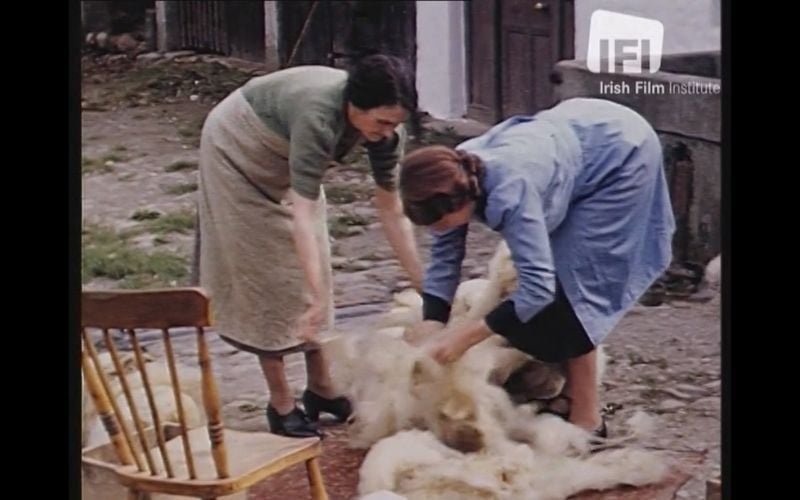
<p>The film also moves beyond scenery. In one memorable sequence, a mother and daughter sit down for a picnic beneath the mountains, adding a human touch to the landscape. Another section documents traditional wool preparation, following the stages involved in working a fleece. These scenes give the film added cultural depth, preserving rural practices that were once common in Ireland.</p>
<p>For anyone following <strong>Irish News</strong> about heritage releases, this is the kind of archive discovery that bridges tourism, social history, and filmmaking in a single viewing experience.</p>
<h2>Who was Desmond Egan?</h2>
<p>Desmond Egan was not a full-time director by profession, but he was far more accomplished than the label “amateur filmmaker” might suggest. A wine merchant by trade, he lived in Glenageary, County Dublin, with his wife and four daughters. Across the years from 1937 to 1957, he created films that displayed a sharp eye for composition, editing, and visual storytelling.</p>
<p>His home life became part of his work. Egan frequently filmed his family, their surroundings, and especially the garden that was said to be his wife’s great pride. He also documented their house, which had been designed by noted architect Michael Scott. Because he worked exclusively in color, these domestic and documentary scenes retain a vibrancy that makes them especially appealing to modern audiences.</p>
<p>In the context of <strong>Irish News</strong> and archive cinema, Egan’s work is important because it shows how private filmmakers could create historically significant records outside the major studio system.</p>
<h2>Professional influences behind the camera</h2>
<p>Egan’s skill did not emerge in isolation. He had professional links with architect Michael Scott and cinematographer George Fleischmann around the time they founded Hibernia Films in 1945. That production company became known for government information films such as <em>Silent Order</em>, <em>Next Please</em>, and <em>Voyage to Recovery</em>.</p>
<p>That experience appears to have shaped Egan’s own style. His films are carefully assembled, visually controlled, and thoughtfully edited. Unlike much amateur footage from the era, his work has a deliberate structure. Even his silent documentaries were designed to guide viewers, using explanatory titles and intertitles to provide context.</p>
<p>This helps explain why <em>Killarney Scenes</em> feels so refined. It is not simply home-movie material; it is a crafted short documentary with a clear sense of place and purpose.</p>
<h2>What viewers will see in this historic Irish film</h2>
<p>The appeal of <em>Killarney Scenes</em> lies in its balance of natural beauty and everyday tradition. Highlights include:</p>
<ul>
<li>Panoramic views of Killarney’s lakes, rivers, and springs</li>
<li>Mountain scenery in County Kerry captured in color</li>
<li>A family picnic scene that adds warmth and intimacy</li>
<li>Traditional wool processing and fleece preparation</li>
<li>Careful camerawork and editing uncommon in amateur film of the period</li>
</ul>
<p>These elements make the film valuable not only as entertainment, but also as a record of Irish cultural heritage. It preserves both landscape and labor, showing how people interacted with the natural world in mid-20th-century Ireland.</p>
<h2>Where to watch <em>Killarney Scenes</em> for free</h2>
<p>Viewers can stream the film on the IFIPlayer, the Irish Film Institute’s digital viewing platform. The service offers free access to a wide range of material preserved by the IFI Irish Film Archive, including documentaries, animation, advertisements, amateur footage, and feature films.</p>
<p>The platform is accessible to audiences around the world and is also available through apps on:</p>
<ul>
<li>iPhone</li>
<li>Android</li>
<li>Apple TV</li>
<li>Amazon Fire TV</li>
<li>Roku</li>
</ul>
<p>For readers who enjoy <strong>Irish News</strong> with a historical angle, the IFIPlayer is an excellent resource for discovering rare footage from the last century and exploring how Irish culture was recorded on screen.</p>
<h2>A vivid piece of Ireland’s past</h2>
<p><em>Killarney Scenes</em> may be brief and silent, but it speaks volumes about Ireland in 1946. Through Desmond Egan’s lens, County Kerry appears both timeless and specific: a place of natural grandeur, domestic simplicity, and enduring craft traditions. The film’s color, composition, and attention to detail give it lasting power well beyond its original era.</p>
<p>That is what makes this story worthy of <strong>Irish News</strong> attention today. More than a nostalgic curiosity, <em>Killarney Scenes</em> is a beautifully preserved reminder that archives can keep places, practices, and personal moments alive for new generations. If you want to see historic Killarney in motion, this free film is well worth your time.</p>

Irish News: Watch 1946 Killarney Come Alive in a Remarkable Color Film


- Advertisement -